
Hand Forged vs Stamped Knives: What Actually Changes
September 27, 2026 · By Matt
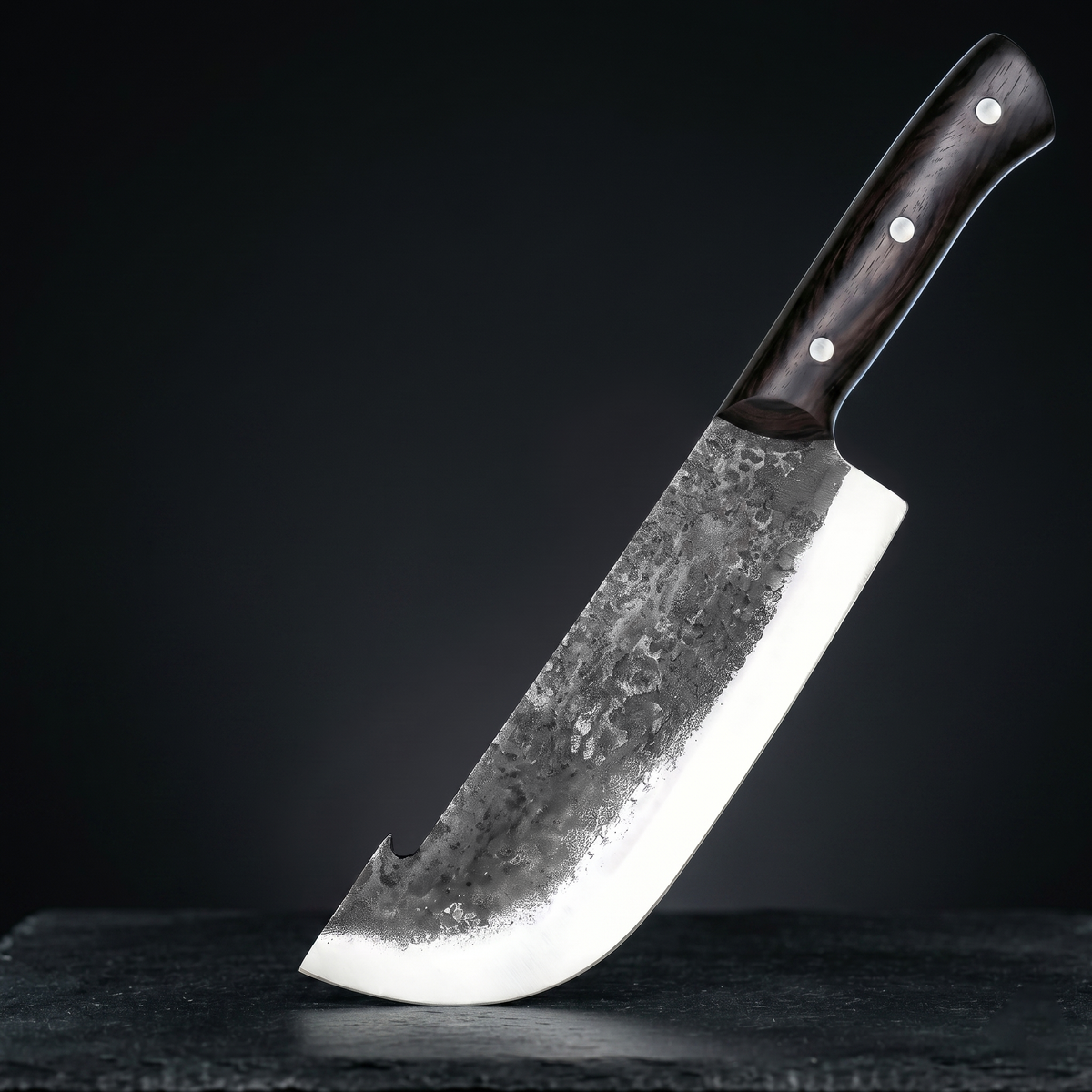
A stamped knife is cut out of a flat sheet of steel, then heat treated, ground and fitted with a handle. A forged knife starts as a bar that is heated and hammered into shape, by a machine or by hand. Forging lets the maker vary thickness and shape. Heat treatment and grinding decide how well either one cuts.
Walk through any kitchen store and the word forged is printed on a lot of boxes. Hand forged turns up on fewer of them, and it gets stretched further than it should. Here is what the words actually mean, what each method changes in the finished knife, and what it does not change, including a few things a forge would probably rather you did not hear. We are a forge. We are telling you anyway.
How a Stamped Knife Is Made
Stamping starts with a big sheet of steel rolled to an even thickness. A press or a cutting machine cuts knife shaped blanks out of it, much like a cookie cutter going through dough. The blanks are heat treated to harden them, the bevel is ground in to form the edge, and a handle goes on. Because the sheet is one thickness, the blade starts out that thickness everywhere, and any taper has to be ground in afterwards.
The result is light, consistent and cheap to make in large numbers. Every knife from a run looks the same, which is exactly what a factory wants. Many stamped knives also skip the bolster, the thick collar where the blade meets the handle, because there is no extra steel in the blank to form one.
How a Forged Knife Is Made
A forged knife starts as a bar of steel that is heated until it will move and then pushed into shape under force. There are two quite different ways of doing that, and knife marketing likes to blur them together.
Drop forged, or machine forged
In drop forging, a hot bar goes into a shaped die and a heavy machine hammer or press drives it into that shape. It is real forging, and it can form a thicker spine and a bolster in one go. It is also a factory process, so the knives come out as alike as stamped ones. When a box says forged and nothing more, this is usually what it means.
Hand forged
Hand forging means a smith heats the steel, hammers it, puts it back in the fire and hammers it again, shaping the blade by eye over many heats. Some smiths use a power hammer for the heavy early work, which is fair enough, but a person still decides where every bit of steel goes. After that the blade is heat treated, the edge is ground and the handle is fitted. It is slow and loud, and no two blades come out identical.
So the hand forged vs machine forged question is less about the fire and more about who decides the shape: a person with a hammer, or a die cut to one pattern.
What Forging Changes
Thickness and weight
Forging lets the maker leave steel where it is wanted. A thick spine that tapers toward the edge, extra mass over the heel, a heavy front end on a cleaver. That extra metal makes forged knives heavier, and on a cleaver or a big chef knife the weight does real work for you. On a knife built for delicate slicing it can simply be weight.
Shape freedom
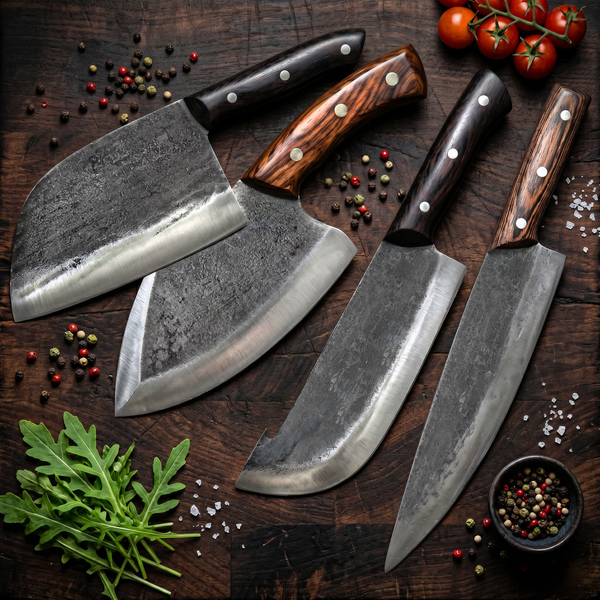
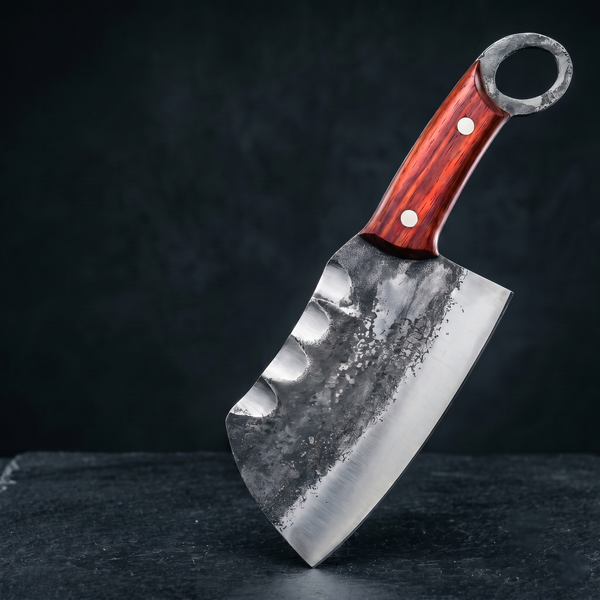
A die makes one shape. A smith can make whatever the hammer allows, which is why hand forged ranges tend to include shapes a factory would never tool up for: tall cleaver shaped chef knives like the Kermode 7" Serbian chef knife, clip points on cleavers, finger holes punched near the spine. Our hand forged meat cleavers are full of those.
The look
A hand forged blade carries a record of how it was made. Hammer marks, forge scale and small differences in finish mean your knife will not match the next one off the bench. Some people love that. Some people want a block of identical knives. Both are allowed.
What Forging Does Not Change
Now the honest part. How well a knife cuts and how long it holds an edge come mostly from the steel, the heat treatment and the edge geometry. A stamped knife with decent steel, a good heat treatment and a well ground edge cuts very well. Plenty of busy commercial kitchens run on stamped knives, and they are not suffering for it.
You will also read that forging aligns the grain of the steel and makes a blade dramatically stronger. We are not going to lean on that. With modern steel, heat treatment does far more for performance than the hammering does, and if a seller quotes you a percentage, ask where the number came from. Buy a hand forged knife for the shape, the weight and the fact that a person made it. Do not buy one because somebody promised the hammer turns steel into something magical.
Hammer Marks and Forge Scale
Hammer marks are the dents the hammer leaves in the flats. Forge scale is the dark layer that builds up on steel in the fire. On many hand forged knives, ours included, both are left on the upper blade on purpose, and only the edge is ground down to bright metal and polished.
As evidence
They count as evidence, with a catch. Some factory knives have a hammered pattern pressed or ground into a stamped blade so they look handmade. That pattern tends to be perfectly even and to repeat from one knife to the next. Real hammer marks wander. They are deeper in some places and faint in others, and they never land the same way twice.
As a finish
They also do a job. Textured flats break the suction that makes wet meat and potato slices cling to a smooth blade, and the scale helps protect the steel. On the Kraken 8" cleaver, the polishing stops short of the spine, so the hammer marks stay on the upper flats and you can see every strike.
How to Tell Them Apart
- Look down the spine. A stamped blade is often the same thickness from heel to tip. A forged one usually tapers, and a hand forged one may vary a little along its length.
- Check for a bolster. A thick collar at the heel points to forging. A missing one proves nothing, since plenty of forged knives skip it.
- Compare the photos. Mass produced knives look identical in every product shot and every customer photo. Hand forged ones differ in texture, finish and wood grain.
- Pick it up. A forged blade usually feels heavier than a stamped one of the same size.
- Read the wording closely. Forged on its own usually means drop forged. Hand forged should come with some mention of the smith, the hammer or the finish. A hammered finish or a forged look describes the surface and says nothing about how the blade was shaped.
- Look at the price. Hand forging takes a lot of skilled time per knife. A hand forged chef knife priced like a sandwich deserves a second look.
| Feature | Stamped | Drop forged (machine) | Hand forged |
|---|---|---|---|
| How it is shaped | Cut from a sheet | Hot bar driven into a die | Heated and hammered by a smith |
| Thickness | Even, taper ground in later | Can be thicker at spine and bolster | Wherever the maker leaves it |
| Weight | Light | Medium to heavy | Usually heavy |
| Consistency | Identical | Identical | Each one different |
| Shape options | Whatever the cutter allows | Whatever the die allows | Wide, including cleaver shapes and finger holes |
| Cutting quality | Set by steel, heat treatment and grind | Set by steel, heat treatment and grind | Set by steel, heat treatment and grind |
| Price | Lowest | Middle | Highest |
Where the Money Goes
A stamped knife is cheap because a machine does nearly all of it. A hand forged knife costs more because a person spends time on each blade: heating and hammering it over many rounds, heat treating it, grinding and polishing the edge, and shaping and fitting the handle. You are paying for that labor and for a shape nobody built a die for. You are not paying for a sharper edge out of the box, because a good factory knife can match that.
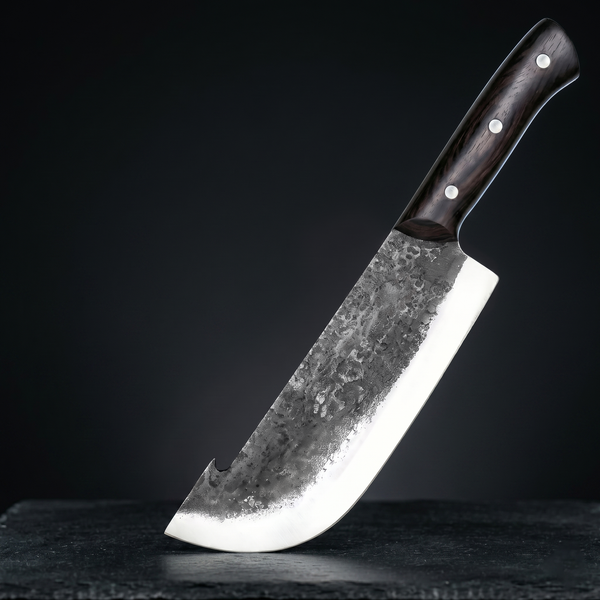
Here is how we do it. We forge in the Serbian style, which is a technique and a look: thick cleaver shaped blades, flats hammered by hand and the raw forge scale left on. Every knife is high carbon steel, full tang, with the handle locked on by steel pins. The Ironclad 8.7" chef knife keeps the hammer work on its spine so you can see and feel how it was made. Our chef knives show the lighter end of the range, and the about page covers how a blade gets from a bar of steel to your board.
If the price is the sticking point, read are hand forged knives worth it. It is the blunt version, including the cases where we would tell you to buy a factory knife instead.
Forged or stamped, a high carbon steel blade still rusts if it is left wet, so looking after high carbon steel is worth reading whichever way you go. If the thick, hammered look is what brought you here, a Serbian chef knife up close covers that style in detail. And to see which of our knives sell best, start with the knives customers pick most.
Questions
What does hand forged mean?
It means a smith shaped the blade by heating the steel and hammering it, over and over, instead of cutting it from a sheet or pressing it in a die. Heat treatment, grinding and handle fitting follow. Uneven hammer marks and small differences between knives are the usual signs.
Are forged knives better than stamped knives?
Not automatically. Forging lets a maker build a thicker spine, more weight and shapes a factory will not make. Cutting performance comes mostly from the steel, the heat treatment and the edge grind, and a well made stamped knife cuts very well. Choose on the job and the feel you want.
What is the difference between hand forged and machine forged?
Machine forged, usually called drop forged, means a hot bar is driven into a die by a heavy hammer or press, so every knife comes out the same. Hand forged means a person shapes each blade with a hammer by eye, so each one is slightly different from the last.
Does a hammered finish mean a knife is hand forged?
No. Some factory knives have a hammered pattern pressed or ground into a stamped blade for looks. Real hammer marks are uneven and never repeat exactly from one knife to the next. If every knife in every photo carries the identical pattern, a machine probably put it there.
Why are hand forged knives heavier?
Forging lets the maker leave extra steel where it helps, mostly in a thick spine and a heavier front end on the blade. On a cleaver or a big chef knife that weight does the chopping for you. On a knife meant for delicate slicing it is less of an advantage.
Shop the knives from this guide
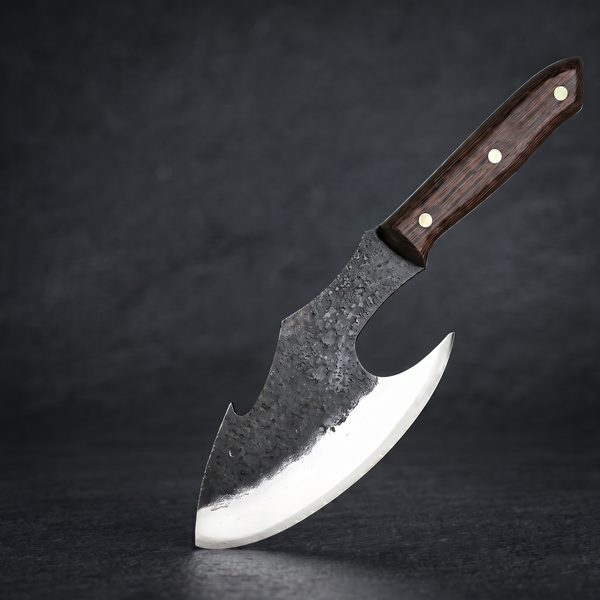
Keep reading
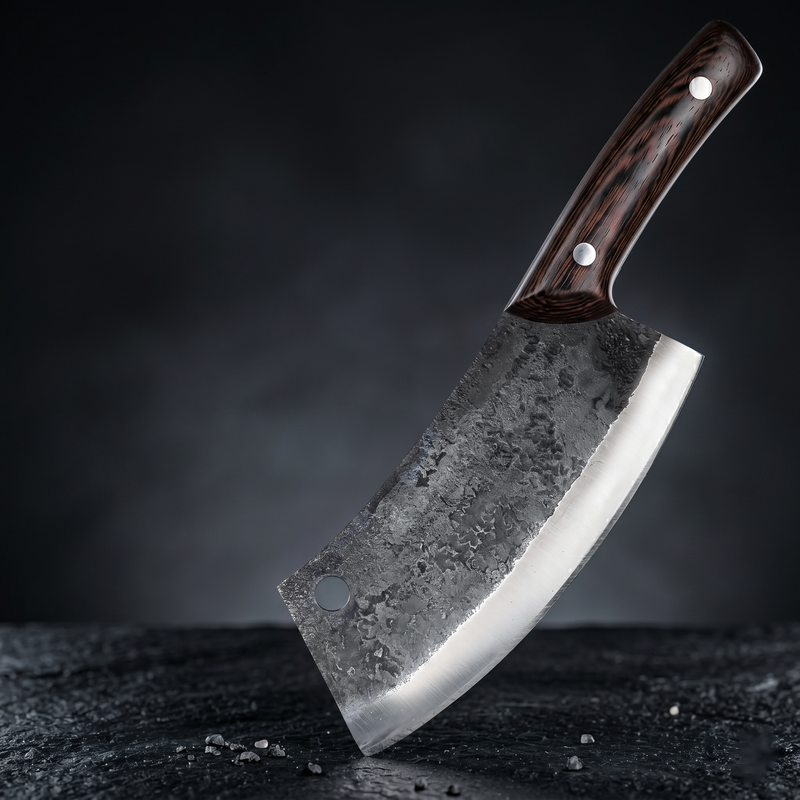
Are Hand Forged Knives Worth It? An Honest Answer
Are hand forged knives worth it? An honest answer from a forge. What the extra money actually buys, what it does not, how long...
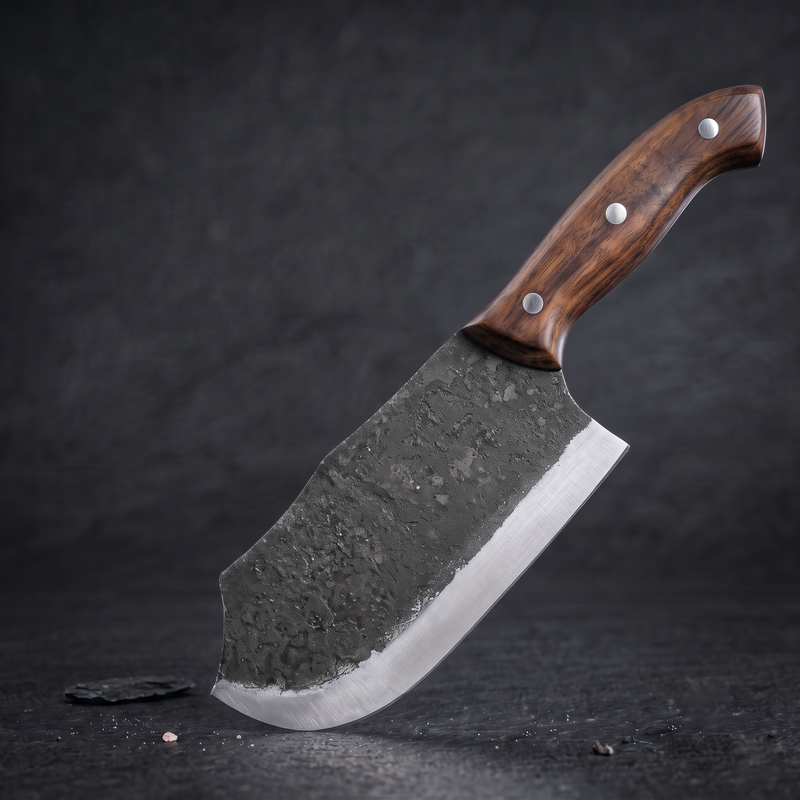
High Carbon Steel Knife Care: Rust, Patina, Oiling and Sharpening
High carbon steel rewards a simple routine. Here is how to wash, dry and oil a carbon steel knife, remove light rust, force a...
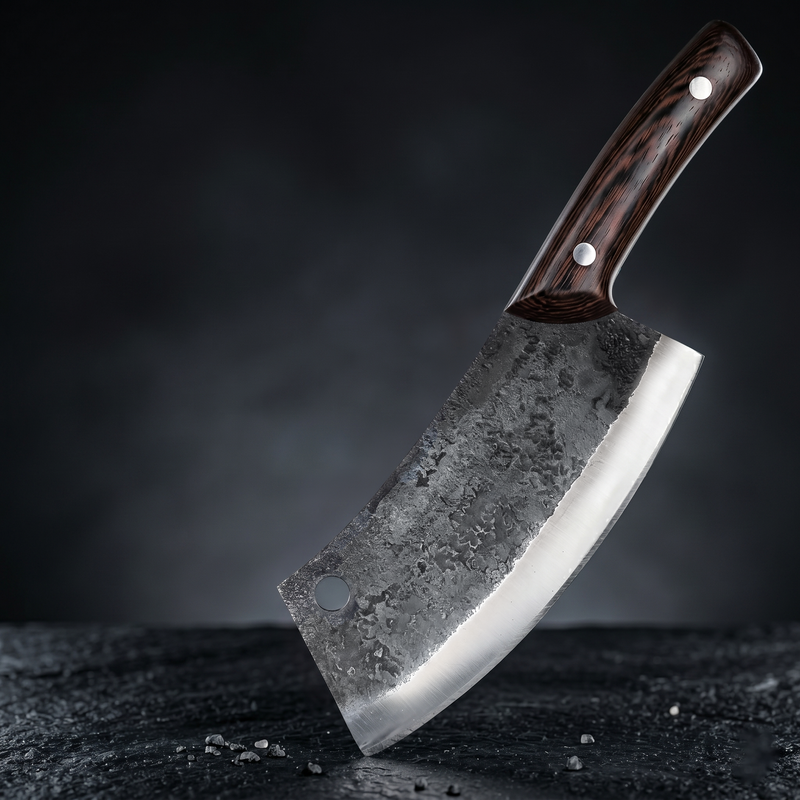
What Is a Serbian Chef Knife? The Cleaver Shaped Blade Explained
A Serbian chef knife is a thick, hand forged, cleaver shaped chef knife that chops, rocks and scoops. Here is what the style really...