
High Carbon Steel Knife Care: Rust, Patina, Oiling and Sharpening
September 27, 2026 · By Matt
Short answer: to care for a carbon steel knife, hand wash it, dry it straight away and wipe on a thin coat of food safe oil. Let a patina form, scrub off light rust as soon as you see it, store the knife dry, and sharpen it on a whetstone, honing between sessions. Never use the dishwasher.
High carbon steel has a reputation for being needy. It is not needy. It is just honest. Leave it wet and it will rust, leave onion juice on it and it will change color, and in return it takes a keen edge and comes back to sharp on a stone without a fight. Every knife we forge is high carbon steel, so this is the routine we recommend for all of them.
Why High Carbon Steel Needs a Routine
Carbon steel reacts with water, salt and acid. That reaction is what makes rust, and in a milder form it is what makes a patina. None of it hurts the knife if you stay ahead of it. The trouble starts when a blade sits wet in a sink or a sheath for hours. A two minute habit after cooking saves you a Saturday afternoon with a scrub pad.
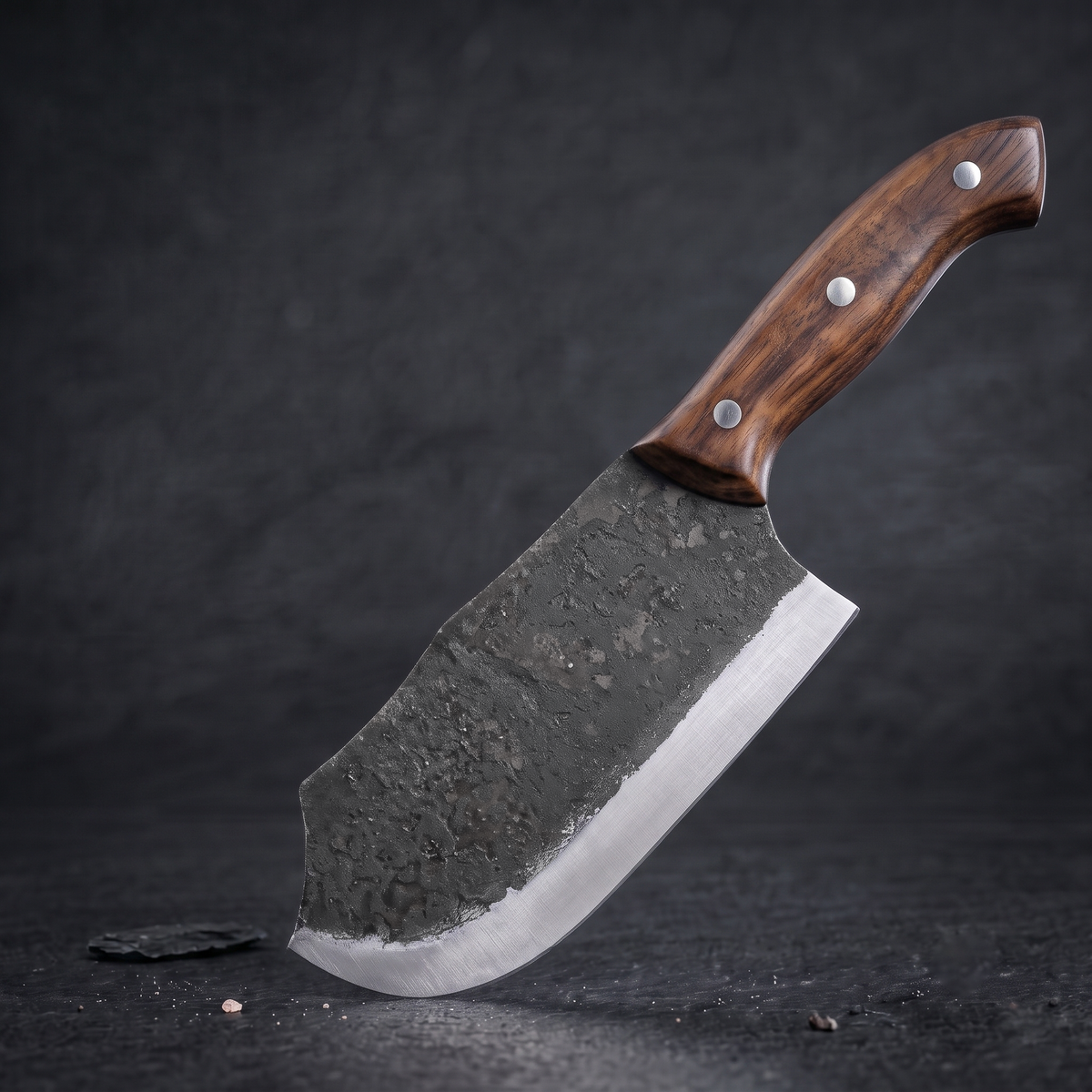
Our blades are forged in the Serbian style, and on most of them the upper flats keep their dark forge scale while only the edge area is polished to bright steel. The scale already gives the flats some protection. The bright metal near the edge is where you will see rust first, and where the patina will build.
How to Care for a Carbon Steel Knife Every Day
- Wipe it while you cook. After cutting tomatoes, citrus, onions or anything salty, give the blade a quick wipe instead of letting juice sit on it.
- Wash by hand. Warm water, a little dish soap and a soft sponge. Keep the knife in your hand, not at the bottom of a sink full of water.
- Dry it right away. Use a towel on both faces, the spine and the spot where blade meets handle. That last spot is where water likes to hide.
- Oil it. Put a few drops of food safe oil on a paper towel and wipe a thin film over the blade. You want a sheen, not a puddle.
- Put it away dry. Rack, strip or block, as long as it is somewhere dry.
Which Food Safe Oil to Use
Food grade mineral oil is the easy choice. It is cheap, it does not go off, and it is sold for cutting boards anyway. Camellia oil is the traditional knife oil and works just as well. Cooking oils such as olive or vegetable oil will do in a pinch, but over time they can turn sticky and smell stale, which is not what you want on a blade you use for food. A drop of the same oil on the wooden handle now and then keeps it from drying out.
Carbon Steel Knife Patina
A patina is a thin, stable layer of oxide that forms on carbon steel as it meets food and air. It shows up as grey, blue, brown or a patchy mix of all of them. It is not dirt and it is not damage. It actually helps protect the steel from red rust. Every blade builds its own, so no two look alike after a year of cooking.
How to Force a Patina
You can let a patina build on its own, or you can give it a head start. Both methods below are widely used. Go carefully and keep acid off the wooden handle.
- Vinegar. Wash the blade with soap to take off any oil, then dry it. Warm some white vinegar, soak a paper towel in it and lay the towel along the bright part of the blade, or wipe the vinegar on with a cloth. Check it every few minutes. When the steel has gone an even grey, rinse it, wash it, dry it and oil it.
- Mustard. Clean and dry the blade the same way, then smear plain yellow mustard on the bright steel in whatever pattern you like. Leave it a while, wipe it off, then wash, dry and oil. It gives a blotchy, marbled look that some people love and some people think looks like a mistake.
Do not leave either one overnight. Acid left too long can etch the edge. If the first go is too light, repeat it rather than leaving it on longer.
Carbon Steel Knife Rust: How to Remove It
Light orange spots are a nuisance, not a disaster. Deal with them the day you see them.
- Wipe the spot with a little oil to loosen it.
- Rub it with a paste of baking soda and water, or with a wine cork dipped in oil. Work along the length of the blade, not across it.
- For stubborn spots, use a fine nonwoven scrub pad or very fine steel wool with a little oil. Keep to the rusty area on the polished steel.
- Wash, dry and oil the knife as usual.
Leave the forge scale on the flats alone. Scrubbing hard up there takes off the finish you paid for and the protection that comes with it. If you are looking at deep pitting rather than surface spots, get in touch before you grind on it, and check our warranty page for what the lifetime warranty covers.
Storing a High Carbon Steel Knife
Dry storage matters more than the kind of storage. A magnetic strip is good as long as you set the spine on first and roll the blade flat, so the edge does not slap the metal. A block works if it is dry inside. Blade guards keep edges safe in a drawer.
Leather sheaths are great for carrying and bad for long term storage, because leather holds moisture against the steel. Take the knife out once you are home. If a knife is going into a cupboard for months, give it a heavier coat of oil than usual and check on it now and then.
How to Sharpen a Knife With a Whetstone
Pull through gadgets are quick, and they also take off more metal than they need to. A whetstone takes longer to learn and gives you a better edge for years. Here is how to sharpen a knife on one.
What You Need
A combination whetstone with a medium side and a fine side, water, a damp towel to stop the stone sliding, and a marker pen. As a typical guide, very coarse stones in the low hundreds of grit are for repairing chips, a stone around 1000 grit is the everyday sharpening stone, and finer stones in the thousands polish and refine the edge.
Sharpening Angle
Many kitchen knives are sharpened somewhere around 15 to 20 degrees per side. Cleavers and heavy choppers usually get a wider angle, often around 20 to 25 degrees per side or more, so the edge can take impact. These are typical ranges, not a specification for our knives. The best angle for any knife is the one its edge already has, and the marker trick below finds it for you.
Step by Step
- Prepare the stone the way its maker says. Some soak in water until the bubbles stop, others only need a splash on top.
- Set the stone on the damp towel with the medium side up.
- Color the edge bevel with the marker. Make a couple of light strokes and look: if the ink comes off evenly, your angle matches the bevel. If it only comes off at the top or bottom, adjust.
- Hold that angle and push the blade across the stone, edge leading, with light, steady pressure. Sweep from heel to tip so the whole edge touches the stone.
- Keep going on the first side until you can feel a small burr along the entire length on the other side. No burr, not finished.
- Turn the knife over and repeat on the second side until the burr flips back.
- Move to the fine side and do the same with fewer strokes and lighter pressure.
- Finish with a few very light alternating strokes, one per side, to knock off the burr. A leather strop does this nicely too.
- Test on a sheet of paper, then rinse, dry and oil the blade. The stone gets rinsed and left to air dry.
How to Sharpen a Cleaver
Same method, three differences. Use a wider angle than on a slicing knife. Work the long edge in sections so every part gets the same number of strokes. And let the weight of the blade do the pressing, because a heavy cleaver on a stone needs less push than you think. On a cleaver with a curved belly, like our 7.5 inch butcher cleaver, lift the handle slightly as you reach the curve so the bevel stays flat on the stone. Keep the forge scale on the flats off the stone. Only the bevel should touch. The same goes for a big bone chopper like the Mammoth 9.1 inch meat cleaver, which will teach you about patience.
Honing Between Sharpenings
A honing rod does not really sharpen. It pushes a rolled or bent edge back into line, which is why a knife that feels dull can feel sharp again after six light strokes. Hold the rod upright, match roughly the angle you sharpen at, and draw the edge down the rod a few times per side with barely any pressure. A smooth steel or a fine ceramic rod both work. Hone when the knife starts to drag, sharpen when honing stops helping.
What Never to Do
- Put it in the dishwasher. A long hot cycle of water and harsh detergent is the fastest way to rust a blade and crack a wooden handle.
- Leave it soaking in the sink, where it also becomes a hazard for whoever reaches in next.
- Cut on glass, stone or ceramic boards. Wood or plastic only.
- Chop frozen meat with the edge, even with a cleaver.
- Store it wet in a sheath or a drawer.
- Use bleach or scouring powder on the blade.
Where to Go Next
Everything above applies to every blade we make, from our hand forged chef knives to our hand forged meat cleavers and butcher knives. If you are buying for someone else, our knife sets put a few blades in one box, which also means more knives to oil. If you are still choosing between types, read our comparison of the meat cleaver vs butcher knife, or see our pick of the best meat cleaver for your kitchen.
Once the edge starts to fade, sharpening a cleaver step by step takes the routine further on the stone. If you are still deciding whether high carbon steel and hand forging are for you at all, read is a hand forged knife worth the upkeep and then forging against stamping. And if you want a first knife to try all of this on, the Orca 7" everyday chef knife is a sensible start, as is anything from our best selling blades. The oil is the same for all of them.
Questions
Is patina the same as rust?
No. A patina is a thin, stable, dark layer of oxide that sits on the surface and helps protect the steel. Rust is orange or red, flaky and eats into the metal. You keep the patina and remove the rust. If it wipes off orange on a paper towel, it is rust.
What is the best food safe oil for knives?
Food grade mineral oil is the simplest choice because it is cheap, easy to find and does not go stale. Camellia oil is the traditional knife oil and works just as well. Avoid leaving cooking oils on a stored blade for long, since they can turn sticky over time.
How often should I sharpen a high carbon steel knife?
It depends on how much you cook and what you cut on. Hone whenever the knife starts to drag, and go to the whetstone when honing no longer brings the edge back. For a home cook that might be every few weeks or every few months. Let the edge tell you.
Can a carbon steel knife go in the dishwasher?
No. The long hot wash, the standing water and the detergent will rust the blade and can damage a wooden handle. Hand wash it with warm soapy water, dry it straight away and wipe on a light coat of food safe oil. It takes about a minute.
What angle should I sharpen a cleaver at?
Cleavers are usually sharpened at a wider angle than slicing knives, often around 20 to 25 degrees per side or more, so the edge can take impact. That is a typical range, not a fixed rule. The easiest method is to match the bevel already on the blade using a marker.
Shop the knives from this guide
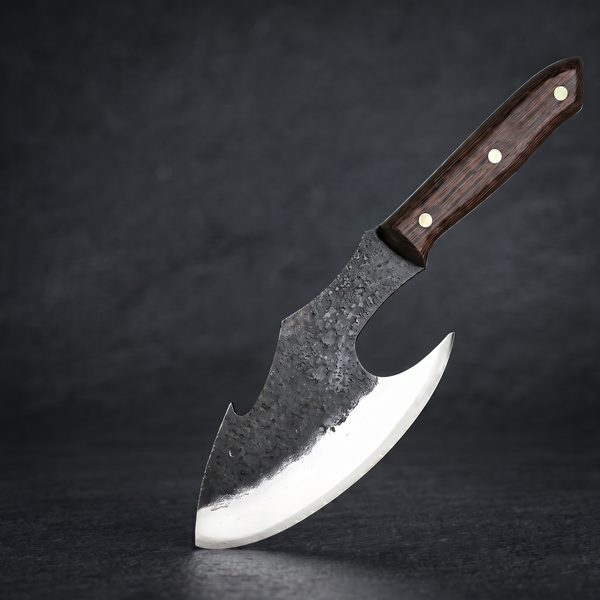
Keep reading
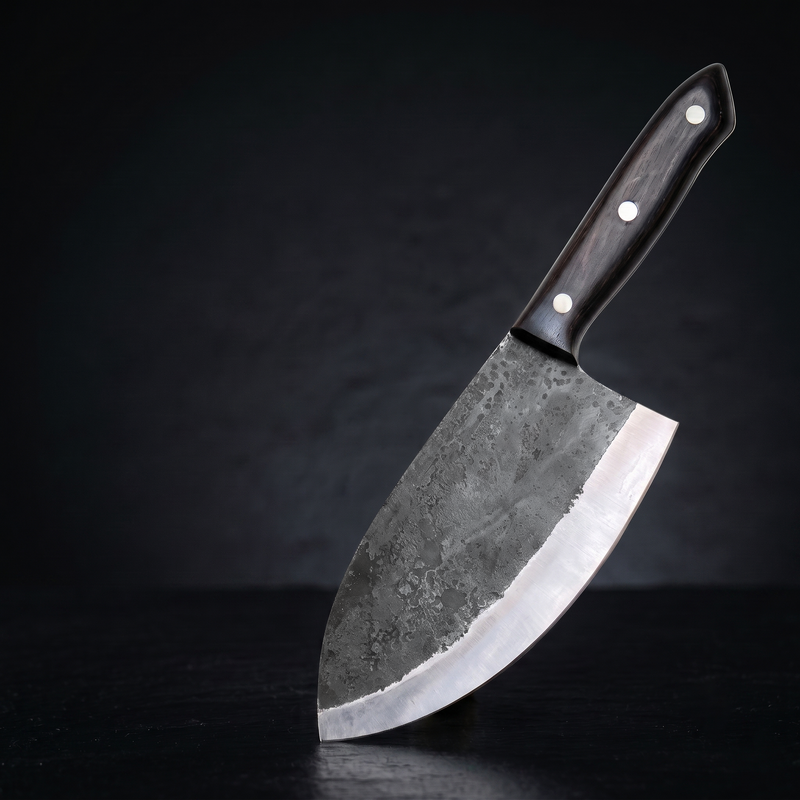
How to Sharpen a Meat Cleaver: Angle, Stones and Step by Step
A plain guide to sharpening a meat cleaver at home. Why a cleaver edge is ground differently from a chef knife, how to find...
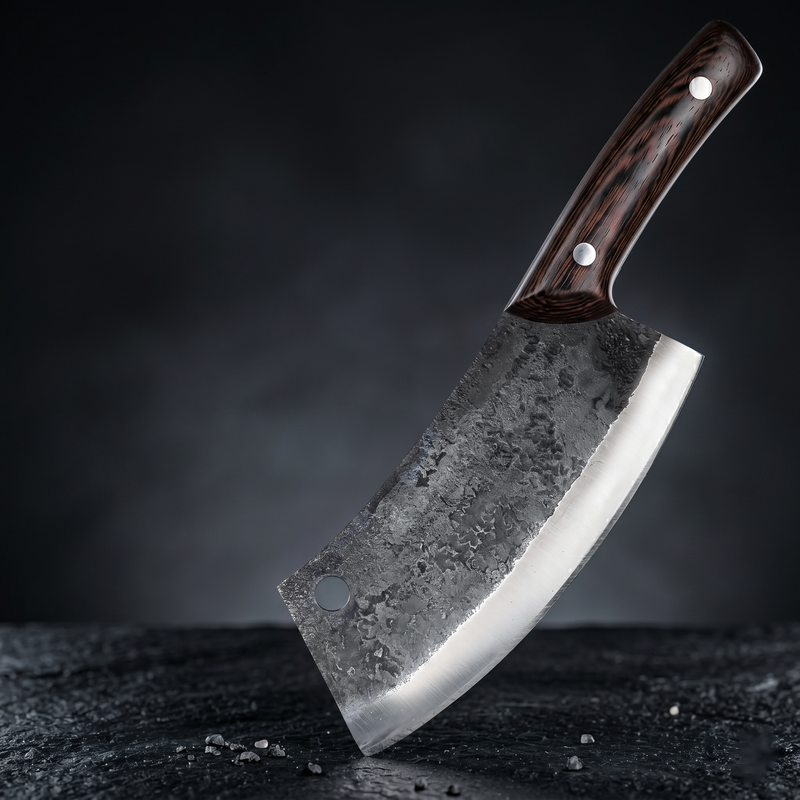
Are Hand Forged Knives Worth It? An Honest Answer
Are hand forged knives worth it? An honest answer from a forge. What the extra money actually buys, what it does not, how long...
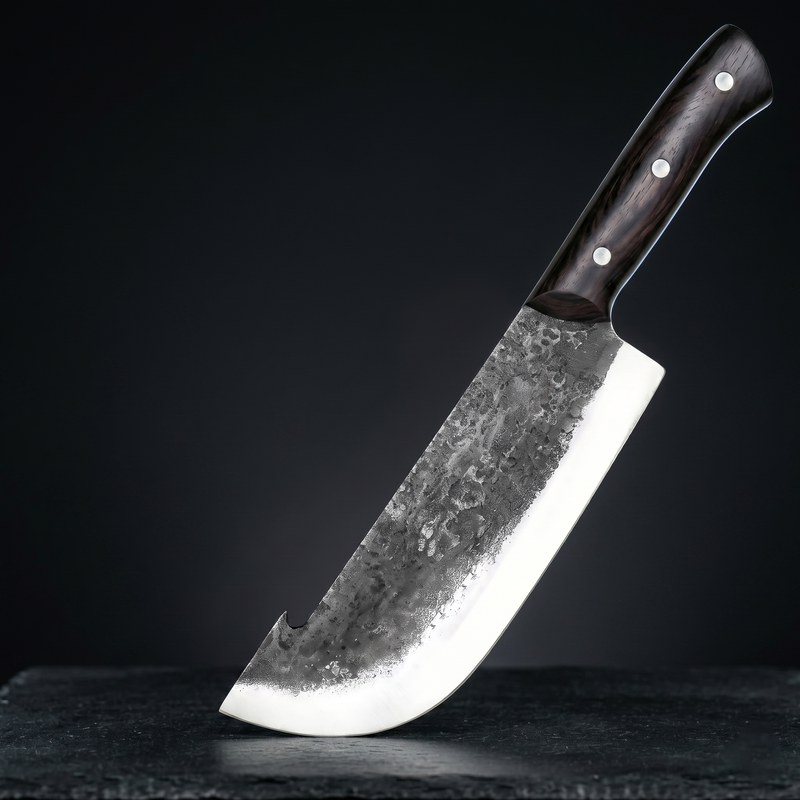
Hand Forged vs Stamped Knives: What Actually Changes
Forged vs stamped knives, explained by people who forge them. How a stamped knife is made, how drop forged and hand forged knives differ,...