
Meat Cleaver vs Butcher Knife: Which One Your Kitchen Needs
September 27, 2026 · By Matt
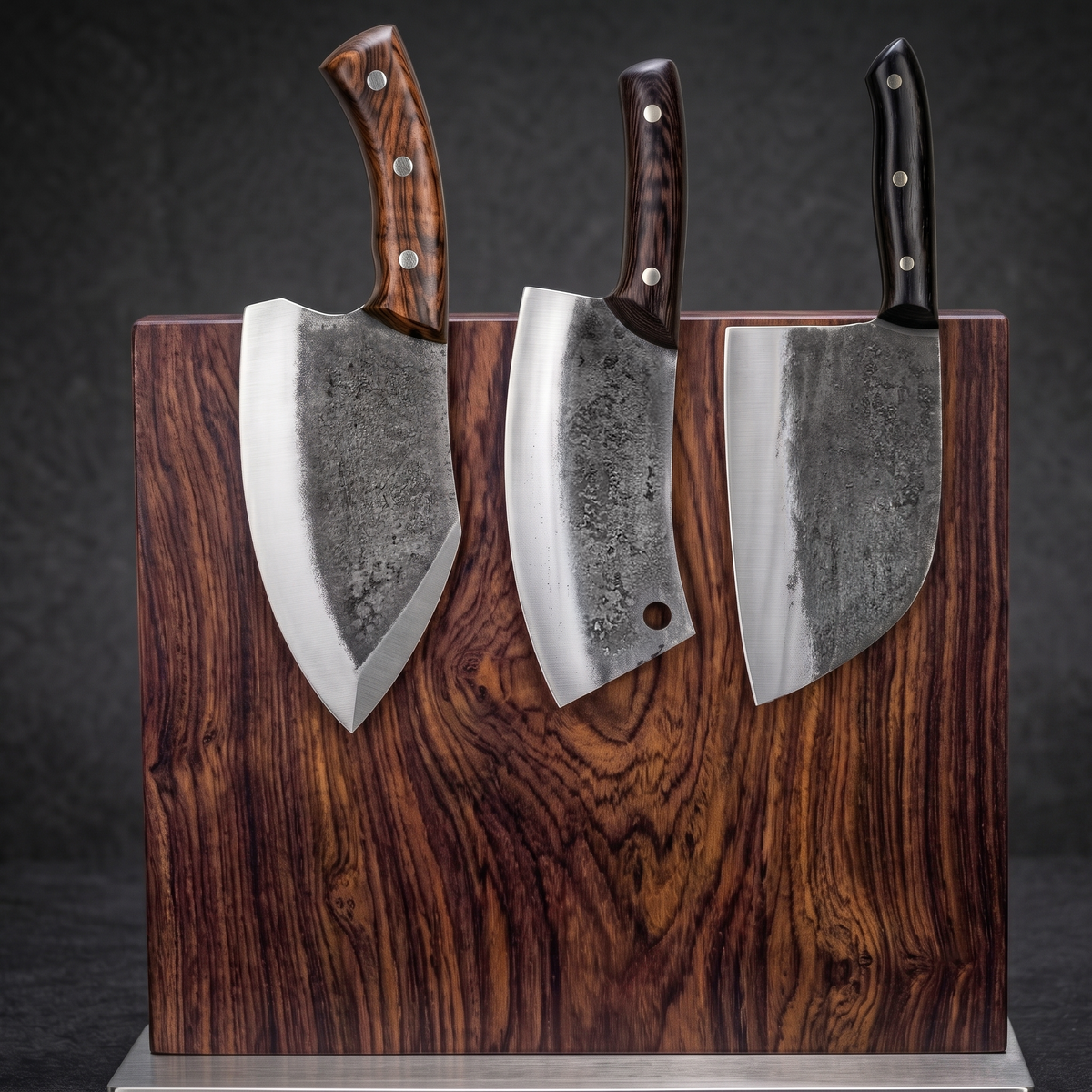
Short answer: a meat cleaver is a tall, heavy blade with a thick spine that chops through joints and bone with a short, controlled drop. A butcher knife is a longer, thinner, curved blade that slices, trims and portions meat. If you break down whole cuts, own both. If you mostly trim, start with the butcher knife.
Both of these get sold as "the knife for meat", which is about as helpful as calling a sledgehammer and a screwdriver "tools for the house". They both work on meat. They just do very different things to it, and using one for the other's job is how edges get chipped and fingers get nervous. Here is how they differ, where the overlap is, and which of our knives covers which job.
What Is a Meat Cleaver?
A meat cleaver is the rectangular one. Tall face, thick spine, and most of its weight sitting right above the edge. It does not rely on finesse. It relies on mass, so you lift it a few inches and let it fall into the cut.
Shape and Weight
The tall blade gives you knuckle clearance on the board and a wide flat you can use to scoop chopped food or crush garlic. The thick spine is the engine. It keeps the blade from twisting when it lands on a joint and pushes the force straight down instead of off to the side. Heavier cleavers do more of the work for you, which is great on a pork shoulder and a bit silly on a cherry tomato.
The Edge
A cleaver edge is ground at a wider angle than a slicing knife. That makes it a little less keen on paper, and a lot harder to chip when it meets bone. A thin, acute edge would fold or crack the first time it hit a rib. A cleaver edge is built to take the hit and keep going.
What a Cleaver Is For
Splitting whole chickens, separating ribs, cutting through joints, chopping bone in chicken and pork, portioning heavy cuts and rough chopping of big vegetables. Our guide on what a meat cleaver is used for goes through the full list if you want the long version.
What Is a Butcher Knife Used For?
A butcher knife is the long, curved one. The blade is narrower than a cleaver, thinner behind the edge, and usually sweeps up toward a pointed tip. Where the cleaver chops, the butcher knife draws. You pull it through the meat in long strokes and let the edge do the cutting.
The jobs are the ones that happen around bone rather than through it:
- Breaking big primal cuts down into smaller pieces
- Trimming fat caps and stripping silverskin
- Portioning steaks, chops and roasts
- Following a seam between muscles
- Skinning and cleaning up game
Butcher knives come in a range of lengths. Longer blades cover a big cut in one pass. Shorter ones give you more control around the fiddly bits, which is why a small trimming knife earns its place even in a kitchen that already has a big one.
Can a Butcher Knife Cut Through Bone?
Not really, and you should not ask it to. A butcher knife will cut cartilage, slip through a joint once you find the gap, and get through the small bones of a chicken if you are careful. What it will not do is chop dense bone. Slam a thin, acute edge into a pork femur and the best outcome is a rolled edge. The usual outcome is a chip you will be sharpening out for a while.
Butchers work around bone with a knife and go through bone with a cleaver or a saw. Even a cleaver has limits. Heavy beef leg bones and frozen blocks belong to a saw, and anyone who tells you otherwise has not had to regrind an edge afterwards.
Meat Cleaver vs Butcher Knife: Side by Side
| Feature | Meat Cleaver | Butcher Knife |
|---|---|---|
| Blade shape | Tall and rectangular | Long, narrow and curved |
| Spine | Thick, carries the weight | Thinner, built for flex and control |
| Weight | Heavy, weight sits forward | Lighter, balanced for long strokes |
| Edge | Wider angle, made to take impact | Finer angle, made to slice cleanly |
| Cutting motion | Short lift and drop | Long drawing slice |
| Best jobs | Joints, ribs, poultry bones, heavy portioning | Trimming, portioning, seam work, skinning |
| Bone | Chops through most kitchen bones | Works around bone, not through it |
| Weak spot | Clumsy for fine trimming | Chips if you use it to chop |
Cleaver vs Butcher Knife: Where the Butcher Cleaver Fits
Then there is the butcher cleaver, which sounds like someone could not make up their mind. It is a cleaver built for breakdown work: long enough to reach through a big cut, heavy enough to go through joints, and often with a deeper belly so it can rock and slice as well as chop. It will not replace a thin trimming knife, and it will not replace a heavy bone chopper, but it covers a big chunk of the middle.
Our cleavers are forged in the Serbian style, which means thick blades, hand hammered flats and raw forge scale left on above a polished edge. That scale is not decoration only. It cuts drag, so dense meat falls off the flat instead of riding up it.
When to Own Both
If you buy meat already portioned and wrapped, one good knife will do and you can ignore most of this page. The minute you start buying whole chickens, primals or a whole brisket for the smoker, you will hit jobs one blade does badly. A simple way to decide:
- You mostly trim and portion. Start with a butcher knife. It handles fat caps, silverskin and clean portions.
- You split chickens and cut ribs. Add a butcher cleaver so the joints and small bones stop being a fight.
- You crack bones for stock or break down whole shoulders. Get a heavy meat cleaver and let the weight work.
- You do all of the above most weekends. Buy a set and stop reading comparison guides.
Matching Xcutlery Knives to the Job
Hellfang 5 Inch Butcher Knife
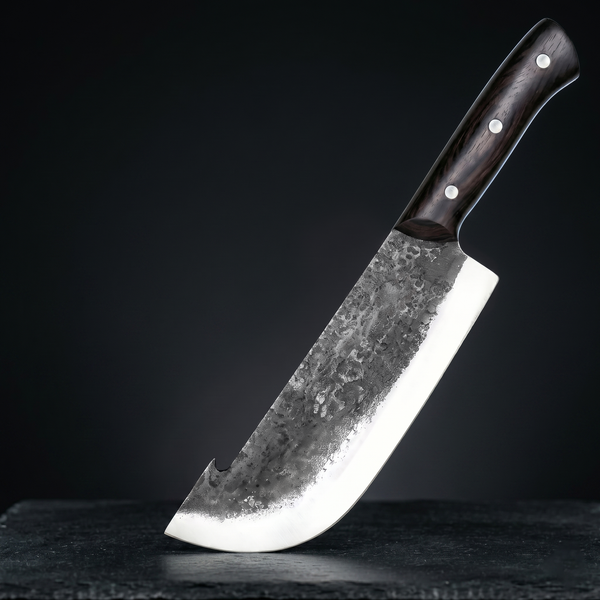
The Hellfang 5 inch hand forged butcher knife is short for the category, and that is on purpose. It is a stiff trimming blade for stripping silverskin off a tenderloin, trimming a brisket fat cap and cleaning up a rack of ribs. It is not meant for chopping. High carbon steel, full tang, hardwood handle.
Hand Forged Butcher Cleaver 7.5 Inch
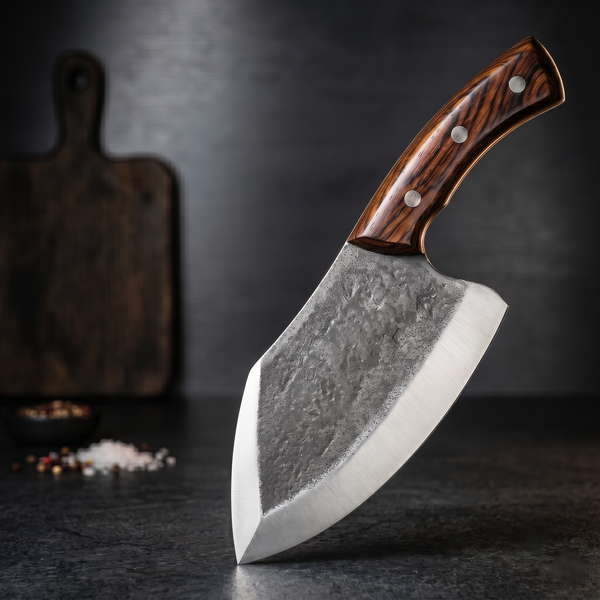
The Hand Forged Butcher Cleaver is the heavy hitter for breakdown work. A 7.5 inch high carbon steel blade gives you reach through a pork loin or beef chuck, and the deep, sweeping belly lets it rock through herbs once the heavy work is done. It handles joints, ribs, poultry and pork bones. Pair it with the Hellfang and you have a two knife butcher kit.
Kodiak 8 Inch Butcher Cleaver
The Kodiak 8 inch drop point cleaver is the one pitmasters ask about. It has cleaver weight up front and a curved belly you can actually carve with, so it takes a brisket from trimming to slicing. It is built for meat, joints and game breakdown. It is not a bone splitter.
Mammoth 9.1 Inch Meat Cleaver
For the bone splitting, there is the Mammoth 9.1 inch meat cleaver. It weighs about 1500 grams and has a thick spine that sits right over the edge, so a short drop does the job. It cracks bone for stock and separates joints on a whole shoulder. It is also far too much blade for everyday prep, and it will tell you so by lunchtime.
The Butcher's Trio
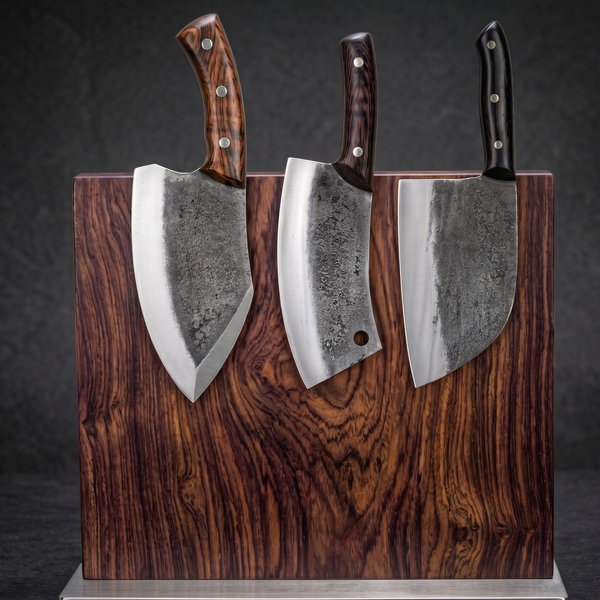
If you want the whole range in one box, the Butcher's Trio gives you a 7.5 inch butcher cleaver, an 8 inch drop point cleaver and a 7 inch sheep foot cleaver, each on a full tang. The butcher cleaver carries weight forward for chopping, the drop point adds a tip for detail work, and the sheep foot handles clean push cuts. What it will not do well is thin slicing of a finished brisket.
For single blades, browse our butcher knives or compare sizes in hand forged meat cleavers.
Keeping Either One Working
Both types are high carbon steel on our side, so they want the same treatment. Hand wash, dry right away, wipe on a light coat of food safe oil, and keep them out of the dishwasher. Over time the steel darkens into a patina, which is normal. Sharpen the cleaver at a wider angle than the butcher knife so its edge keeps its toughness. Our high carbon steel knife care guide walks through rust, patina, oiling and whetstone sharpening step by step.
Pick the knife for the job you actually do most. The other one can wait until the first time you try to split a rack of ribs with a slicer and hear that little crunch you did not want to hear.
If you have settled on a cleaver, the best meat cleaver for your kitchen narrows it down by size and weight. If the trimming side won, boning knife or fillet knife is your next decision. And if all of this ends at a smoker, slicing a finished brisket covers the knife you want at the end of the cook, which is the part everyone at the table actually sees.
Questions
Is a meat cleaver better than a butcher knife?
Neither is better overall. A cleaver is better for chopping through joints and bone because of its weight and tougher edge. A butcher knife is better for trimming, portioning and following seams because it is thinner and longer. Most people who break down whole cuts end up owning one of each.
What is a butcher knife used for?
A butcher knife is used to break large cuts into smaller ones, trim fat and silverskin, portion steaks and roasts, and skin game. It slices with long drawing strokes and works around bone rather than through it. For chopping bone you want a cleaver or a saw.
Can you use a meat cleaver on vegetables?
Yes. A cleaver chops cabbage, squash and onions well, and the wide flat is handy for scooping food off the board and crushing garlic. Lighter cleavers with a curved belly also rock through herbs. A very heavy bone cleaver works too, but your wrist will be tired long before the vegetables are.
Do I still need a bone saw if I own a cleaver?
For most home cooking, no. A good cleaver handles poultry, ribs, pork bones and joints. Thick beef leg bones, marrow bones and anything frozen are a job for a saw. Forcing a cleaver through those risks chipping the edge and gains you nothing.
What size butcher knife should I buy?
It depends on what you cut. A short blade, like our 5 inch Hellfang, gives control for trimming and detail work. Longer blades reach through big roasts and primals in one pass. If you only buy one, pick the size that matches the cuts you bring home most often.
Shop the knives from this guide
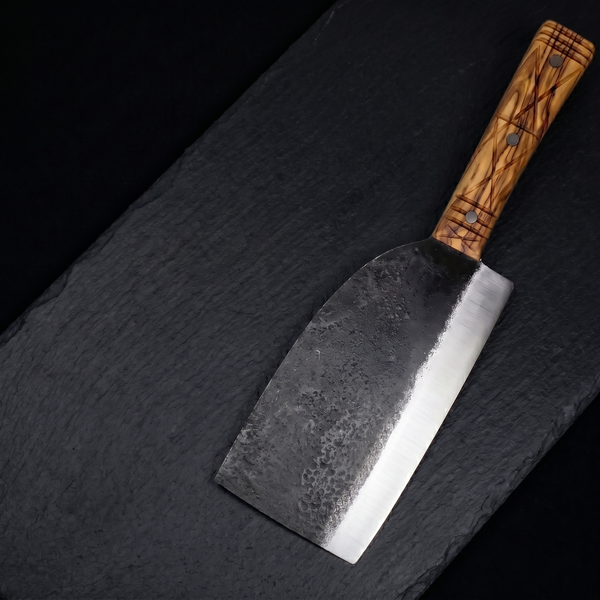
Keep reading
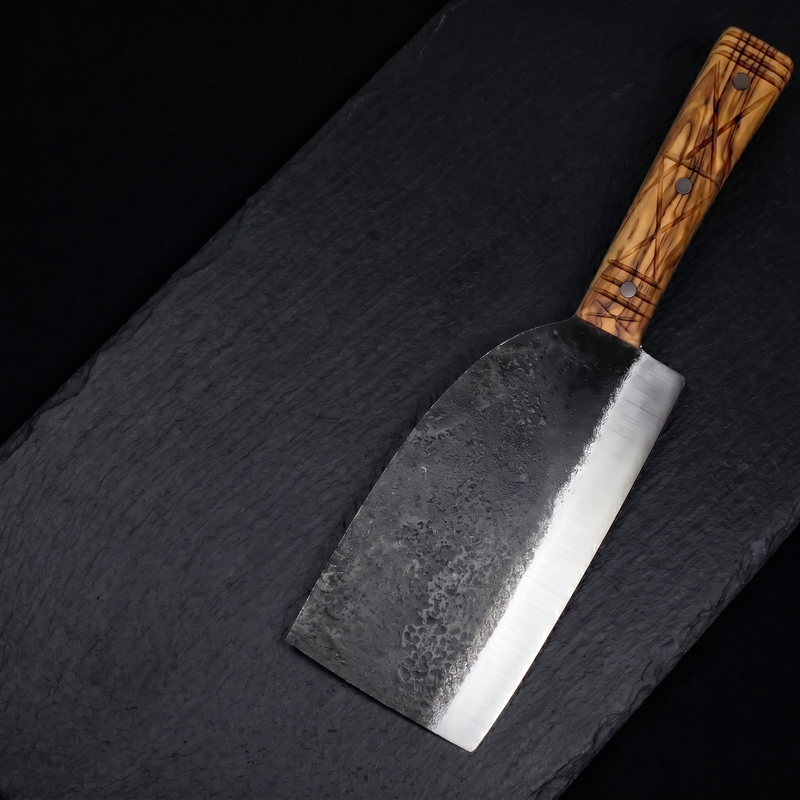
How to Pick the Best Meat Cleaver for Your Kitchen
A buyer's guide to the best meat cleaver for your kitchen. What weight, blade length, height, spine, handle, finger hole and steel actually change,...
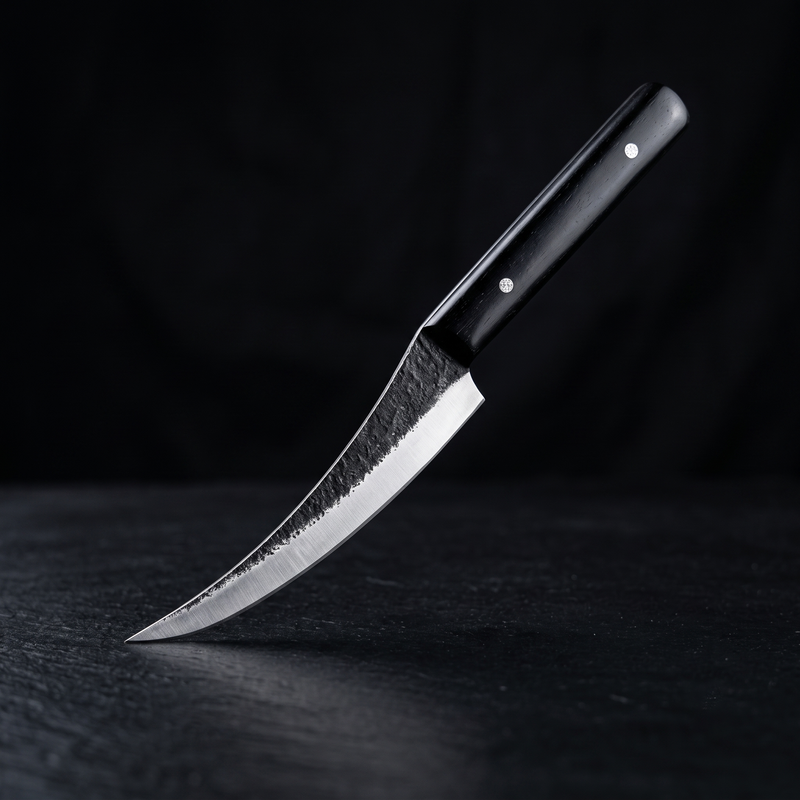
Boning Knife vs Fillet Knife: What Is the Difference?
Boning knife or fillet knife? The real difference is stiffness. Here is how the two shapes compare, which one to use for fish, poultry,...
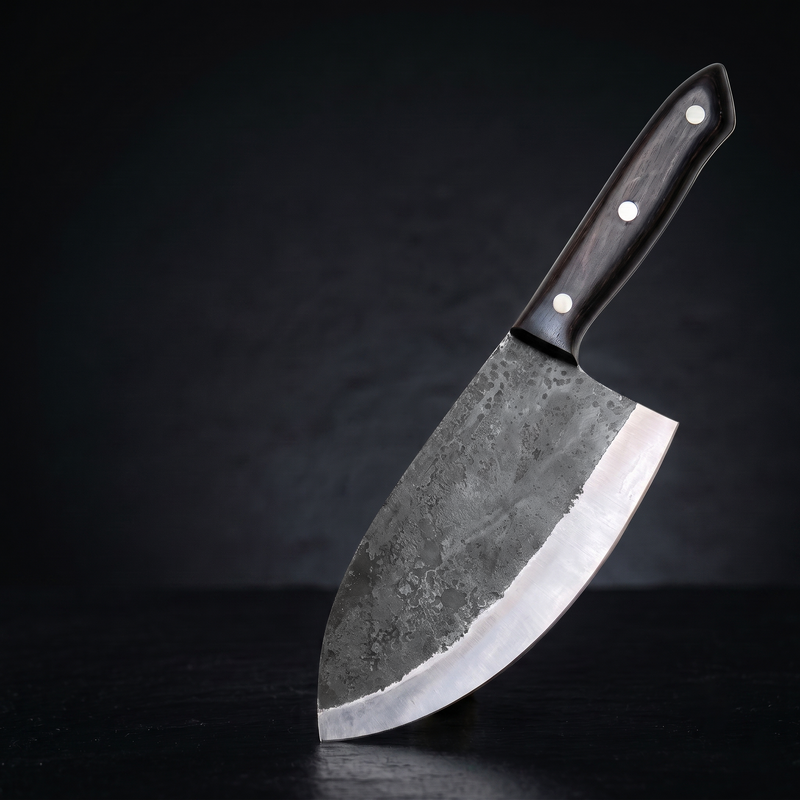
What Is a Meat Cleaver Used For? 9 Jobs It Does Better Than Your Chef Knife
What is a cleaver knife used for? Nine kitchen jobs a meat cleaver does better than your chef knife, from spatchcocking chicken and portioning...