
Best Sellers
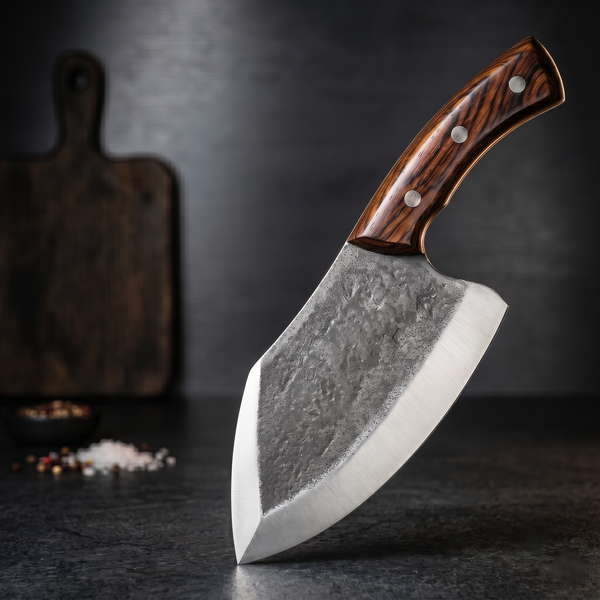
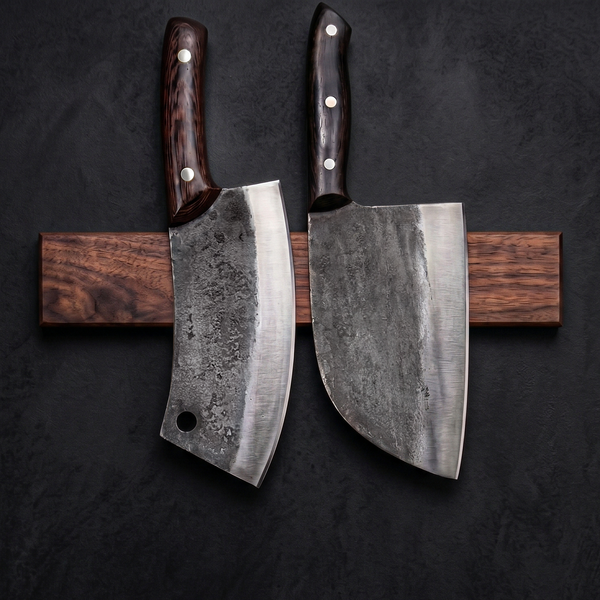
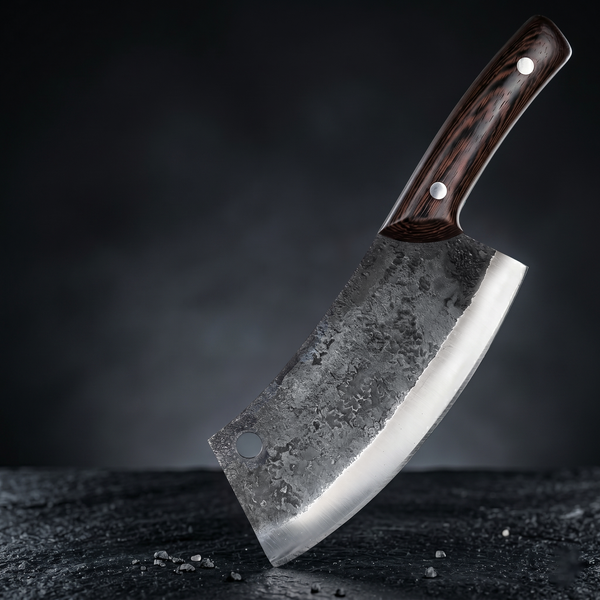
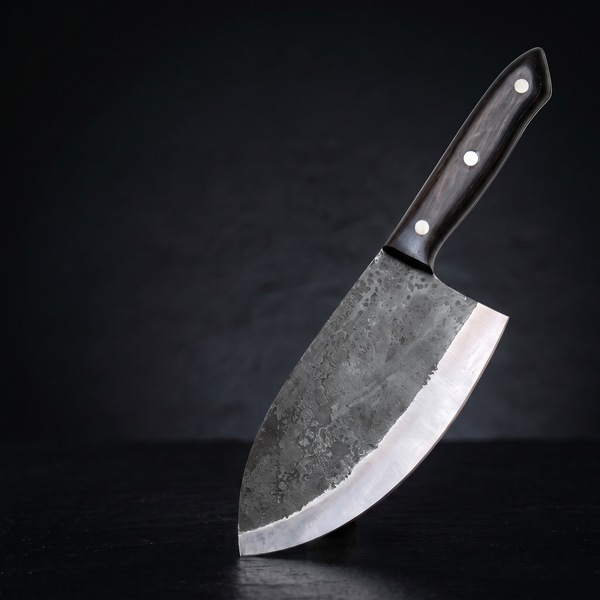
The best hand forged knives are the ones that get used, and this page gathers the ones our customers keep coming back for. The lineup covers two tall 7" Serbian chef knives, the Chef's Kiss and the Kermode, meat cleavers from the 6" Warthog, Aurochs and 6.6" Megalodon up to the 8" Kraken and Kodiak, a 7.5" butcher cleaver, the 5" Hellfang trimming knife, the Barracuda 13" fillet knife and the Mastercraft 4 Piece Set. Every blade is high carbon steel on a full tang. New to forged steel? Pick one knife from each end, a chef knife for prep and a cleaver like the Warthog 6" for bone, or read our best meat cleaver guide first.
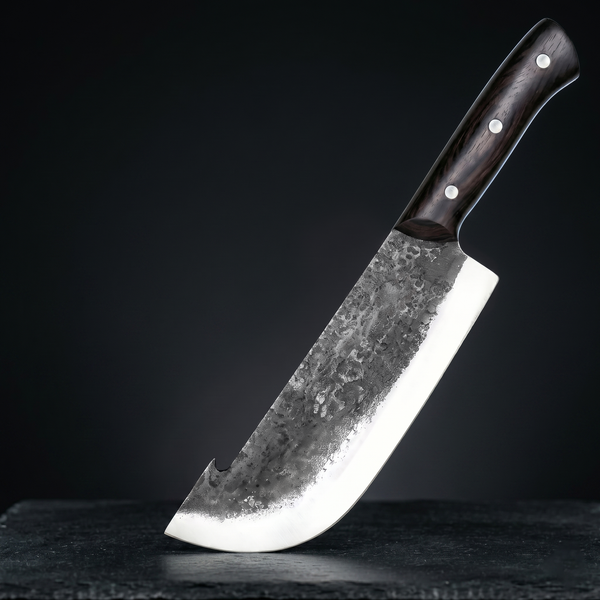
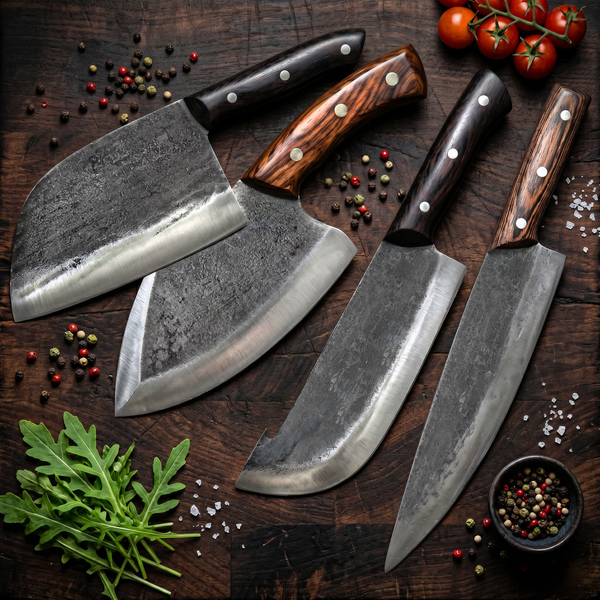
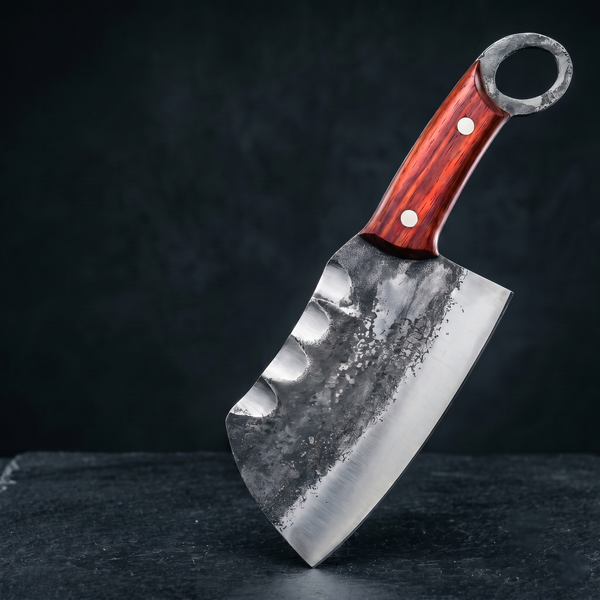
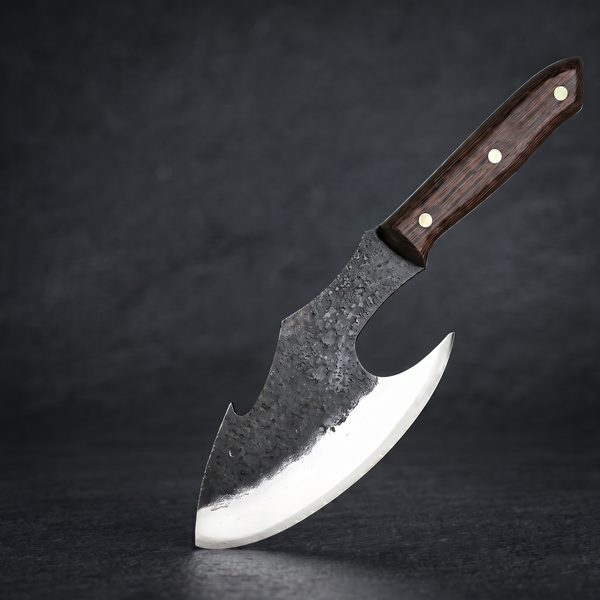
What are the best hand forged kitchen knives to start with?
Two knives cover most kitchens: a chef knife for everyday prep and a cleaver for anything with a bone in it. From this page, the Chef's Kiss 7" or the Kermode 7" handles vegetables and boneless meat, and the Warthog 6" or the Megalodon 6.6" takes joints and ribs. Add a trimming or fillet knife later if you smoke meat or catch fish. If you want everything in one box, the Mastercraft 4 Piece Set covers bone, fish and fine slicing. For the cleaver half of that decision, our guide on what a meat cleaver is used for explains which jobs actually need one.
What does the lineup cover?
| Knife | Blade | Best for |
|---|---|---|
| Chef's Kiss 7" | 7", tall with curved belly | All purpose prep, dicing, mincing and slicing |
| Kermode 7" | 7", tall chef's cleaver | Vegetables and meat with one blade |
| Warthog 6" | 6" | Joint breakdown, BBQ prep, camp cooking |
| Kraken 8" | 8" | Butchering, game processing, BBQ |
| Kodiak 8" | 8" drop point | Brisket, game breakdown, heavy BBQ prep |
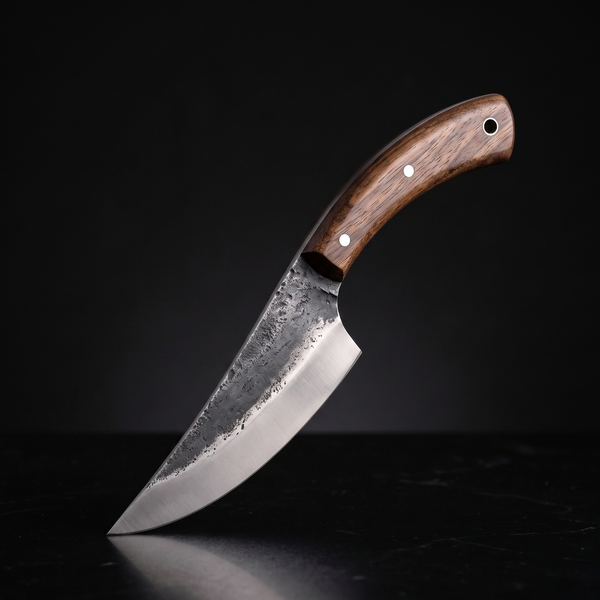
| Hellfang 5" | 5" | Trimming and detail butchering |
| Barracuda 13" | 8" blade, 13" overall | Filleting big fish |
| Mastercraft 4 Piece Set | 4 pieces | Bone, fish and fine slicing |
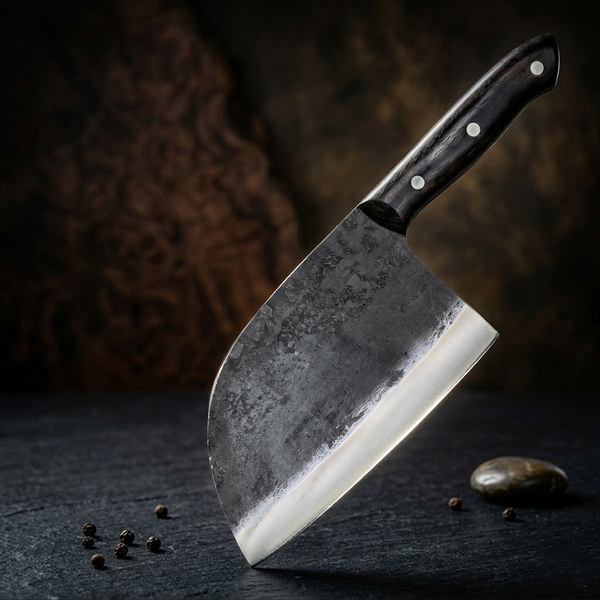
The heavy end of the page leans toward meat. The Kraken and Kodiak carry their weight forward for joints and game, while the Aurochs adds a spear point you rarely see on a cleaver, handy for getting into tight spots. At the light end, the Hellfang and the Barracuda do the careful work around fat, silverskin and fish bones.
What makes a hand forged knife different?
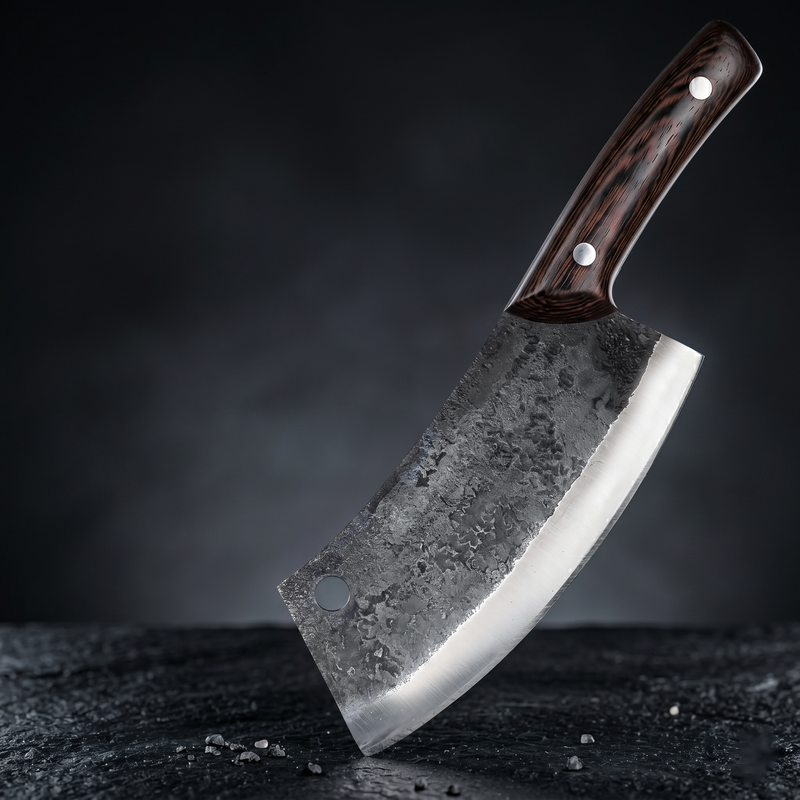
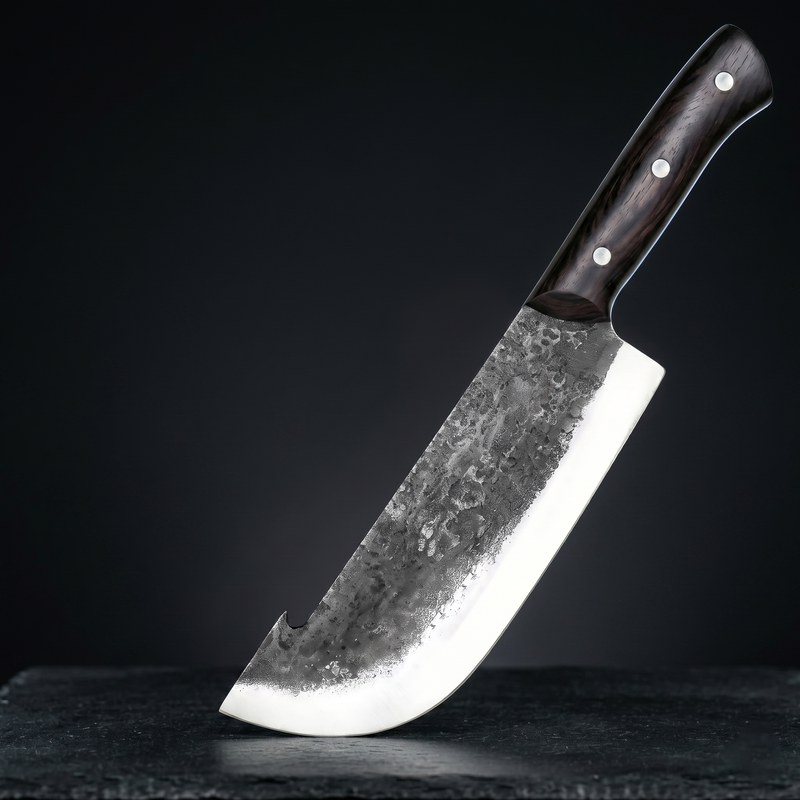
A stamped knife is cut out of a sheet of steel like a cookie. A hand forged knife starts as a bar that is heated and shaped under the hammer, one blade at a time. Ours are forged in the Serbian style: thick, cleaver shaped blades, hand hammered flats and the raw forge scale left on. Some, like the Megalodon, have a finger hole through the top of the blade for close control when trimming. The hammer texture also does some work, since dense food and wet meat release from it instead of clinging. Because every knife is forged on its own, yours will differ slightly from the photos and from every other one we make.
Why high carbon steel?
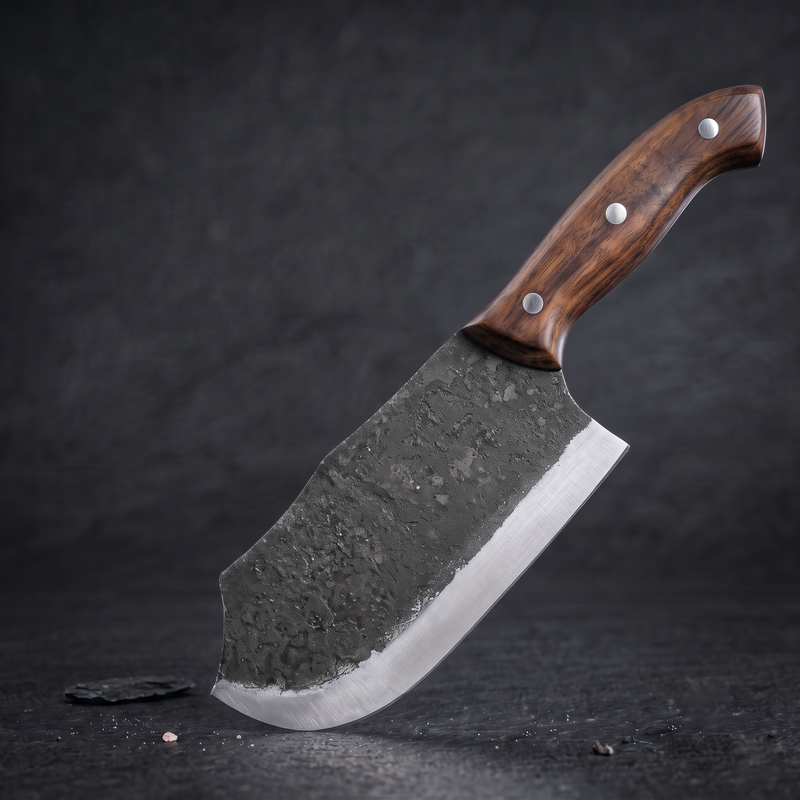
It takes a keen edge and sharpens up well on a stone. In return it asks one thing: keep it dry. Wash by hand, dry right away and wipe on a light coat of food safe oil. Leave it wet in the sink overnight and it will rust, which is on the sink, not the steel. Over time the blade darkens into a patina, which is normal. Our high carbon steel knife care guide walks through it. The Aurochs 6" and the 7.5" Hand Forged Butcher Cleaver both carry raw forge scale with a polished edge, so the flats look worn in from day one anyway.
What backs every knife on this page?
The numbers behind the brand are 250,000+ customers, 102,318 reviews and 5+ years of forging. You can read what people say on our reviews page. Every knife carries a lifetime warranty against defects in materials and craftsmanship, and the warranty page has the details. You have 30 days to send back any unused knife. Shipping is free in the USA and Australia, from warehouses in Memphis, Tennessee and Melbourne, Victoria. For more single blades, browse our hand forged meat cleavers and butcher knives.
Read before you buy
If you are new to hand forged knives, whether hand forged knives are worth the money gives a straight answer, including when a factory knife is the better buy. How forged and stamped knives differ explains what the hammer marks on these blades mean. Buying for someone else? Our knife gift ideas sort blades by occasion. If you mostly cook vegetables and boneless meat, our chef knives for everyday prep are the place to start.
Questions
What is a meat cleaver used for?
Chopping through joints, ribs and cartilage, splitting chickens and breaking down big cuts. The weight sits forward over the edge, so you let the blade drop rather than forcing it. Thick marrow bones still call for a saw. The Warthog 6" and the Kraken 8" on this page are both built for joint work.
What is a butcher knife used for?
Trimming and breaking down meat. A small butcher knife like the Hellfang 5" handles fat caps, silverskin and detail work where a cleaver is too much steel. A butcher cleaver like our 7.5" takes the heavy chopping and still rocks through a cut, thanks to its deep belly.
Can a butcher knife cut through bone?
A butcher cleaver can take joints, ribs and cartilage, which is what its forward weight is for. A slim butcher or trimming knife should stay off bone, since that is how edges chip. For thick marrow bones, even a heavy cleaver hands the job over to a saw.
What is a good fillet knife?
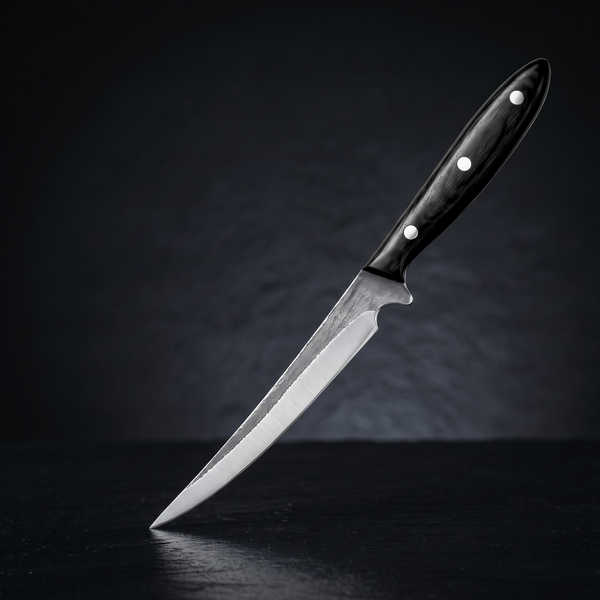
One long enough to run from head to tail in one stroke, with enough flex to follow the backbone. The Barracuda 13" has an 8" hammer textured high carbon steel blade with balanced flex for long strokes, and a black rosewood handle that stays put in wet hands.
Guides for Best Sellers
Are Hand Forged Knives Worth It? An Honest Answer
Are hand forged knives worth it? An honest answer from a forge. What the extra money actually buys, what it does not, how long...
Hand Forged vs Stamped Knives: What Actually Changes
Forged vs stamped knives, explained by people who forge them. How a stamped knife is made, how drop forged and hand forged knives differ,...
High Carbon Steel Knife Care: Rust, Patina, Oiling and Sharpening
High carbon steel rewards a simple routine. Here is how to wash, dry and oil a carbon steel knife, remove light rust, force a...