
How to Sharpen a Meat Cleaver: Angle, Stones and Step by Step
September 27, 2026 · By Matt
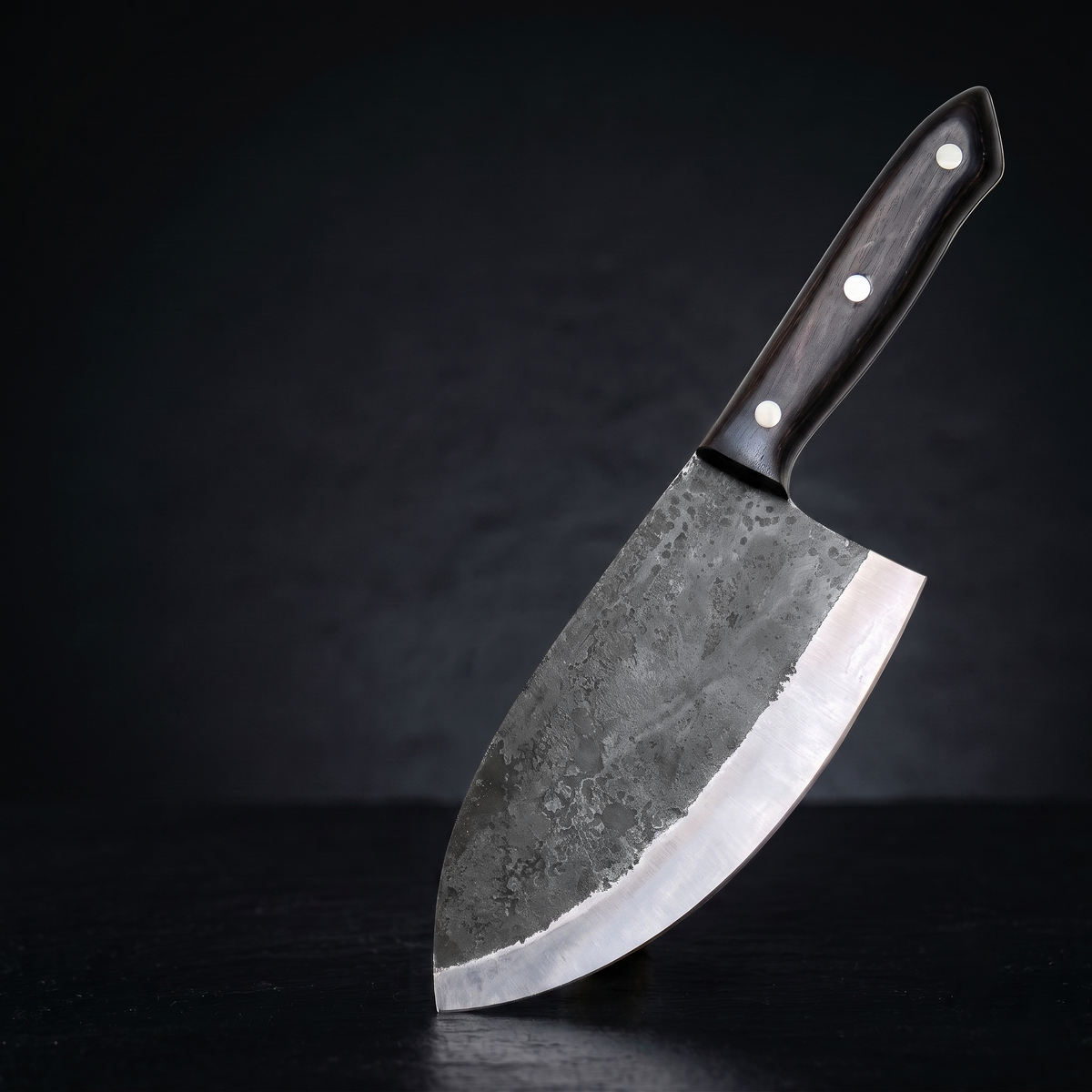
To sharpen a meat cleaver, find the angle of the bevel already on the blade, hold it steady on a medium whetstone and work one side until a burr forms along the whole edge. Flip it, raise a burr on the other side, refine on a fine stone, strip the burr and hone lightly between sharpenings.
People put off sharpening a cleaver because it looks like a lot of steel to move. It is a lot of steel, but you only sharpen the last sliver of it. The rest of the blade is there to make the edge hit hard, and it does not care whether you own a fancy stone. This guide covers what makes a cleaver edge different, how to pick the angle, the tools worth having, the method step by step, how to fix a chip, and how often to bother.
Why a Cleaver Edge Is Different
A chef knife is built to glide. It has a thin blade behind the edge and a fine angle, so it falls through an onion with almost no effort. A meat cleaver is built to land. The blade stays thick well down toward the edge, and the edge itself is usually ground more obtuse, meaning the two bevels meet at a wider angle. That wider angle leaves more steel right behind the cutting line, which is what lets the edge take a hit on a joint and come back for more.
So the goal is different too. You are not chasing a razor that shaves arm hair. You want an edge that bites cleanly into meat and skin, and holds up when it meets cartilage and bone. Sharpen a heavy cleaver like a thin slicer and it will look lovely right up until the first rack of ribs folds it over.
The Cleaver Sharpening Angle
As general practice, many thin kitchen knives are sharpened somewhere around 15 to 20 degrees per side. Heavy cleavers and bone choppers are usually sharpened wider, often around 20 to 25 degrees per side or more. Those are common ranges from the sharpening world, not a specification for any knife we make. We do not publish a factory grind angle for our cleavers, and hand forged blades vary a little from one to the next anyway.
The honest answer is to match the bevel that is already there. It is the angle the edge was finished at, and following it takes off the least steel. The marker trick finds it in about a minute:
- Color the whole bevel on one side with a permanent marker.
- Set the cleaver on the stone at the angle you think is right and make two light strokes.
- Look at the ink. If it came off evenly across the bevel, you have the angle. If it only came off near the edge, raise the spine a little. If it only came off at the top of the bevel, lower it.
Once the ink comes off evenly, remember how that feels in your wrist. That is your angle for this cleaver.
Tools You Need, and Tools to Skip
What to have
A combination whetstone with a medium side and a fine side covers most of the work. Add a coarse stone if you ever need to repair a chip. A honing steel or ceramic rod keeps the edge in line between sessions. A damp towel under the stone stops it sliding around, which matters more than usual when the blade on top of it weighs as much as a small hammer.
| Tool | Typical grit | What it does on a cleaver |
|---|---|---|
| Coarse stone | Low hundreds | Removes chips and resets a badly rolled edge |
| Medium stone | Around 1000 | Everyday sharpening, raises the burr |
| Fine stone | Several thousand | Refines and polishes the edge, optional on a bone cleaver |
| Honing steel or ceramic rod | None, or very fine | Pushes a rolled edge back into line between sharpenings |
| Leather strop | None | Strips the last of the burr after the fine stone |
Grit numbers vary between stone makers, so treat the table as a rough guide rather than gospel.
What to avoid
Pull through sharpeners are the big one. They are made for thin knives, and a tall, heavy cleaver either will not fit in the slot or sits in it at whatever angle the gadget decided on, which may have nothing to do with the bevel on your blade. They also tend to chew off more metal than the job needs. Bench grinders are faster still, and that is the problem. A grinder can overheat a thin edge in seconds and ruin the steel right at the spot you were trying to fix. And skip the back of a ceramic mug. It works in a pinch on a cheap knife, and a cleaver deserves a pinch less often.
How to Sharpen a Meat Cleaver on a Whetstone
- Prep the stone. Soak it or splash it, depending on what its maker says, and set it on the damp towel medium side up.
- Find the angle. Use the marker trick above until the ink comes off evenly.
- Work the first side. Push the edge across the stone, edge leading, with light, steady pressure. The weight of the cleaver already does a lot of the pressing, so you need less push than you would on a chef knife.
- Go in sections. A long cleaver edge will not all fit on the stone at once. Split it into heel, middle and front, and give each section the same number of strokes so you do not end up with a wavy edge.
- Feel for the burr. Run a fingertip gently off the edge on the opposite side, from spine toward edge, never along it. A small rough lip along the full length means that side is done. No burr, keep going.
- Flip and repeat. Do the second side at the same angle until the burr flips back the other way.
- Refine. Move to the fine stone and repeat with fewer strokes and lighter pressure. On a cleaver that mostly cracks bone you can skip this step. A slightly toothy edge bites meat well.
- Remove the burr. Finish with a few very light alternating strokes, one per side, or a few passes on a strop, spine leading.
- Test and clean up. Slice a sheet of paper or the skin of a tomato. Then rinse the cleaver, dry it at once and wipe on a light coat of food safe oil.
Curved bellies and odd shapes
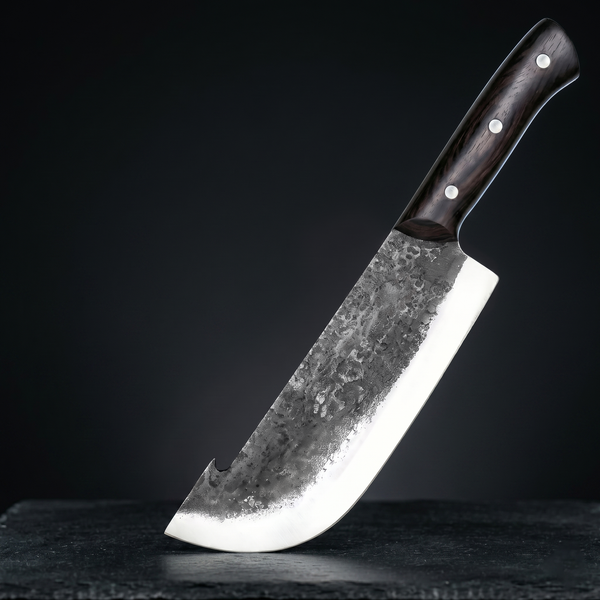
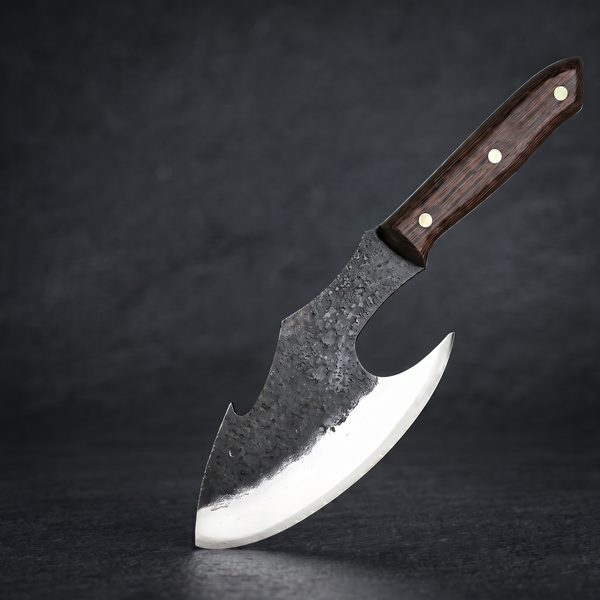
On a cleaver with a curved belly, like our 7.5" Hand Forged Butcher Cleaver or the drop point Kodiak 8" butcher cleaver, lift the handle slightly as you reach the curve so the bevel stays flat on the stone all the way to the tip. On the Razorback 6", the saw tooth spine is not part of the job. Leave it alone and sharpen only the edge.
Keep the flats off the stone
Most of our cleavers keep dark forge scale or hammer texture on the upper flats, with only the edge polished. Only the bevel should touch the stone. Grinding the scale off the flats will not make the knife any sharper, and it strips away the finish that helps meat fall off the blade.
How to Sharpen a Chef Knife, and What Changes
The method is the same on a chef knife. The differences are the angle and the pressure. A thin chef knife is usually sharpened at the lower end of the ranges above, and it needs lighter pressure, because the thin steel behind the edge flexes and rolls more easily. You also cannot rely on the weight of the blade to do the pressing, so keep a couple of fingertips on the flat near the edge to hold it on the stone. The marker trick still decides the angle. On a tall Serbian style chef knife that sits between a chef knife and a cleaver, match whatever the marker tells you rather than guessing which camp it belongs to.
Fixing Chips in a Cleaver Edge
Chips happen when a cleaver meets something harder than it expected, usually a frozen roast, a stone board or a bone struck at an angle. Small chips come out in a normal sharpening session. For a chip you can see from across the kitchen, go to the coarse stone:
- Hold the cleaver upright with the edge straight down on the coarse stone and draw it lightly along a few times. This flattens the edge back to the bottom of the chip.
- Rebuild the bevel on each side on the coarse stone at your usual angle until a burr forms along the full length.
- Move to the medium stone and sharpen as normal.
It takes a while on a heavy blade. That is the price of cutting frozen meat with a cleaver, and one good reason not to. If you think the steel itself failed rather than the frozen roast, check our warranty page for what the lifetime warranty covers.
Honing Between Sharpenings
A honing steel does not remove much metal. It straightens an edge that has rolled over after a few hard sessions, which is why a cleaver that feels dull can come back after a handful of strokes. Stand the rod upright with its tip on a towel, hold the cleaver at roughly the angle you sharpen at, and draw the edge down the rod from heel to front, alternating sides. Five or six light strokes per side is plenty. A heavy cleaver needs almost no pressure on the rod. Press hard and you undo the point of honing.
How Often to Sharpen a Cleaver
It depends on what it hits. A cleaver that splits ribs every weekend needs the stone more often than one that portions chicken on Sundays. The signs are easy to read: it starts crushing skin instead of cutting it, it bounces off a tomato, or it drags through meat it used to fall through. Hone first. When honing stops bringing the edge back, go to the stone. Cutting on a wood or plastic board and keeping it away from frozen food will stretch the time between sessions more than any gadget will.
After sharpening, care is the same as always: hand wash, dry right away, light coat of food safe oil, no dishwasher and no soaking. Our full routine is in the high carbon steel knife care guide. If your current cleaver is past saving, our hand forged meat cleavers run from light prep choppers up to the Mammoth 9.1", and our guide to the best meat cleaver will help you pick one before you have to learn to sharpen it.
A sharp cleaver only stays sharp if you ask it to do cleaver work. The jobs a meat cleaver is built for covers what to chop and what to leave alone, which is also the cheapest way to spend less time at the stone.
Questions
What angle should I sharpen a meat cleaver at?
Heavy cleavers are commonly sharpened wider than thin kitchen knives, often around 20 to 25 degrees per side or more. That is general practice, not a fixed rule for any one knife. The simplest way to get it right is to color the bevel with a marker and match the angle already on the blade.
Can I use a pull through sharpener on a cleaver?
We would not. Most pull through sharpeners are made for thin knives, so a tall, heavy cleaver either does not fit or sits at whatever angle the slot sets, which may not match your bevel. They also remove more metal than they need to. A whetstone takes longer and gives you a better, longer lasting edge.
How do I know when my cleaver needs sharpening?
It crushes skin instead of cutting through it, bounces off a tomato, or drags through meat it used to go through easily. Try a honing steel first, since a rolled edge often comes straight back. When a few light strokes on the rod no longer help, the cleaver is ready for the stone.
Can I sharpen a cleaver with a honing steel?
A honing steel straightens a rolled edge but removes very little metal, so it maintains an edge rather than restoring a dull one. Hold the rod upright, match your sharpening angle and draw the cleaver down it lightly a few times per side. Once honing stops working, the cleaver needs a whetstone.
How do I fix a chip in a meat cleaver?
Small chips come out during a normal sharpening. For a bigger chip, draw the edge upright across a coarse stone until the chip is gone, rebuild the bevel on both sides at your usual angle, then move to a medium stone. It takes patience on a heavy blade, so keep it away from frozen meat.
Shop the knives from this guide
Keep reading
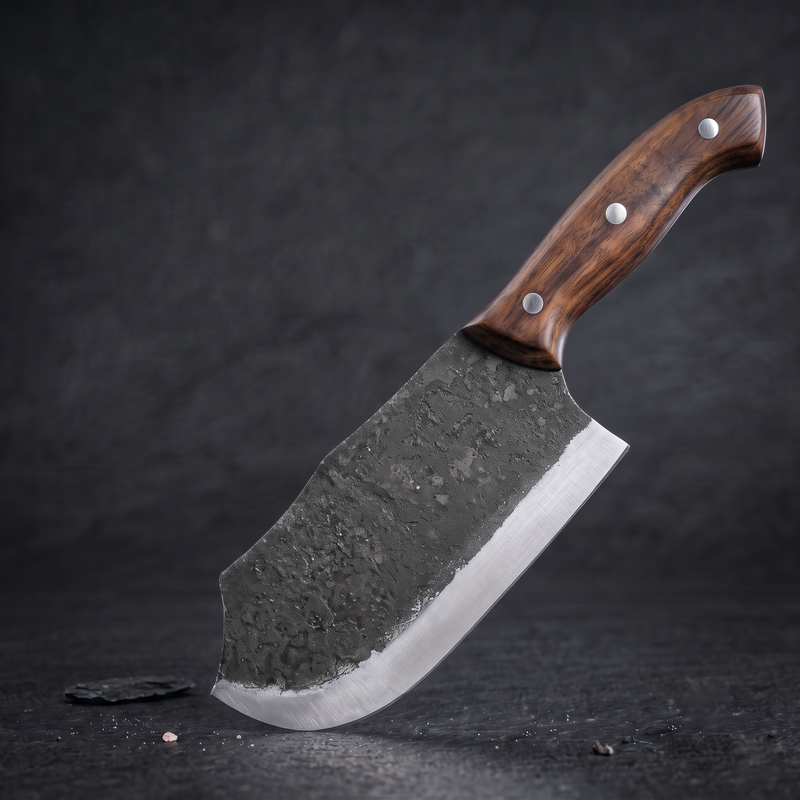
High Carbon Steel Knife Care: Rust, Patina, Oiling and Sharpening
High carbon steel rewards a simple routine. Here is how to wash, dry and oil a carbon steel knife, remove light rust, force a...
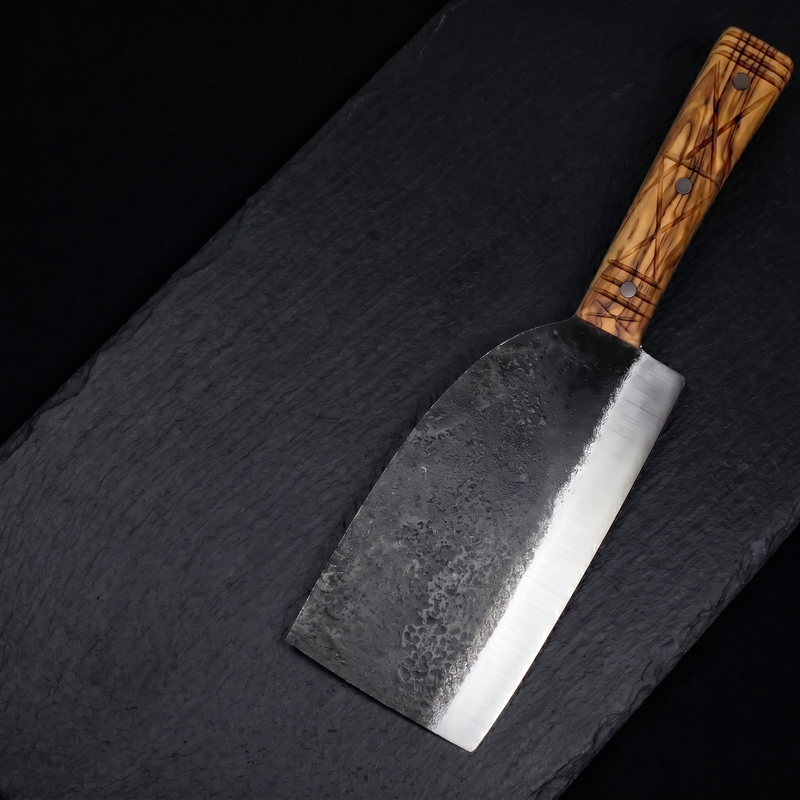
How to Pick the Best Meat Cleaver for Your Kitchen
A buyer's guide to the best meat cleaver for your kitchen. What weight, blade length, height, spine, handle, finger hole and steel actually change,...
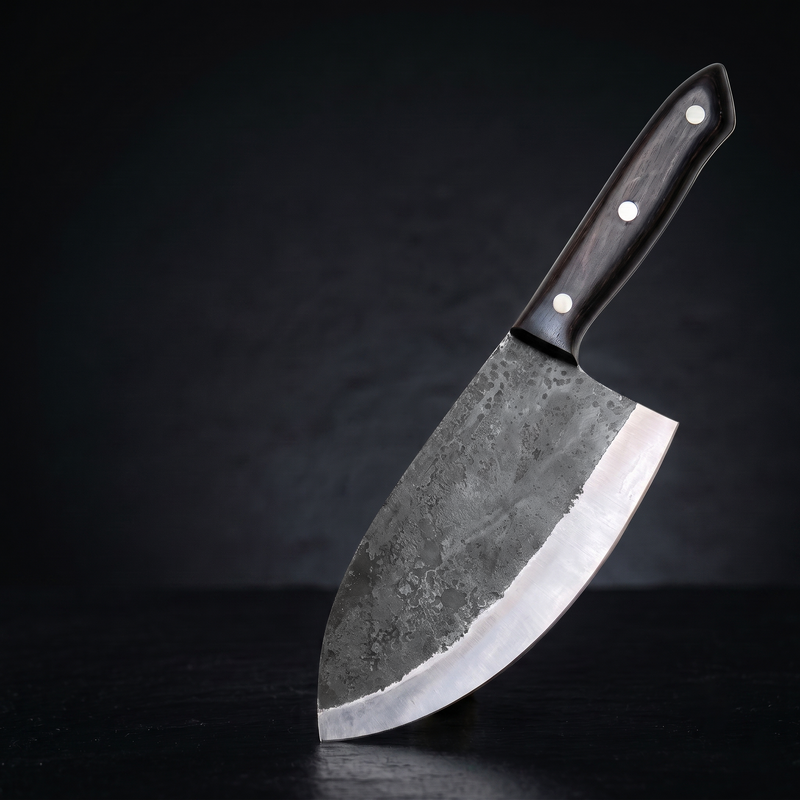
What Is a Meat Cleaver Used For? 9 Jobs It Does Better Than Your Chef Knife
What is a cleaver knife used for? Nine kitchen jobs a meat cleaver does better than your chef knife, from spatchcocking chicken and portioning...