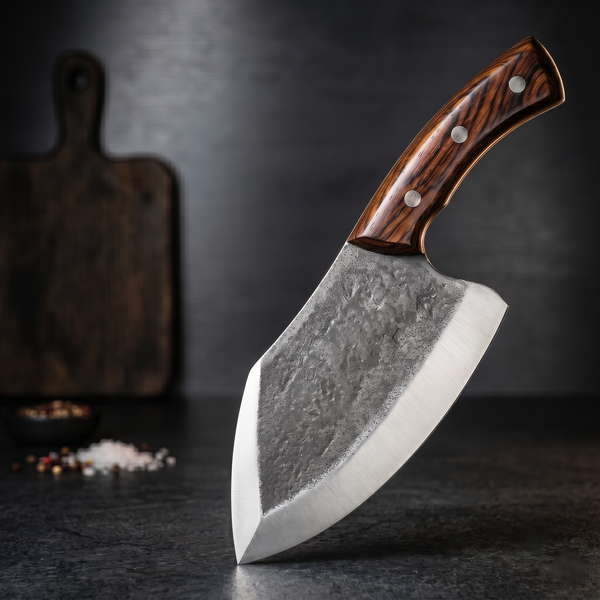
Hand Forged Chef Knives
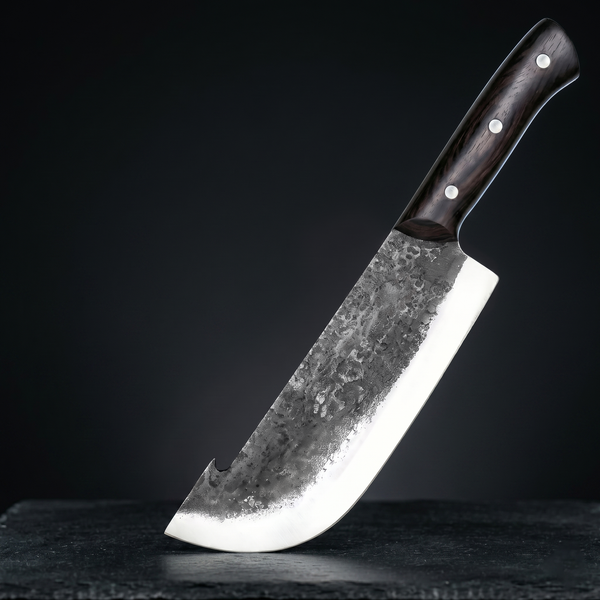
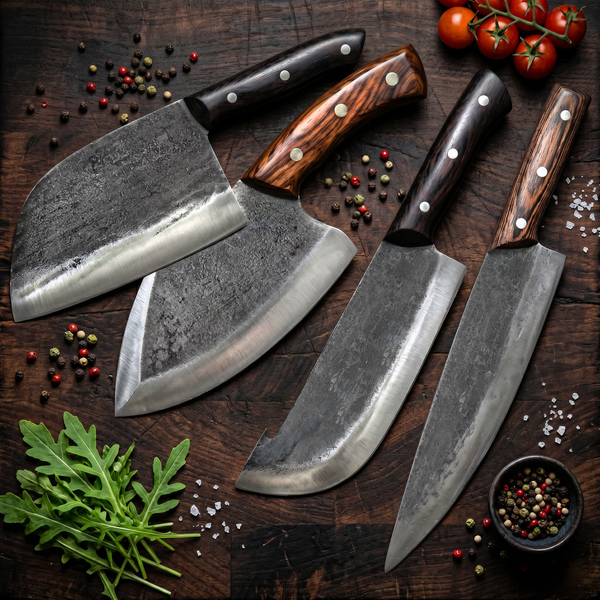
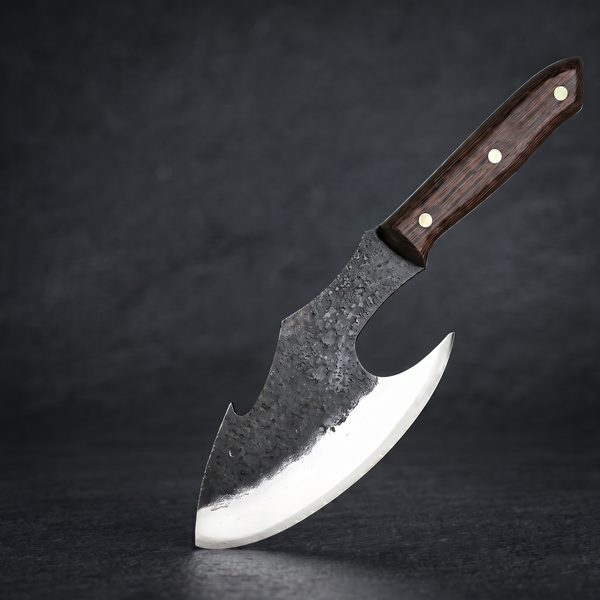
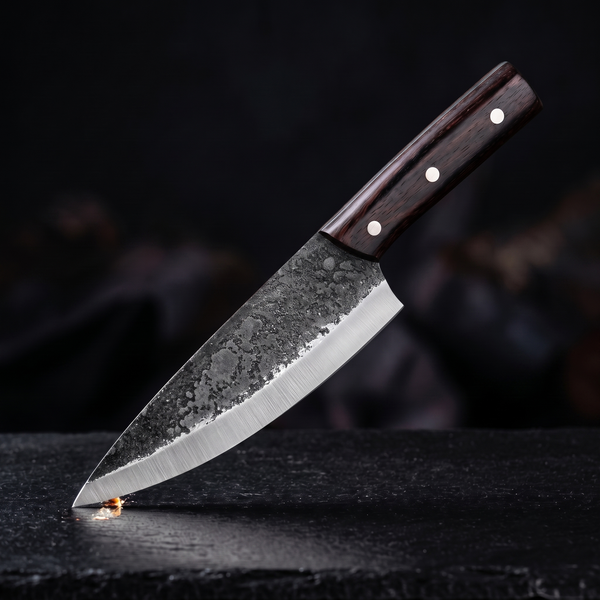
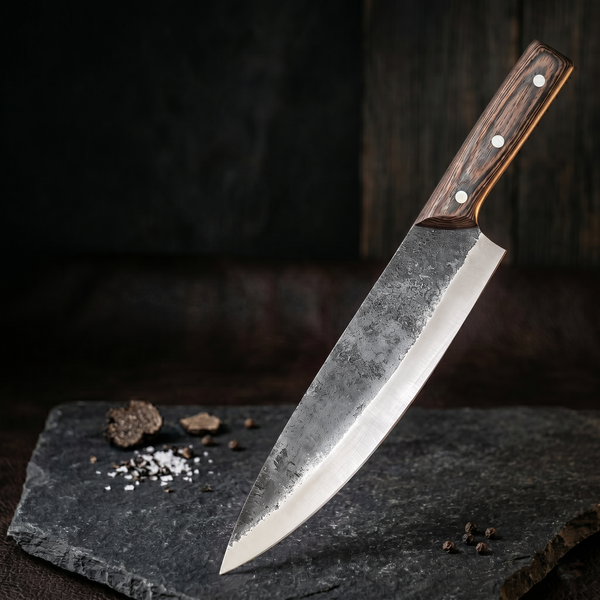
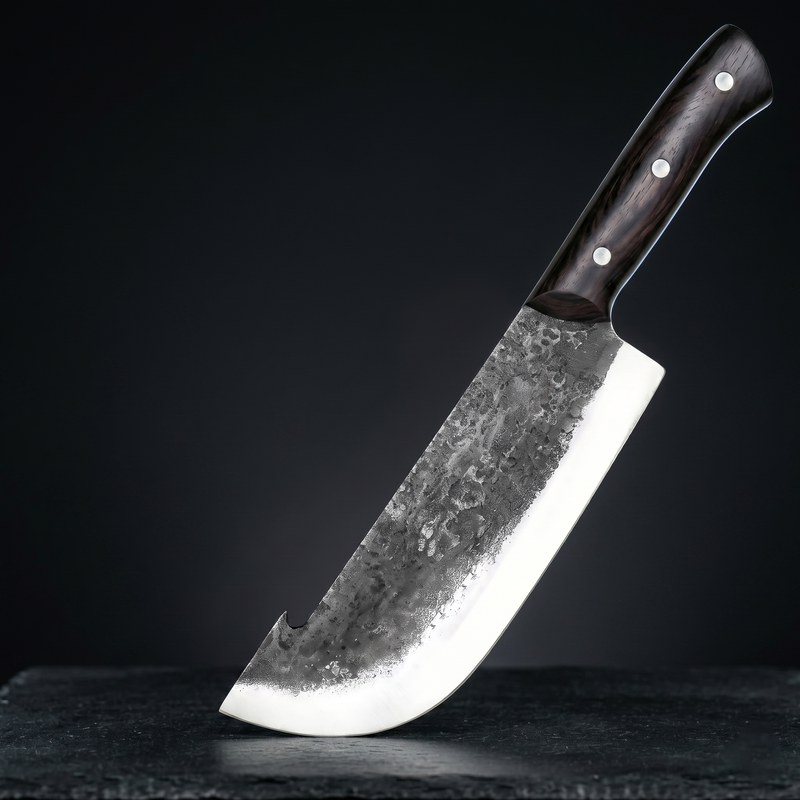
Our hand forged chef knives are the ones that live on the cutting board, not in a drawer. Each blade is shaped under the hammer from high carbon steel and fitted to a full tang wooden handle held with steel pins. There are four of them. The Orca 7" is the quick everyday knife, 12" overall. The Ironclad 8.7" gives you reach for big produce and roasts. The Chef's Kiss 7" and the Kermode 7" are tall Serbian chef knives that rock like a chef knife and chop like a small cleaver. If that shape is new to you, read our Serbian chef knife guide before you choose. None of the four is a bone knife. That is what a cleaver is for.
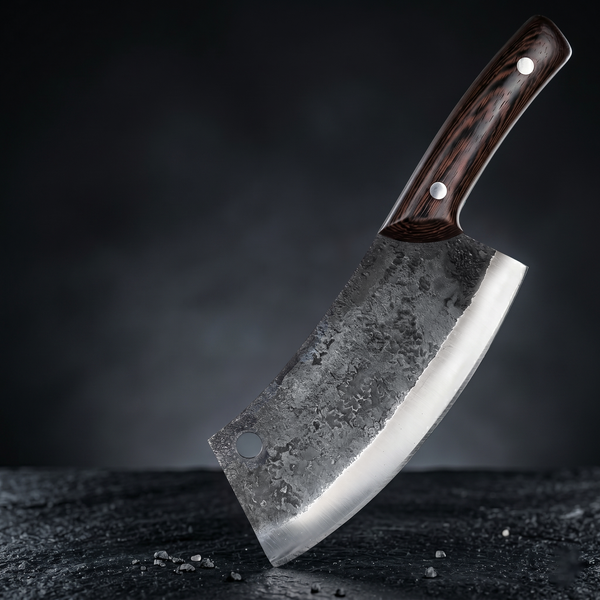
What is a chef's knife used for?
Most of what happens on a cutting board. A chef knife dices onions, minces garlic, rocks through herbs, slices peppers and portions boneless meat like chicken breast or pork loin. The curved belly lets you rock the edge without lifting the tip, and the length lets you push through a cabbage or a squash in one stroke. What it should not do is chop bone, split frozen food or pry anything open. Those jobs wreck edges. If your cooking leans toward ribs and joints, pair your chef knife with something from our hand forged meat cleavers.
What is a Serbian chef knife?
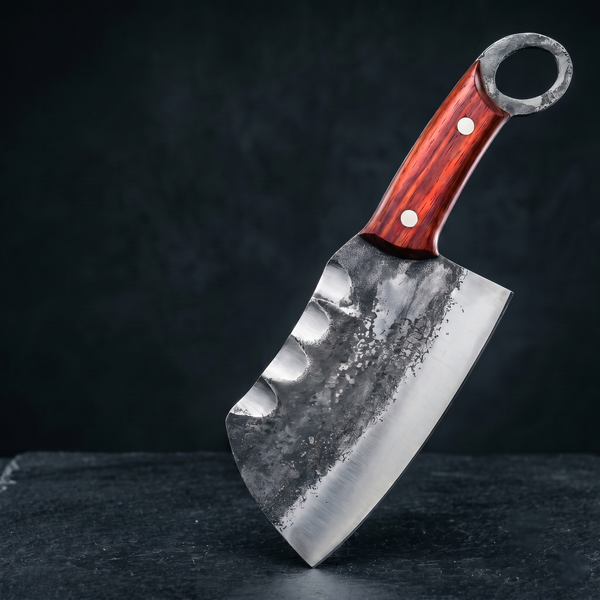
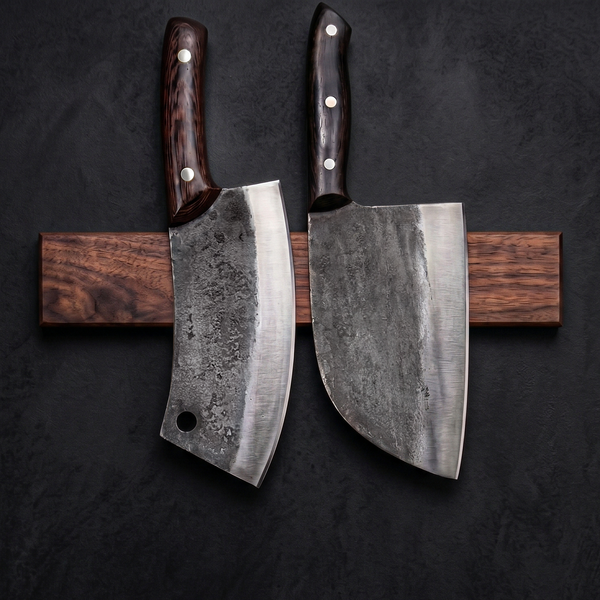
It is a handmade chef knife with a tall, wide blade, hammer marked flats and a finish that looks like it came straight off the anvil, because it did. Serbian style describes how the blade is forged and the shape that comes out of it. The height gives your knuckles room to clear the board, and the wide face works as a scoop to carry diced food to the pan. The Chef's Kiss has a hammer textured face and an edge finished by hand. The Kermode is shaped as a chef's cleaver with a steady curve for rocking cuts. Both look like they could take on a rack of ribs. They should not be asked to. Our full guide to the Serbian chef knife goes through the shape in more detail.
Which of our chef knives fits your kitchen?
Start with how much you cook and how big your board is. A 7" blade suits most home kitchens and most cooks. The 8.7" Ironclad pays off when you prep in volume and have the counter space to swing it.
| Knife | Blade | Best for |
|---|---|---|
| Orca 7" Chef Knife | 7", 12" overall | Everyday prep, slicing, dicing and mincing |
| Chef's Kiss 7" Serbian Chef Knife | 7", tall profile with curved belly | All purpose prep, dicing, mincing and slicing |
| Kermode 7" Chef Cleaver | 7", tall chef's cleaver profile | All purpose prep, vegetables and meat |
| Ironclad 8.7" Chef Knife | 8.7", 13.7" overall | Heavy daily prep, slicing, dicing and BBQ |
All four are forged one at a time, so the hammer marks on yours will not match the photos exactly. That is the whole idea of a forged chef knife. If you would rather cover the kitchen in one go, our hand forged knife sets pair a chef knife with cleavers.
How do you hold a chef knife?
Use a pinch grip. Pinch the blade with your thumb and the side of your index finger just in front of the handle, then wrap your other three fingers around the handle. It feels odd for about a week and then it feels like the only sensible way. You get far more control than with a fist around the handle, and the knife stops twisting in dense food. Your other hand holds the food in a claw, fingertips tucked back and knuckles resting against the flat of the blade. On a tall blade like the Chef's Kiss there is plenty of flat to rest against. Keep the tip on the board and rock, or lift and push forward for clean slices.
How do you sharpen a chef knife?
A whetstone does the best job. Wet the stone the way its maker says, hold the blade at the same low angle as the existing edge, and work one side along the full length, belly and tip included, until you can feel a small burr on the other side. Switch sides and repeat, then finish with lighter alternating strokes on a finer grit to take the burr off. Between sharpenings, a few passes on a honing rod keep the edge straight. Skip the pull through gadgets that chew steel off the edge. High carbon steel sharpens up well on a stone, so this is a short job once you have done it twice.
How do you keep a high carbon steel chef knife in shape?
Wash it by hand, dry it straight away and wipe on a light coat of food safe oil. No dishwasher and no soaking in the sink. Over time the blade darkens into a patina, which is normal for high carbon steel. Rust only starts when water is left sitting on it. Our high carbon steel knife care guide goes into more detail. Every chef knife here carries a lifetime warranty against defects in materials and craftsmanship, and unused knives can be returned within 30 days.
Read before you buy
Our guide to what a chef knife does all day covers the jobs, the pinch grip and blade height. If you cook a lot of meat on the bone, read chef knife vs cleaver before you pick. And if you want to know what hand forging changes on a kitchen knife and what it does not, forged versus stamped blades is the blunt version. A chef knife is one of the safer picks among our hand forged knife gifts, and our customer favorites show which blades people order most.
Questions
Is a 6 inch or 8 inch chef knife better?
For most home cooks the answer sits in between. The Orca, Chef's Kiss and Kermode all have 7" blades, which handle vegetables, herbs and boneless meat without feeling like a sword. If you prep for a crowd or cut big roasts and melons, the 8.7" Ironclad gives you the extra reach.
What makes a good chef's knife?
Steel that takes a keen edge and comes back easily on a stone, plus a blade length you will actually use. The handle matters too. On our chef knives the high carbon steel tang runs the full length of the handle, and steel pins hold the wood in place so nothing works loose.
How do you hone a chef knife?
Stand a honing rod upright with its tip on a folded towel. Draw the blade down and across the rod at a low, steady angle, from heel to tip, and alternate sides for a handful of light passes. Honing straightens the edge but removes very little steel, so you still need a stone now and then.
Is a chef's knife the same as a carving knife?
No. A carving or slicing knife is long and narrow, made for single clean strokes through cooked meat. A chef knife is shorter and taller, made for prep. For brisket and big roasts, the 11" Mamba slicing knife in our BBQ knives collection is the better tool.
How do you sharpen a Serbian chef knife?
The same way as any chef knife: on a whetstone, following the angle of the existing edge. The tall blade does not change the edge itself. Lift the handle slightly as you work around the curved belly so the whole edge meets the stone, then take the burr off with light alternating strokes.
Guides for Hand Forged Chef Knives
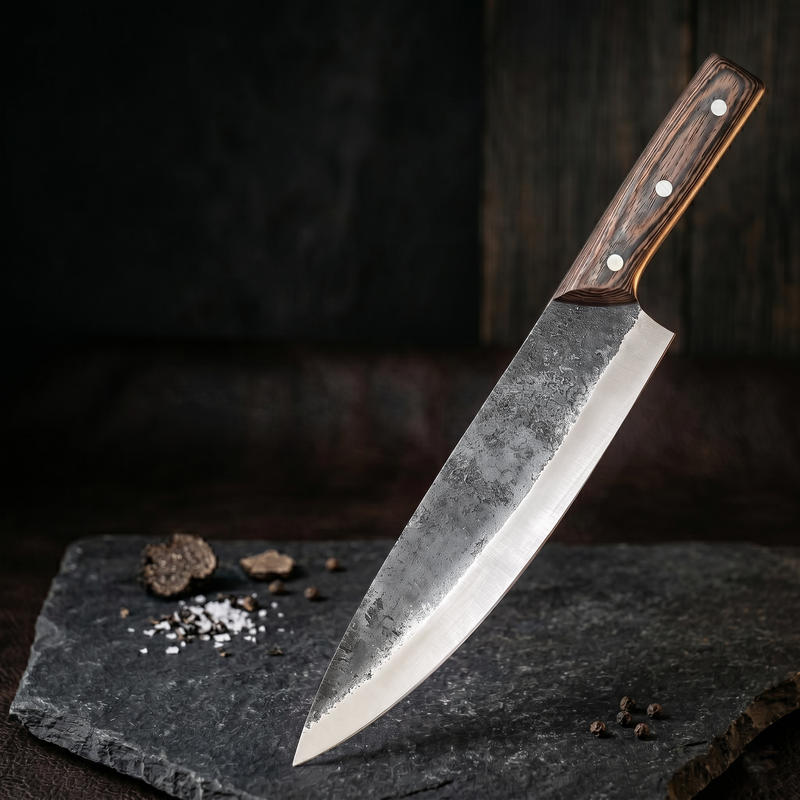
What Is a Chef Knife Used For? Jobs, Sizes and How to Hold One
What a chef knife is used for, and what it should never be asked to do. How to pick a blade length for your...
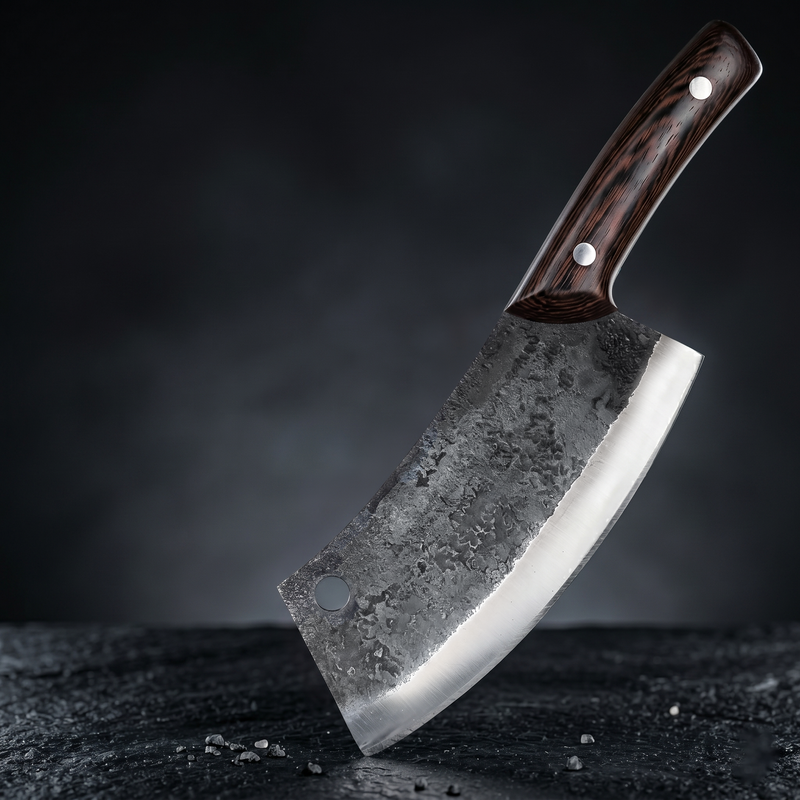
What Is a Serbian Chef Knife? The Cleaver Shaped Blade Explained
A Serbian chef knife is a thick, hand forged, cleaver shaped chef knife that chops, rocks and scoops. Here is what the style really...
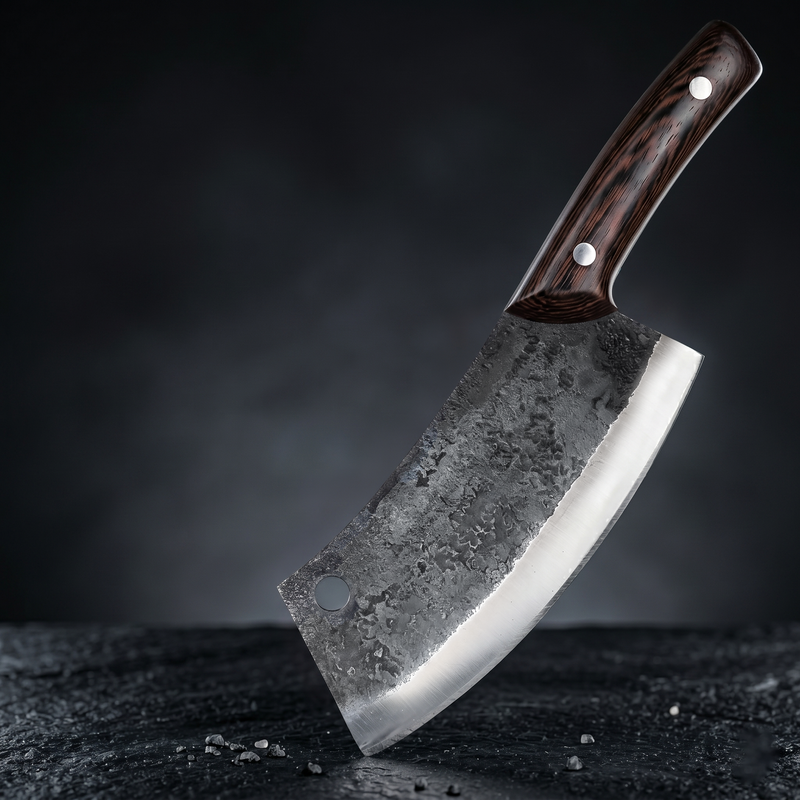
Cleaver vs Chef Knife: Which One Do You Actually Need?
Cleaver or chef knife? What each knife is actually for, where the tall Serbian style chef cleaver sits between them, how weight and cutting...
Hand Forged vs Stamped Knives: What Actually Changes
Forged vs stamped knives, explained by people who forge them. How a stamped knife is made, how drop forged and hand forged knives differ,...