
Beef Wellington Without the Panic
A calm, step by step beef Wellington recipe built on a properly trimmed center cut tenderloin, dry mushroom duxelles, prosciutto and puff pastry.
By Chef Umais Ahmed,
- Total time 3 hr
- Serves 6
- Hard difficulty
- Oven
Knives used for this recipe
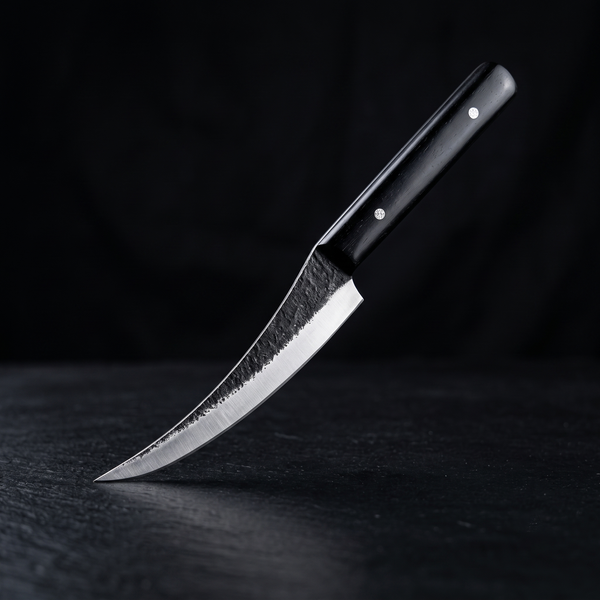
In this recipe Takes the chain and silverskin off the center cut tenderloin so it cooks straight and even.
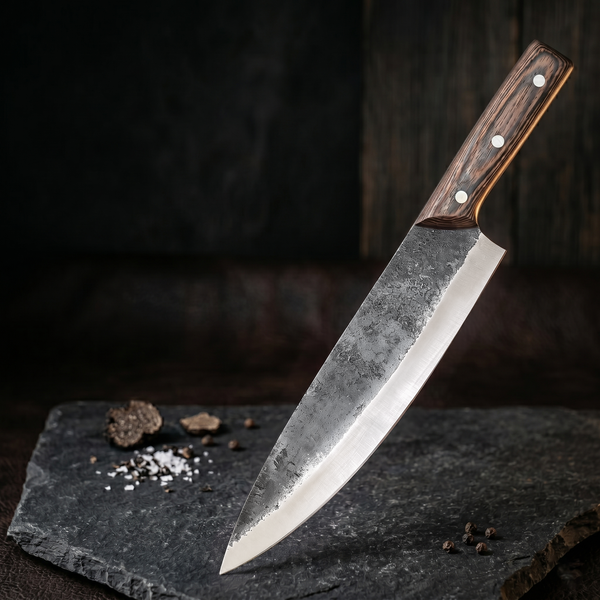
In this recipe Minces the mushrooms and shallots for the duxelles and cuts clean slices through the baked pastry.
Free shipping in the USA and Australia
On this page
Beef Wellington has a reputation for wrecking Christmas dinners, mostly because people skip the boring parts. Trim the tenderloin properly, cook the mushrooms until they are dry, chill everything between stages, and the oven does the rest. This is how to make beef Wellington without hovering over the oven door like it owes you money.
The knife for this job
Two blades carry this recipe. The Mako 7.5" Hand Forged Boning Knife trims the center cut beef tenderloin. Its trailing point blade slips under silverskin and lifts it off in long strips without taking good meat with it. The Ironclad 8.7" Hand Forged Chef Knife handles everything else: mincing a mountain of mushrooms and shallots, then cutting clean slices through baked pastry at the table. If you want both covered and a few spares for the rest of the kitchen, the Mastercraft 4 piece set is the tidy answer.
A dull knife on puff pastry does not slice. It squashes, and you end up serving beef with a flattened lid.
Buying the center cut beef tenderloin
Ask for the center cut, sometimes sold as chateaubriand. You want an even log of about 2 to 2.5 lb (900 g to 1.1 kg) so it cooks at the same rate from end to end. A whole untrimmed tenderloin is cheaper per pound, and you can cut your own center from it, then keep the tail and head for steak or stir fry.
Trimming with the boning knife
- Pat the meat dry. Pull away the loose fat by hand where it lifts easily.
- Find the chain, the narrow strip of meat and fat running along one side. Run the Mako along the seam and take it off. Save it for a stir fry.
- Slide the tip under one end of the silverskin. Angle the edge slightly up toward the skin, grip the loose tab, and draw the blade along in short strokes. Turn the meat and repeat until it is clean.
- Square off the ends so you have an even cylinder. Tie it with butcher's twine every inch or so to hold the shape while it sears.
Silverskin does not render in the oven. Leave it on and it shrinks, bends the fillet into a banana and sends your pastry sideways.
Sear and season
Season the tenderloin hard with salt and black pepper. Get a heavy skillet very hot with a splash of neutral oil and sear every side, ends included, about 1 to 2 minutes a side. You are building colour, not cooking the middle. Lift it onto a rack, snip off the twine, and brush all over with English mustard while it is still warm. Let it cool completely. Warm beef wrapped in cold pastry is how soggy bottoms are born.
The mushroom duxelles
Duxelles is just mushrooms chopped very fine and cooked until the water has gone. It is the layer that keeps the pastry dry, so it matters more than it looks.
Mincing with the chef knife
You can use a food processor, but pulse it once too often and you get mushroom paste. I prefer the Ironclad for this. The long, tall blade lets you rock through a big pile in a few passes.
- Peel and halve the shallots, then cut them into a fine dice. Mince the garlic and strip the thyme leaves.
- Slice the mushrooms thin, then gather them into a pile and rock the knife through them, turning the board and scraping the pile back together, until the pieces are about the size of coarse breadcrumbs.
- Melt butter in a wide pan over medium heat. Soften the shallots and garlic for 2 minutes, then add the mushrooms and thyme.
- Cook, stirring now and then, for 12 to 15 minutes until the pan is dry and the mixture starts to stick. Add a splash of white wine or brandy if you like and cook it off. Season and spread on a plate to cool.
If you think it is dry enough, give it three more minutes. Nobody has ever complained that their duxelles was too dry.
Wrap it twice
Lay a long sheet of plastic wrap on the bench. Overlap the prosciutto slices on it in a rectangle wide enough to go around the beef. Spread the cold duxelles over the prosciutto in a thin, even layer. Set the tenderloin along the near edge and use the plastic to roll everything into a tight log. Twist the ends like a sweet wrapper and chill for 30 minutes so it holds its shape.
Roll the puff pastry on a floured bench to a rectangle big enough to wrap the log with a small overlap. Unwrap the beef, place it on the pastry, brush the edges with beaten egg and roll it up, seam underneath. Trim the excess pastry at the ends with the chef knife, fold the ends under, and press to seal. Too much pastry at the ends just stays raw, so cut it back rather than folding it over three times.
Brush the outside with egg yolk, score a light crosshatch with the back of the knife, and sprinkle with flaky salt. Chill again for 20 to 30 minutes. Cold pastry puffs. Warm pastry slumps.
Bake and check the temperature
Heat the oven to 400°F (200°C) with a heavy baking tray inside. Slide the Wellington onto the hot tray on a sheet of baking paper so the base starts cooking straight away. Bake for 35 to 45 minutes, until the pastry is deep golden.
A probe thermometer is the only honest way to know where the middle is. For medium rare, pull it at 120 to 125°F (49 to 52°C). It climbs to about 130 to 135°F (54 to 57°C) as it rests. The USDA minimum for whole cuts of beef is 145°F (63°C) with a 3 minute rest, so cook it to that if you are serving anyone who needs it fully safe. Push the probe in through the end at a shallow angle to avoid punching holes through the top.
Rest it for 10 minutes on a board. Cutting straight from the oven loses the juice into the pastry, and you have spent too long keeping that pastry dry to flood it now.
Slicing the Wellington
This is where the chef knife earns its place. Use the full length of the Ironclad in one long, light stroke, letting the edge cut through the crust before you add any downward pressure. Pressing straight down crushes the pastry and pushes the duxelles out the sides. Cut slices about 1 inch (2.5 cm) thick and wipe the blade clean between cuts so each slice looks like the first.
A sharp edge makes all the difference here. If yours has gone soft, our guide on sharpening kitchen knives with a whetstone will sort it before Christmas, and the full range of chef knives is there if you need a new one.
Xcutlery Cooking Hub, www.xcutlery.com
Recipe card
Beef Wellington Without the Panic
- Prep
- 1 hr
- Cook
- 1 hr
- Total
- 3 hr
- Serves
- 6
- Cook on
- Oven
- Difficulty
- Hard
Ingredients
Amounts make 1 Wellington, 6 servings. Tap an ingredient to tick it off.
Beef
Duxelles
Wrapping
Knives
Method
Tap a step when it is done.


Done temperatures
| What | Temperature |
|---|---|
| Pull for medium rare | 120 to 125°F (49 to 52°C) |
| Medium rare after rest | 130 to 135°F (54 to 57°C) |
| USDA minimum, whole beef with 3 minute rest | 145°F (63°C) |
| Oven | 400°F (200°C) |
Nutrition per serving
Estimate for 1 serving (of 6), worked out from USDA FoodData Central values for the ingredients above. Your numbers will move with the cut, the trim and how heavy your hand is with the salt.
- Calories
- 691
- Protein
- 55 g
- Fat
- 38 g
- Saturated fat
- 20 g
- Carbs
- 32 g
- Sugar
- 4 g
- Fiber
- 3 g
- Sodium
- 1340 mg
- Cholesterol
- 220 mg
Notes. You can wrap the Wellington in pastry up to 24 hours ahead and keep it covered in the fridge. Add 5 to 10 minutes to the bake if it goes in straight from cold.
Recipe by Chef Umais Ahmed for the Xcutlery Cooking Hub. https://www.xcutlery.com/blogs/recipes/beef-wellington-recipe
Questions
What cut of beef is best for beef Wellington?
The center cut of the beef tenderloin, sometimes sold as chateaubriand. It is an even thickness from end to end, so the whole log cooks at the same rate. The thinner tail would overcook before the middle is ready.
How do you stop beef Wellington getting a soggy bottom?
Cool the seared beef completely, cook the duxelles until the pan is dry, and chill the wrapped log before it goes in the oven. Baking on a preheated tray also starts the base cooking straight away.
What temperature should beef Wellington be inside?
For medium rare, pull it at 120 to 125°F (49 to 52°C) and let it rest, and it will finish around 130 to 135°F (54 to 57°C). The USDA minimum for whole cuts of beef is 145°F (63°C) with a 3 minute rest.
Can I make beef Wellington ahead of time?
Yes. Wrap it in pastry up to 24 hours ahead, cover it and keep it in the fridge. Brush with egg yolk just before baking and allow a few extra minutes in the oven.
What knife do you need to cut beef Wellington?
A long, sharp chef knife. The length lets you cut through the pastry with one light stroke instead of pressing down and crushing the layers. Wipe the blade between slices to keep them clean.
Shop the kit
Every knife this recipe needs, in one box
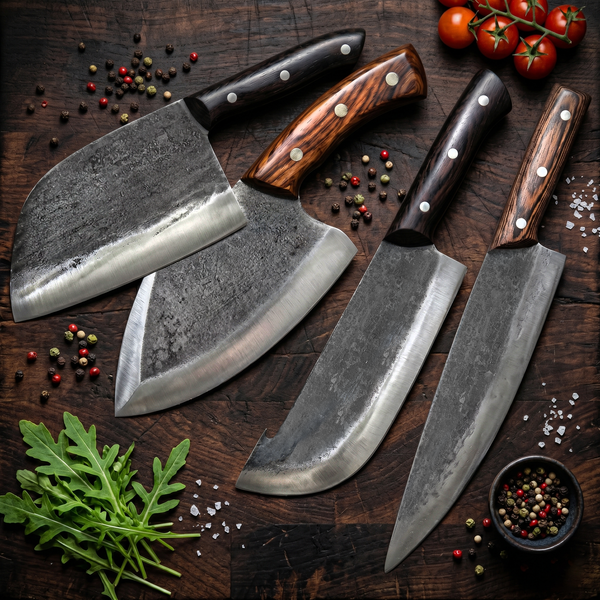
Mastercraft 4 Piece Hand Forged Chef Knife and Cleaver Set is the set we would pick for the cuts in this recipe.
Cook this next
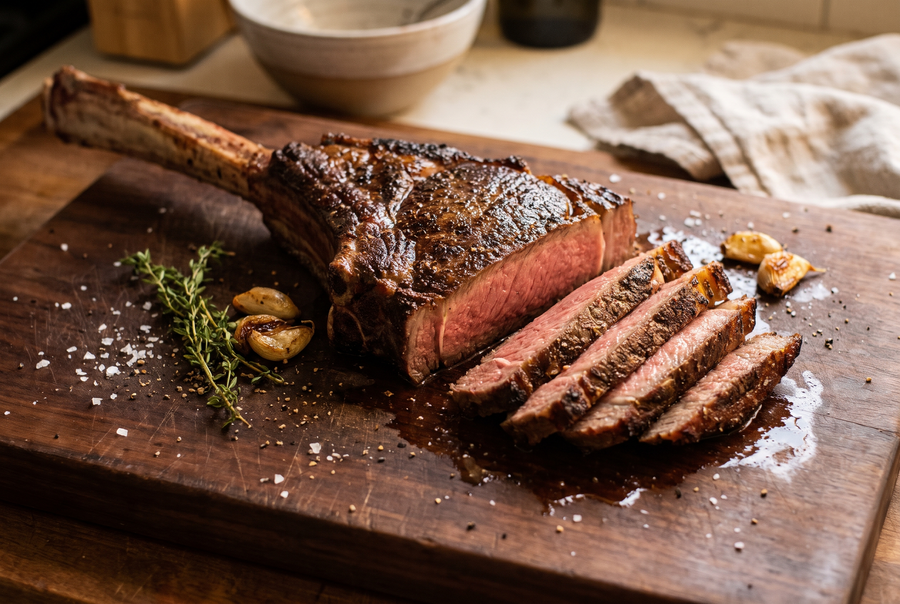
Reverse Sear Tomahawk Steak
A thick bone in tomahawk cooked low in the oven or on the grill, seared hard, then cut off the bone and sliced across the grain...
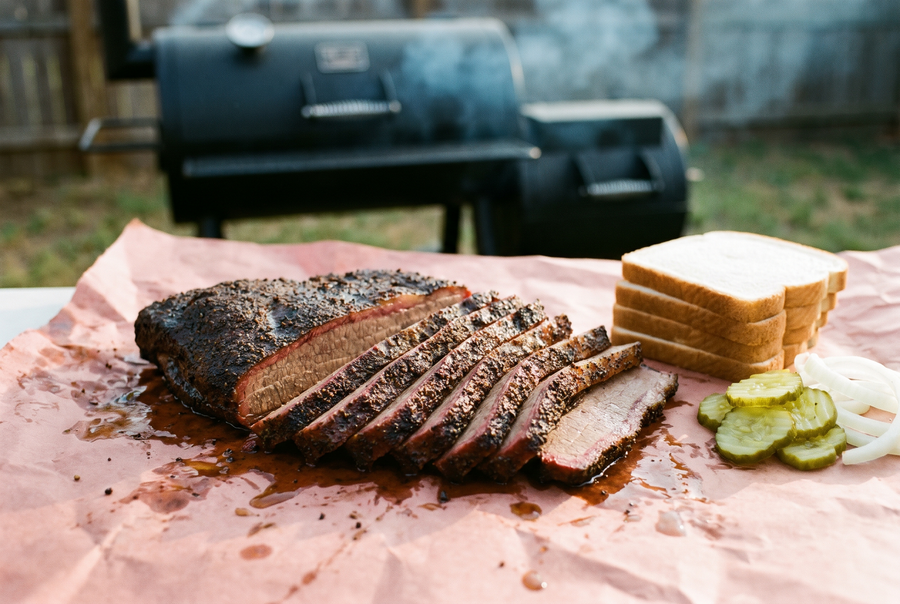
Texas Smoked Brisket, Trim to Slice
A whole packer brisket with salt and pepper, smoked low, wrapped, rested and sliced against the grain of each muscle. Covers how to trim a brisket...
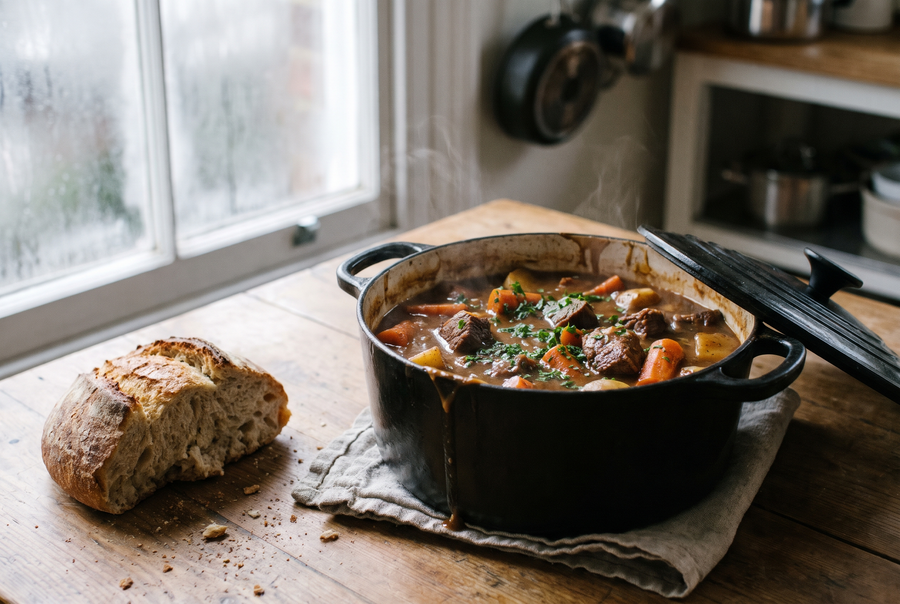
Beef Stew Worth the Chopping
A classic beef stew made with chuck roast cubed by hand, seared properly and braised low until it falls apart, with vegetables added late so they...
One recipe a week, straight to your inbox
One email a week with the new recipe and the knife that makes it easy. No spam, unsubscribe any time.