
Texas Smoked Brisket, Trim to Slice
A whole packer brisket with salt and pepper, smoked low, wrapped, rested and sliced against the grain of each muscle. Covers how to trim a brisket and how to slice it.
By Chef Umais Ahmed,
- Total time 15 hr
- Serves 12 to 16
- Hard difficulty
- Offset or pellet smoker
Knives used for this recipe
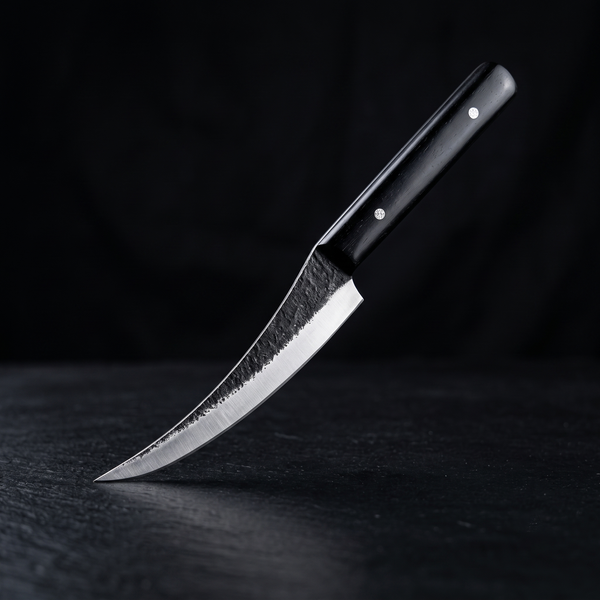
In this recipe Trims the hard fat, squares the edges and takes the fat cap down to an even 1/4 inch.
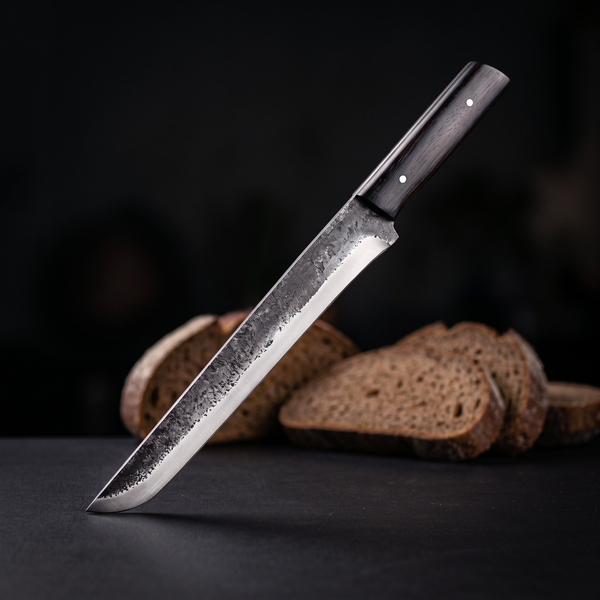
In this recipe Splits the point from the flat and slices each muscle against its grain in one long draw.
Free shipping in the USA and Australia
On this page
Texas brisket keeps the rub to salt and pepper and lets the smoke do the rest. The recipe itself is short. The trim and the slice are where most briskets go wrong, so that is where I spend the words. Plan on a long day and a good sleep the night before.
The knife for this job
Two blades. For the trim I use the Mako 7.5" Hand Forged Boning Knife. The trailing point blade follows the curve of the fat seam between the point and the flat, and it lifts hard fat away without tearing the meat under it. For the slice I use the Mamba 11" Hand Forged Brisket Slicing Knife. That long straight edge goes across the whole flat in one pull, so the bark stays on and the slices stay whole. A short knife sawing back and forth turns a good brisket into pulled beef. A dull knife does not slice brisket. It negotiates with it.
Pick the brisket
Buy a whole packer brisket, point and flat together, 12 to 14 lb (5.4 to 6.4 kg). Bend it in the pack. A floppy brisket usually has more marbling and a more forgiving flat. A stiff one tends to stay stiff after twelve hours too. Choice grade or better if you can find it. Expect to lose close to half the raw weight to trimming, rendering and moisture, so do not buy for the raw number.
How to trim a brisket
Trim it cold, straight from the fridge. Cold fat is firm and cuts clean. Warm fat smears and slides around under the blade. Pat it dry and lay it fat side down first.
1. Clean up the meat side
With the Mako, take off the silver skin and any loose fat on the meat side. Find the big lump of hard fat where the point sits on the flat. Work the tip of the blade along it in short strokes and lift it out. That fat will not render in any reasonable time, so it has to go.
2. Square the edges
Flip it fat side up. Trim the thin edge of the flat back until what is left is close to the thickness of the rest. Thin edges burn and dry out long before the middle is done. Round off the sharp corners as well, because they char. Keep the fat trimmings. They render down into very good tallow.
3. Trim the fat cap
Take the fat cap down to about 1/4 inch (6 mm) all over. Hold the Mako almost flat and slice in long sweeps instead of digging. You want an even layer, not a lunar surface. Leave a little more over the point, it can take it.
4. Mark the grain
Before seasoning, look at which way the grain runs on the flat and cut a small notch off the corner against it. Once the bark forms you will not see the grain at all, and at midnight you will be glad of that notch.
Season it
Mix equal parts coarse kosher salt and coarse black pepper by volume. Some cooks add a little garlic powder. That is allowed in Texas, quietly. Shake it on from about a foot above the meat so it lands evenly, and coat every side. Let it sit while the smoker comes up to temperature.
Smoke it
Run the smoker at 250 to 275°F (120 to 135°C). On an offset, burn clean seasoned oak and look for thin blue smoke, not thick white smoke. On a pellet smoker, use oak or a hickory blend and set it to 250°F (120°C). Most pellet cooks go fat side up. On an offset, put the fat side toward the fire so it shields the meat, with the point toward the hotter end.
Then leave it alone. After the first three hours, spritz with water or apple cider vinegar about once an hour if the surface looks dry. Opening the lid every twenty minutes to admire it only adds hours.
The stall and the wrap
Somewhere around 150 to 170°F (66 to 77°C) internal, the temperature stops climbing for hours. This is the stall. It is moisture evaporating off the surface and cooling it, not a broken thermometer. When the bark is set and dark and does not rub off on your finger, usually around 165 to 170°F (74 to 77°C), wrap it tightly in unwaxed butcher paper and put it back on. Paper keeps the bark firmer. Foil is faster and wetter. Both work.
When is brisket done
Go by feel, not a number. Most briskets are probe tender somewhere around 200 to 205°F (93 to 96°C), but the real test is a probe sliding into the thickest part of the flat with almost no resistance, like going into soft butter. Check several spots. If one is tight, give it another 30 minutes. For the record, the USDA minimum for whole cuts of beef is 145°F (63°C) with a 3 minute rest. Brisket is far past that by the time it is tender. The extra time is what breaks down the connective tissue.
Rest it properly
Leave it wrapped, put an old towel around it and set it in a dry cooler, or hold it in an oven at 150 to 170°F (66 to 77°C). Give it at least 1 hour, and 2 to 4 hours is better. The juices settle back into the meat and the slicing gets far cleaner. Cutting it straight off the smoker is how you end up with a puddle on the board and dry slices on the plate.
How to slice a brisket
The point and the flat are two different muscles with grain running in different directions, so each one gets sliced against its own grain.
1. Separate the point and the flat
Unwrap on a big board with a juice groove. Find the layer of fat between the two muscles. Run the Mamba along that seam and split the brisket into flat and point.
2. Slice the flat
Find your notch. Slice the flat against the grain about the thickness of a pencil, 1/4 inch (6 mm). Use the full length of the Mamba in one long draw from heel to tip and let the edge do the work. Pressing down squashes the slice and tears the bark. A good slice holds together when you drape it over a finger and pulls apart with a gentle tug.
3. Slice the point
Turn the point about 90 degrees, because its grain runs roughly across the grain of the flat. Slice it a little thicker, about 3/8 inch (1 cm). The point is fattier and falls apart if you cut it thin. Cube the end pieces, sauce them and put them back on the smoker for burnt ends if anyone is still standing.
4. Only slice what you serve
Slice to order. Unsliced brisket stays moist in its wrap. Sliced brisket dries out on the board while everyone argues about sauce.
Read more before you cook
For a closer look at the blades, read the best knife for trimming brisket and the best knife for slicing brisket. If you want one kit for the whole cook, The Smokehouse Set is our 3 piece BBQ knife set, and the rest of the range is in BBQ knives.
Xcutlery Cooking Hub, www.xcutlery.com
Recipe card
Texas Smoked Brisket, Trim to Slice
- Prep
- 1 hr
- Cook
- 12 hr
- Total
- 15 hr
- Serves
- 12 to 16
- Cook on
- Offset or pellet smoker
- Difficulty
- Hard
Ingredients
Amounts make 1 packer brisket, about half its raw weight once cooked. Tap an ingredient to tick it off.
Brisket
Rub
For the cook
Knives
Method
Tap a step when it is done.


Done temperatures
| What | Temperature |
|---|---|
| Smoker | 250 to 275°F (120 to 135°C) |
| Wrap | around 165 to 170°F (74 to 77°C) |
| Probe tender | usually around 200 to 205°F (93 to 96°C) |
| USDA minimum, whole cuts of beef | 145°F (63°C) with a 3 minute rest |
Nutrition per serving
Estimate for 1 serving (of 12), worked out from USDA FoodData Central values for the ingredients above. Your numbers will move with the cut, the trim and how heavy your hand is with the salt.
- Calories
- 822
- Protein
- 64 g
- Fat
- 60 g
- Saturated fat
- 23 g
- Carbs
- 2 g
- Sugar
- 0 g
- Fiber
- 1 g
- Sodium
- 1510 mg
- Cholesterol
- 230 mg
Notes. Total time includes a 2 hour rest. Smoke times vary a lot between briskets, so start early and let the rest absorb the difference.
Recipe by Chef Umais Ahmed for the Xcutlery Cooking Hub. https://www.xcutlery.com/blogs/recipes/texas-smoked-brisket
Questions
How long does it take to smoke a brisket?
At 250 to 275°F (120 to 135°C), a 12 to 14 lb packer usually takes 10 to 14 hours, plus at least an hour of rest. Every brisket is different, so cook to feel, not to the clock. Start early, because a brisket that finishes early can rest for hours, and one that finishes late cannot be hurried.
What temperature is brisket done?
Most briskets are probe tender around 200 to 205°F (93 to 96°C). The number is a guide. The real sign is a probe sliding into the flat with almost no resistance. The USDA minimum for whole cuts of beef is 145°F (63°C) with a 3 minute rest, but brisket needs far more heat than that to turn tender.
How do you trim a brisket?
Trim it cold. Remove the silver skin and the hard fat between the point and flat, square off the thin edge of the flat, and take the fat cap down to about 1/4 inch (6 mm). A boning knife with a trailing point, like the Mako, makes the curved cuts much easier.
How do you slice a brisket against the grain?
Separate the point from the flat along the fat seam first. Slice the flat against its grain about pencil thick, then turn the point about 90 degrees and slice it a little thicker. Use a long slicing knife and one smooth stroke so the bark stays on.
Should I wrap brisket in foil or butcher paper?
Butcher paper keeps the bark firmer and still lets some moisture escape. Foil pushes through the stall faster but softens the bark. Texas pitmasters mostly use unwaxed butcher paper.
Shop the kit
Every knife this recipe needs, in one box
The Smokehouse Set is the set we would pick for the cuts in this recipe.
Cook this next
Reverse Sear Tomahawk Steak
A thick bone in tomahawk cooked low in the oven or on the grill, seared hard, then cut off the bone and sliced across the grain...
Beef Stew Worth the Chopping
A classic beef stew made with chuck roast cubed by hand, seared properly and braised low until it falls apart, with vegetables added late so they...
Beef Wellington Without the Panic
A calm, step by step beef Wellington recipe built on a properly trimmed center cut tenderloin, dry mushroom duxelles, prosciutto and puff pastry.
One recipe a week, straight to your inbox
One email a week with the new recipe and the knife that makes it easy. No spam, unsubscribe any time.