
How to Carve a Turkey Without Shredding It
November 01, 2026 · By Matt
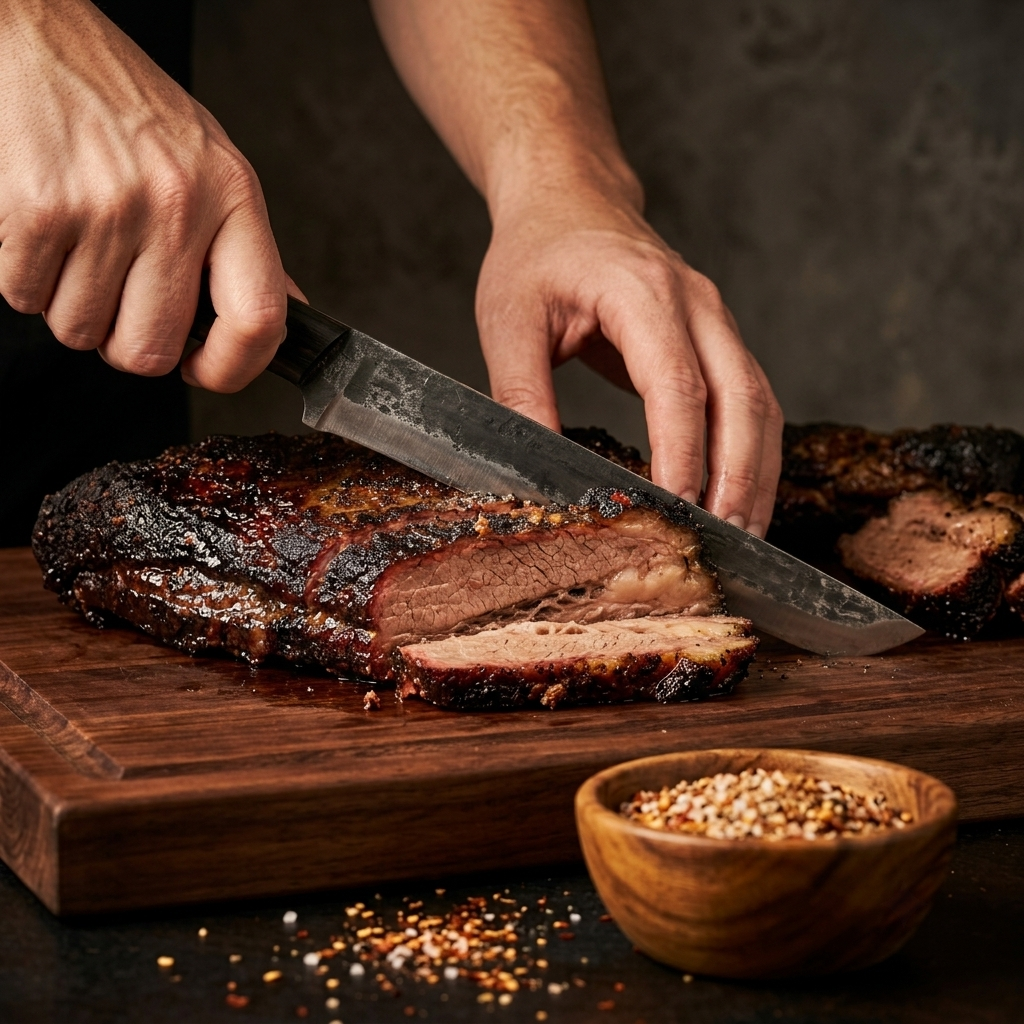
To carve a turkey without shredding it, let it rest for at least 20 minutes, then take it apart before you slice it. Cut off the legs, split them into drumsticks and thighs, lift each breast off the bone in one whole piece, and slice the breast across the grain on the board. A long, sharp slicing knife and a carving fork do the work. Sawing at a whole bird on the platter does the damage.
Every Thanksgiving, someone stands at the head of the table with a dull knife and an audience, hacking thin grey ribbons off the side of a turkey while the gravy goes cold. The bird took hours. The carving takes ten minutes and gets far less planning. This guide covers the resting time, the tools, the cut by cut method and the plating, so the slices look like slices. With Thanksgiving on 26 November this year, there is time to practise on a chicken first.
What Do You Need to Carve a Turkey?
Not much, but each piece matters. Get it all out before the bird leaves the oven, because hunting for a fork with a hot turkey on the counter is how the carving ends up rushed.
A long, sharp knife
The main tool is a long slicer with a straight edge, around 10 to 12 inches, sharp enough to cut a breast slice in one or two pulls. Our Mamba 11" slicing knife is built for this job, and its listing names turkey breast and roasts as part of the work. A shorter, narrow blade helps around the joints, and the Mako 7.5" boning knife is handy for working the thigh meat off the bone. If you are still deciding which blade to buy, our separate guide on the best knife for carving turkey covers length, profile and why a chef knife struggles. This page sticks to the method.
A carving fork
A two prong carving fork holds the bird or the breast steady while the knife moves. Use it to pin, not to stab over and over. Every hole lets juice out. If you do not own one, a pair of sturdy tongs or a clean kitchen towel in your free hand works almost as well.
A big board with a groove
Carve on a large cutting board with a juice groove, set on a damp towel so it cannot slide. Carving on the serving platter looks traditional and works badly. The platter is slippery, the edges get in the way, and it dulls the knife.
How Long Should a Turkey Rest Before Carving?
At least 20 minutes. Food safety comes first: the USDA says a whole turkey is safe at a minimum internal temperature of 165°F, checked in the thickest part of the breast and the innermost part of the thigh and wing, and it suggests letting the bird stand for 20 minutes so the juices set and it carves more easily. Their turkey roasting guide has the full table.
A big bird holds its heat well, so 30 minutes under a loose tent of foil does no harm. Do not wrap it tight, or the skin steams and goes soft. Use the resting time to make the gravy, warm the platter and put the board and knife in place. Cut into a turkey straight out of the oven and the juice runs onto the board instead of staying in the meat, which is the first step toward dry slices.
How to Carve a Turkey, Step by Step
Turn the bird so the legs point toward you. Work on one side at a time.
1. Take off the legs
Slice through the skin between the thigh and the breast. Pull the leg gently away from the body with the fork or your hand and you will see the hip joint open up. Cut through the joint, not the bone. If the knife hits something hard, move it a little and find the gap. The whole leg should come away with a bit of guidance and very little force.
2. Split the drumstick and thigh
Put the leg skin side down on the board. Find the line of fat between the drumstick and thigh, bend the joint to feel where it moves, and cut straight through it. Leave the drumsticks whole. Some people love them, and they look good on the platter.
3. Bone the thigh
Turn the thigh skin side down and run the tip of a narrow knife along both sides of the thigh bone, then lift the bone out. You are left with a flat piece of dark meat that slices neatly. This is where the boning knife earns its place on the counter.
4. Remove the breast in one piece
This is the step that stops the shredding. Find the breastbone running down the middle of the top. Make a long cut along one side of it, keeping the blade close to the bone. Then use long, gentle strokes down along the rib cage, peeling the breast away with the fork as you go, until the whole half comes off in one piece with the skin still on. Repeat on the other side.
5. Slice the breast across the grain
Lay the breast skin side up on the board. Look at the direction of the muscle fibres and slice across them, not along them, in slices about the thickness of a pencil or a little thicker. Use the full length of the blade in one long pull per slice. If you are pressing down and sawing, the knife is either too short or not sharp enough.
6. Take off the wings
Pull each wing out from the body, find the joint where it meets the shoulder and cut through it. Serve the wings whole. Nobody wants to watch you carve a wing.
7. Strip the carcass
Turn the frame over and pull off the two oysters, the small round pieces of dark meat on the back near the thigh. They are the best bite on the bird and the cook has every right to eat them before anyone else notices. Pick any remaining meat off by hand for leftovers.
Carving Mistakes That Shred the Meat
- Carving straight off the whole bird. Shaving slices from a standing breast gives you short pieces with no skin and a lot of torn meat. Remove the breast first.
- Cutting with the grain. Slices cut along the fibres come out stringy and fall apart. Turn the breast so you cut across them.
- Sawing back and forth. Short strokes with pressure tear the meat. A long, sharp blade cuts in one or two pulls.
- Stabbing with the fork. Pin the meat once and hold it there. A breast full of holes leaks.
- Skipping the rest. A turkey carved hot loses its juice to the board. Twenty minutes is worth it.
- Starting with a dull knife. Sharpen or hone it the day before, not while the guests watch.
Turkey Carving at a Glance
| Part | How to cut it | Knife |
|---|---|---|
| Legs | Cut the skin, pull the leg back, cut through the hip joint | Long slicer or chef knife |
| Drumstick and thigh | Cut through the joint along the fat line | Chef knife or boning knife |
| Thigh meat | Bone it out, then slice flat | Boning knife |
| Breast | Remove whole along the breastbone, slice across the grain | Long slicer, 10 to 12 inches |
| Wings | Cut through the shoulder joint, serve whole | Chef knife or boning knife |
| Carcass | Pull off the oysters and scraps by hand, split the frame for stock | Hands, then a cleaver |
How to Plate a Carved Turkey
Warm the platter in a low oven while the bird rests. Put the dark meat at one end: drumsticks standing up or laid across each other, thigh slices fanned beside them. Put the breast slices at the other end, laid in overlapping rows with the skin side up so every slice gets a strip of crisp skin. Add the wings at the corners.
Lift the slices onto the platter with the flat of the knife instead of picking them up one by one. They stay in their rows and look like a restaurant did it. Spoon a little of the juice from the board over the breast meat just before it goes to the table. A few sprigs of herbs are allowed. A carved radish rose is not required.
If you want the classic moment at the table, carve the legs and remove the breasts in the kitchen, then bring one breast out whole and slice it in front of everyone. You get the ceremony and none of the risk.
After the Carving
The frame makes good stock. To fit it in a pot, split it into a few pieces with a cleaver. A heavy blade like the Bison 7.5" butcher cleaver goes through cooked poultry bones without much drama. Keep the slicer away from that job, since thin edges and bones do not get along.
Then look after the knives. Ours are high carbon steel, and turkey juice left on the blade will spot it. Wash them by hand, dry them right away and wipe on a thin coat of food safe oil. Our high carbon steel knife care guide covers the rest.
If you are buying a new knife for the day, buy it a week or two ahead and try it on a Sunday roast first. The long blades sit in our brisket and BBQ knives collection, and the same long slicer covers the Christmas ham and the summer brisket too. Our guide to the best knife for slicing brisket shows how it handles a bigger cut.
Questions
How long should a turkey rest before carving?
At least 20 minutes, loosely covered with foil. The USDA suggests 20 minutes so the juices set and the bird carves more easily, and a large turkey holds its heat well enough that 30 minutes does no harm. Do not wrap it tightly or the skin goes soft.
What is the best way to carve a turkey breast?
Take the whole breast off the bone first by cutting down along one side of the breastbone and following the ribs. Lay it skin side up on the board and slice across the grain in long single strokes, about the thickness of a pencil or a little thicker.
What knife do you use to carve a turkey?
A long slicing knife of about 10 to 12 inches with a straight edge does the breast, and a narrow boning knife helps with the thighs and joints. A chef knife works for the legs and wings but tends to tear wide breast slices.
Should you carve a turkey at the table?
It looks good, but it is easier in the kitchen. A good compromise is to take off the legs and both breasts in the kitchen, then bring one breast out whole and slice it at the table.
Do I need a carving fork?
It helps. A two prong fork holds the meat still while the knife moves. Pin the meat once and hold it there rather than stabbing it repeatedly, which lets juice out. Tongs or a folded clean towel work if you do not have one.