
Knife Care
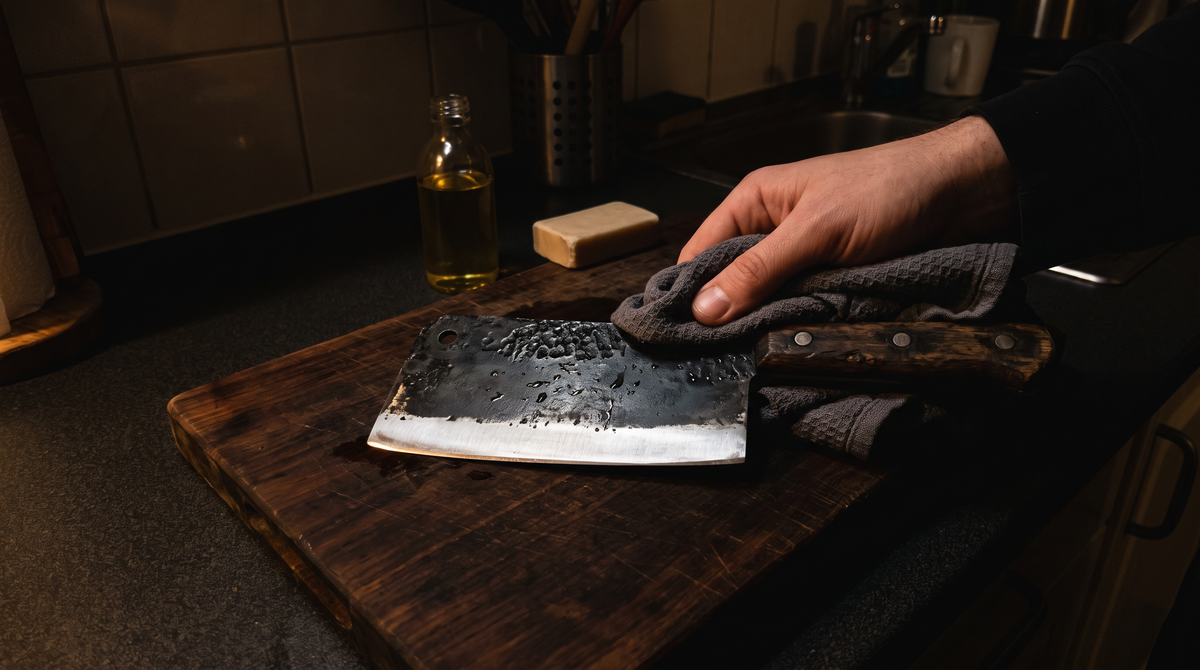
High carbon steel takes a keen edge and asks for one small habit in return. Wash it by hand, dry it right away and give it a light coat of food safe oil.
The routine
Three steps, every time you use the knife.
Wash it by hand
Wash the knife by hand as soon as you are done with it. It never goes in the dishwasher and it never sits soaking in the sink.
Dry it right away
Wipe the blade and the handle dry straight after washing. Water left sitting on high carbon steel is where red rust starts.
Oil it lightly
Wipe a light coat of food safe oil over the blade before you put it away. A thin film is enough.

Patina is not rust
High carbon steel darkens as you use it. That darkening is called patina. It is normal for this steel, it is not a defect, and it helps protect the blade. Your knife is supposed to look more used as time goes on, because it is.
Red rust is something else. It is red or orange, and it shows up when the knife has been left wet, usually after soaking in the sink, a trip through the dishwasher or being put away damp.
If you find rust, deal with it early. Our guide on how to remove rust from a carbon steel knife shows how to take it off without ruining the blade. Then dry the knife and oil it.
- Patina: dark and normal. Leave it alone.
- Red rust: red or orange. Take it off, then dry and oil the blade.
- Rust from the dishwasher, soaking or bad storage is not covered by the warranty.

Keeping the edge
Every edge dulls with use. That is normal wear, and on high carbon steel routine sharpening brings it back.
When you sharpen, match the bevel that is already on the blade. Follow the angle the edge has now instead of grinding a new one.
Honing keeps the edge lined up between sharpenings. A whetstone takes a little steel off and gives you a fresh edge when honing stops helping. Our guides cover sharpening kitchen knives with a whetstone, what angle to sharpen at and how to sharpen a meat cleaver.
- A dull edge is normal wear, not a defect
- Match the bevel that is already on the blade
- Cut on wood or plastic and the edge lasts longer
Do and do not
Most of what ruins a knife happens after dinner, not during it.
No dishwasher
The dishwasher will rust high carbon steel, and that rust is not covered by the warranty. Washing by hand takes less time than unloading the machine anyway.
No soaking
Do not leave the knife in the sink or sitting in water. Wash it, dry it and put it away.
No glass or stone boards
Cutting on glass, stone or metal damages the edge, and that damage is not covered by the warranty.
Wood or plastic boards
Cut on a wood or plastic board. Either one is kinder to the edge than a hard surface.
Store it dry
Make sure the knife is dry and lightly oiled before it goes away. Rust from bad storage is a care problem, not a defect.
Do not pry or twist
A kitchen knife is for cutting. Prying, twisting and throwing count as misuse, and the warranty does not cover the damage.
Care guides from the journal
Longer reads from the guides blog on looking after a knife.

How to Dispose of Old Kitchen Knives Safely (and When Not To)
How to dispose of old kitchen knives without hurting anyone on the way out. Learn when a knife can still be saved...
Read the guide
Best Fillet Knife for Salmon and Big Fish: Length, Flex and Care
The best fillet knife for salmon is long, thin and flexible. Here is how to match blade length to the fish, fillet...
Read the guide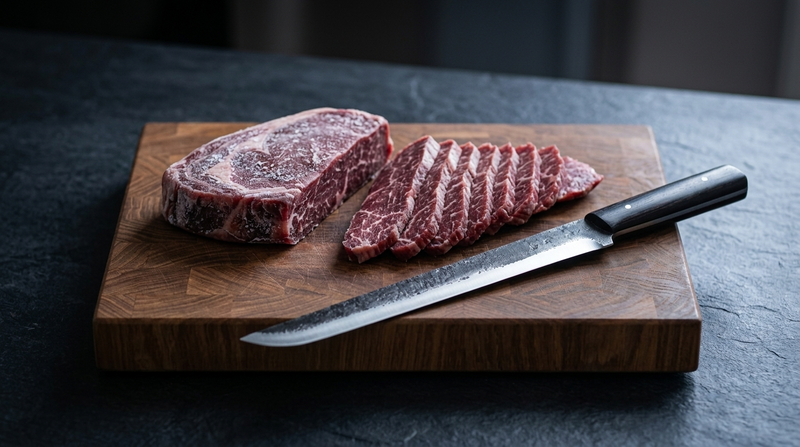
How to Cut Frozen Meat Without Wrecking Your Knife or Your Hand
Fully frozen meat chips knife edges and makes blades skid toward your hand. Here is how to thaw meat safely, why partly...
Read the guide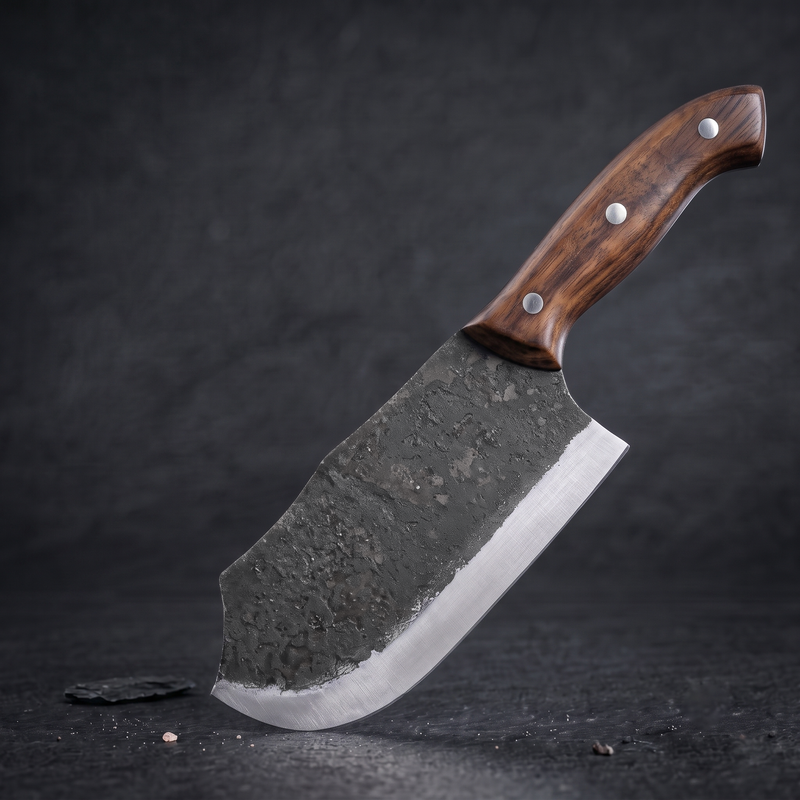
Carbon Steel vs Stainless Steel Kitchen Knives: The Honest Trade
Carbon steel or stainless? We compare the two for kitchen knives in plain terms: how sharp each gets, how easy each is...
Read the guideKnife care in detail
Xcutlery knives are hand forged from high carbon steel. It takes a keen edge and comes back easily with sharpening, and in return it asks for a short routine after every use. Here is the whole of it.
The Daily Routine
Wash it by hand
Wash the knife by hand when you finish cooking. Keep it out of the dishwasher and never leave it soaking in the sink. The dishwasher will rust high carbon steel.
Dry it right away
Dry the blade and the handle straight after washing. Red rust comes from leaving the steel wet, so this is the step to be strict about.
Oil it lightly
Wipe a light coat of food safe oil over the blade before you put the knife away.
Patina and Rust
High carbon steel darkens into a patina as you use it. That is normal for this steel, it is not a defect, and it helps protect the blade. The dark forge scale on the upper blade is left there on purpose for the same reason.
Red rust is different. It usually means the knife stayed wet too long. If you find some, our guide on how to remove rust from a carbon steel knife shows how to take it off, and the high carbon steel knife care guide goes further into patina and oiling.
Sharpening
Every edge dulls with use, and routine sharpening brings it back. Match the bevel that is already on the blade instead of grinding a new angle. If you have never used a stone, start with how to sharpen kitchen knives with a whetstone. There are also guides on what angle to sharpen a kitchen knife and how to sharpen a meat cleaver.
Boards and Storage
Cut on wood or plastic boards. Cutting on glass, stone or metal damages the edge. Store the knife dry, and do not use it to pry or twist. It is a knife, and it is very good at being one.
Care and the Warranty
The lifetime warranty covers defects in materials and craftsmanship. It does not cover a dull edge, misuse, or rust caused by the dishwasher, soaking or improper storage. Look after the knife and the warranty is there for the things that are actually our fault.
More questions? The FAQ has a section on care and sharpening, and every knife in our high carbon steel range is looked after the same way.
Care questions
How do I care for a high carbon steel knife?
Hand wash it, dry it right away and wipe on a light coat of food safe oil. Keep it out of the dishwasher and never leave it soaking in the sink. That short routine is all it takes.
Can I put my knife in the dishwasher?
No. The dishwasher will rust high carbon steel, and rust caused by the dishwasher or by soaking is not covered by the lifetime warranty.
Why is my blade turning darker?
High carbon steel darkens into a patina as you use it. That is normal for this steel, it is not a defect, and it protects the blade. Red rust is a different thing and usually means the knife stayed wet too long.
What do I do about rust spots?
Take them off early, then dry the blade and oil it. Our guide on how to remove rust from a carbon steel knife walks through it. Rust comes from water, so drying and oiling the knife after every wash is what stops it coming back.
What do I do when the edge gets dull?
Sharpen it. Every edge dulls with use, and routine sharpening brings it back. Match the bevel that is already on the blade. Dulling is normal wear and is not a warranty issue.
What should I cut on?
Wood or plastic boards. Cutting on glass, stone or metal damages the edge, and that damage is not covered by the warranty.
Something wrong with your knife?
Care covers patina, rust and dull edges. If a handle works loose or a pin comes free, that is a defect, and the lifetime warranty covers it.