
Best Fillet Knife for Salmon and Big Fish: Length, Flex and Care
October 13, 2026 · By Matt
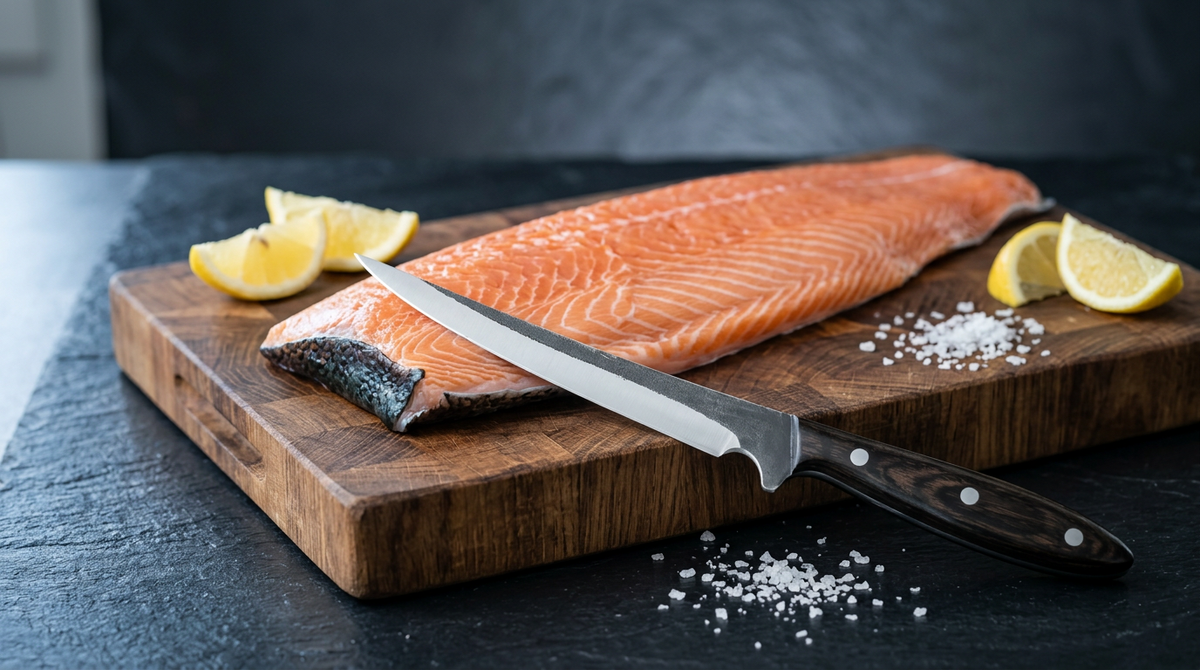
The best fillet knife for salmon is a long, thin, flexible blade that can reach across the whole side of the fish and bend along the backbone without tearing the flesh. For salmon and other large fish we reach for the Barracuda 13" fillet knife, which has an 8" blade only 0.07" thick. For trout and smaller fish, the Barracuda 10" with its 6" blade is the easier knife to steer.
A salmon is a large, slippery, expensive animal, and it has a way of exposing every shortcut in your knife drawer. A chef knife will do it in the sense that a spoon will dig a hole. This guide covers what to look for in a salmon fillet knife, how to fillet and skin the fish, what to do about pin bones, how to keep high carbon steel alive around salt water, and where a cleaver earns a spot at the cleaning table.
What Makes a Good Salmon Fillet Knife?
Four things matter, and they all come back to the shape of the fish. A salmon is long, its backbone runs the full length of the body, and the rib cage curves. The knife has to follow all of that in one smooth pass if you want a clean fillet.
Length that matches the fish
The blade should be long enough to cross the width of the fillet with room to spare, so you can draw it in long strokes instead of sawing. On a whole salmon that means a longer blade. The 8" blade on the Barracuda 13" gives you that reach. On a trout or a small bass, the same length starts to feel like steering a canoe in a bathtub, which is where a 6" blade makes more sense.
Flex
Flex is the whole point of a fillet knife. As you run the edge along the backbone and over the ribs, the blade should bend enough to stay pressed against the bones while the edge slides along them. A stiff blade rides up off the frame and leaves meat behind, or digs in and cuts through bones you meant to leave on the skeleton. The same flex lets the blade lie almost flat on the board when you take the skin off. Wikipedia notes that the blade has to flex when removing skin so it can follow the contours of the fish: Wikipedia on fillet knives.
A thin blade
Thin steel is what makes flex possible, and it also means less drag through the flesh. Salmon is soft and flakes easily, so a thick blade tends to push and tear where a thin one slices. Both Barracuda knives are 0.07" thick, which is about 1.8 mm.
A handle you can hold when it is wet
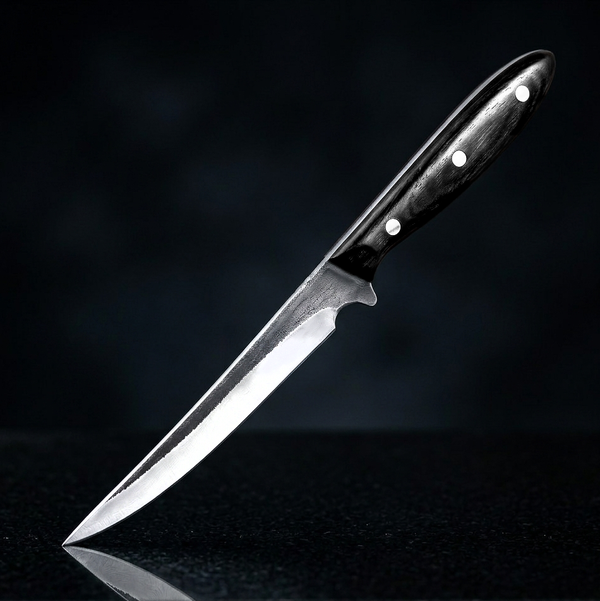
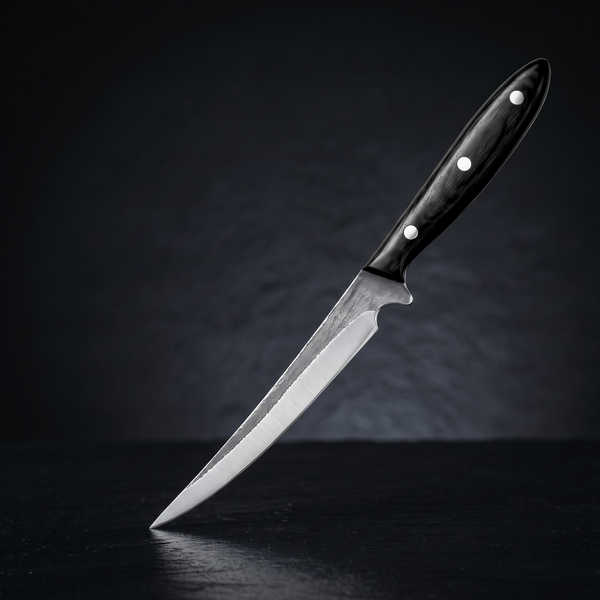
Fish slime is the natural enemy of a good grip. You want a handle that fills the hand and does not twist under pressure, and you want to dry your hands and the handle often, because no handle material is immune to fish slime. Both Barracuda knives have black rosewood handles, 5" long on the 13" knife and 4" on the 10". Full tang construction means blade and handle move as one piece.
Barracuda 13" or Barracuda 10": Which One Do You Need?
If salmon is the main event, buy the 13". Its 8" blade covers a full side of salmon, a large striped bass or a big redfish without running out of steel at the shoulder. The flats are hammer textured, which looks good and gives the fish a little less surface to stick to.
The Barracuda 10" is the better tool for trout, panfish, small bass and similar fish where a long blade just gets in the way. It weighs 220 g, so it is light in the hand and quick around small rib cages. Plenty of people keep both, and the fish do not get a vote.
| Fish size | Knife | Why |
|---|---|---|
| Small fish such as trout, panfish and small bass | Barracuda 10" (6" blade) | Shorter blade is easier to steer around small bones and tight rib cages |
| Salmon and other large fish | Barracuda 13" (8" blade) | Long blade reaches across the whole fillet, thin steel follows the backbone |
| Skinning any fillet | Either Barracuda, matched to fillet size | A flexible blade lies flat on the board and runs between skin and flesh |
| Salmon head and collar for stock | Kraken 8" cleaver | Weight splits the head cleanly so the fillet knife never meets bone it cannot handle |
| Boning meat rather than fish | Mako 7.5" boning knife | A stiffer blade suits meat and joints better than a flexible fish blade |
If you want the long version of where a fillet knife ends and a boning knife begins, our boning knife vs fillet knife guide covers it. The short version: the Mako 7.5" boning knife is for meat, and the Barracuda is for fish. Swapping them works about as well as you would expect.
How Do You Fillet a Salmon?
Start with a fresh or fully thawed fish. Never try to fillet a frozen salmon with a fillet knife, because frozen flesh will chip or bend a thin edge in short order. Set a large board on a damp towel so it stays put.
- Scale and clean. If you plan to cook the fillets skin on, scrape off the scales first, working from tail to head with the back of a knife or a fish scaler. Gut the fish if that has not been done, rinse it in cold water and pat it dry so it does not slide around.
- Make the first cut. Lay the salmon on its side with the back toward you. Cut down behind the gill plate and the pectoral fin until you feel the edge touch the backbone. Do not force it through the spine.
- Turn the blade. Rotate the knife so the edge points toward the tail and the flat of the blade lies along the backbone.
- Run the backbone. Draw the knife toward the tail in long, smooth strokes, keeping the blade pressed against the bones and letting it flex over the ribs. Lift the top of the fillet slightly with your free hand to see where you are going.
- Free the fillet. Cut through the skin at the tail and lift the first fillet away.
- Flip and repeat. Turn the fish over and do the same on the second side. This side is a little harder because the fish no longer lies flat, so go slower.
- Remove the belly bones. Slide the tip of the blade under the row of rib bones at the thick edge of the belly, angle it up and cut them away in one thin strip.
- Trim. Tidy the thin belly edge and any ragged bits. Save the frame, head and trimmings if you want to make stock.
The first salmon you fillet will probably look like it lost an argument. The third will look like something you would pay for at the fish counter.
How Do You Skin a Salmon Fillet?
Skinning is where flex earns its keep. Lay the fillet skin side down with the tail end toward you. Make a small cut through the flesh at the tail, down to the skin but not through it, so you have a little tab of skin to hold.
Grip that tab with a paper towel, because wet salmon skin is about as easy to hold as a bar of soap. Set the blade almost flat against the skin, angled very slightly down toward the board, and push the knife forward with a gentle side to side motion while you pull the skin back toward you. Most of the work is the pulling. A thin, flexible blade hugs the skin and leaves the flesh on the fillet where it belongs.
What About Pin Bones?
Salmon have a line of small pin bones running along the thick part of each fillet. They do not attach to the backbone, so filleting leaves them behind no matter how good your knife is. This is the one job a fillet knife should not try to do.
Use fish bone tweezers or a clean pair of needle nose pliers. Run your fingertips along the fillet from head end to tail to find the tips of the bones. Grip each one and pull it out at a slight angle toward the head end of the fillet, which is the way the bones lie, so you tear less of the flesh. Cutting pin bones out with a knife works, technically, if you do not mind losing a strip of the best meat on the fish.
Saltwater Fish and High Carbon Steel
Here is the honest part. Both Barracuda knives are hand forged high carbon steel. That steel takes a keen edge and is easy to sharpen, which is why we make knives from it, but it will rust if you leave it wet. Salt water and fish juices speed that up, and a fillet knife left on the dock in the sun is basically a rust experiment you did not mean to run.
The fix is a short routine, done every time:
- Rinse the blade in fresh water as soon as you finish, especially after saltwater fish.
- Wash it by hand with a little mild soap, never in the dishwasher, and do not leave it soaking.
- Dry it completely at once, including the spot where the blade meets the handle.
- Wipe on a light coat of food safe oil before you put it away.
Over time the blade will darken into a patina. That is normal and it actually helps protect the steel. Orange spots are a different story, and if you find some, our guide on how to remove rust from a carbon steel knife walks you through getting them off. The full daily routine is in our high carbon steel knife care guide. On a boat, keep a fresh water bottle and a dry rag with the knife.
Where Does a Cleaver Help With Fish?
A fillet knife is the wrong tool for bone. If you want to make stock from the salmon head and frame, which is one of the better things you can do with them, you need to split the head and cut the frame into pieces that fit in a pot. That is cleaver work.
The Kraken 8" cleaver is a good fit. It has an 8" blade and weighs 380 g, enough to split a salmon head down the middle and chop through a frame without needing a big swing. Set the head on a sturdy board, place the edge along the center line and give the spine a firm press or a controlled chop. Keep your thin fillet knife well away from this part. It will not enjoy the experience.
You do not need anything heavier for fish. The Rhino 8" Serbian cleaver weighs 1250 g and is made to order, built for heavy bone work, and using it on a salmon head is like taking a sledgehammer to a walnut. The Kodiak 8" butcher cleaver at 581 g is a drop point cleaver forged in the Serbian style for meat and ribs. Neither is needed at the fish table, but if your kitchen also sees venison, pork shoulder or beef ribs, they handle the rest of the catch and the rest of the butchering. The full range is in our cleavers collection.
Keep the edge sharp, because a dull fillet knife tears salmon no matter how flexible it is. Our boning and fillet knives sit alongside the rest of the kit, and if you are still deciding which blade belongs in which job, the boning knife vs fillet knife guide is the next stop, with the hand forged cleavers waiting for the heads and frames.
Questions
What size fillet knife is best for salmon?
For a whole salmon, a blade of about 8 inches gives you enough reach to cross the full fillet in long strokes. Our Barracuda 13 inch fillet knife has an 8 inch blade that is 0.07 inches thick. For trout and smaller fish, the Barracuda 10 inch with a 6 inch blade is easier to steer around small bones.
Should a salmon fillet knife be flexible or stiff?
Flexible. The blade needs to bend along the backbone and over the ribs so the edge stays against the bones and leaves the meat on the fillet. The same flex lets it lie flat when you take the skin off. A stiff blade rides up off the frame and wastes fish, which is the expensive way to clean a salmon.
Can I use a fillet knife on saltwater fish if it is high carbon steel?
Yes, as long as you look after it. Salt water and fish juices speed up rust on high carbon steel. Rinse the blade in fresh water right after use, wash it by hand, dry it completely at once and wipe on a light coat of food safe oil. Never put it in the dishwasher or leave it soaking.
How do I remove pin bones from salmon?
Use fish bone tweezers or clean needle nose pliers, not the knife. Run your fingertips along the thick part of the fillet to find the bone tips, then pull each one out at a slight angle toward the head end, the way the bones lie. Draping the fillet over an upturned bowl makes the bones easier to grab.
Can a fillet knife cut through a salmon head or backbone?
No. A thin flexible fillet knife is made for flesh and skin, and forcing it through bone will chip or bend the edge. To split a salmon head or chop the frame for stock, use a cleaver such as the Kraken 8 inch, which has the weight to go through cleanly while your fillet knife stays sharp for the next fish.
Shop the knives from this guide
Keep reading
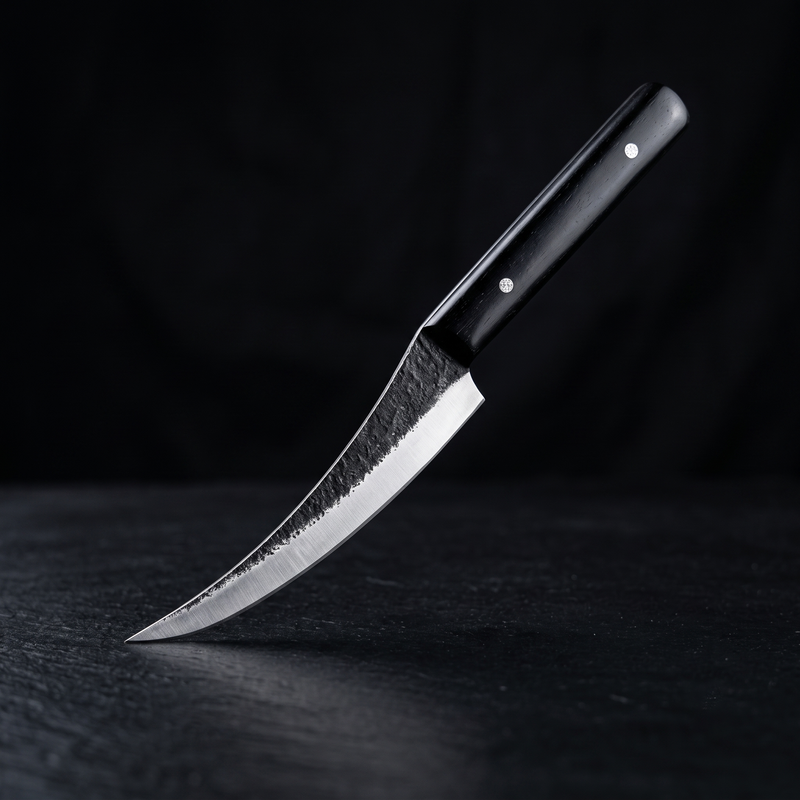
Boning Knife vs Fillet Knife: What Is the Difference?
Boning knife or fillet knife? The real difference is stiffness. Here is how the two shapes compare, which one to use for fish, poultry,...
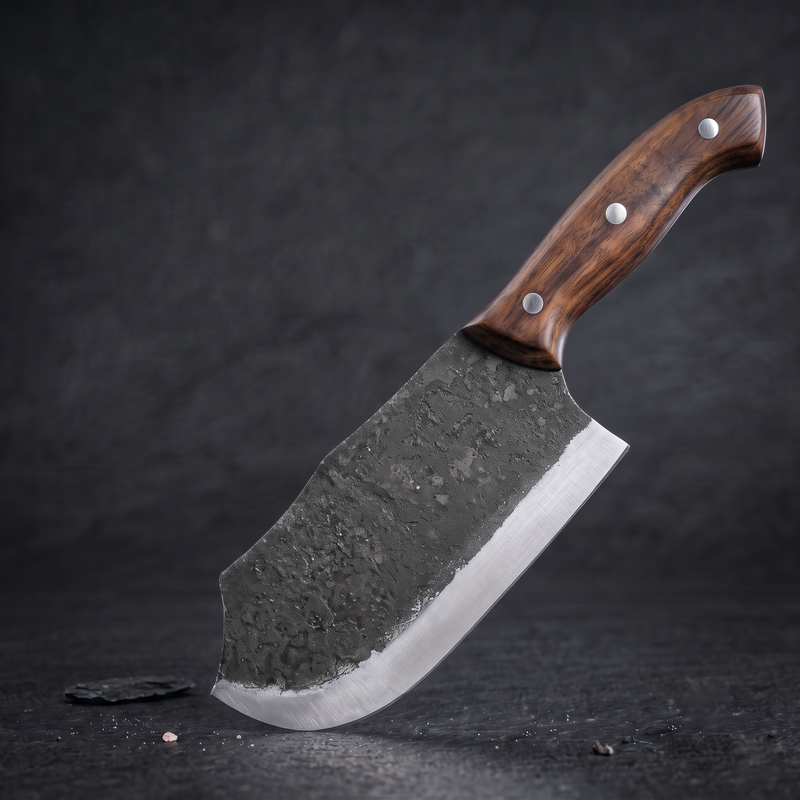
High Carbon Steel Knife Care: Rust, Patina, Oiling and Sharpening
High carbon steel rewards a simple routine. Here is how to wash, dry and oil a carbon steel knife, remove light rust, force a...
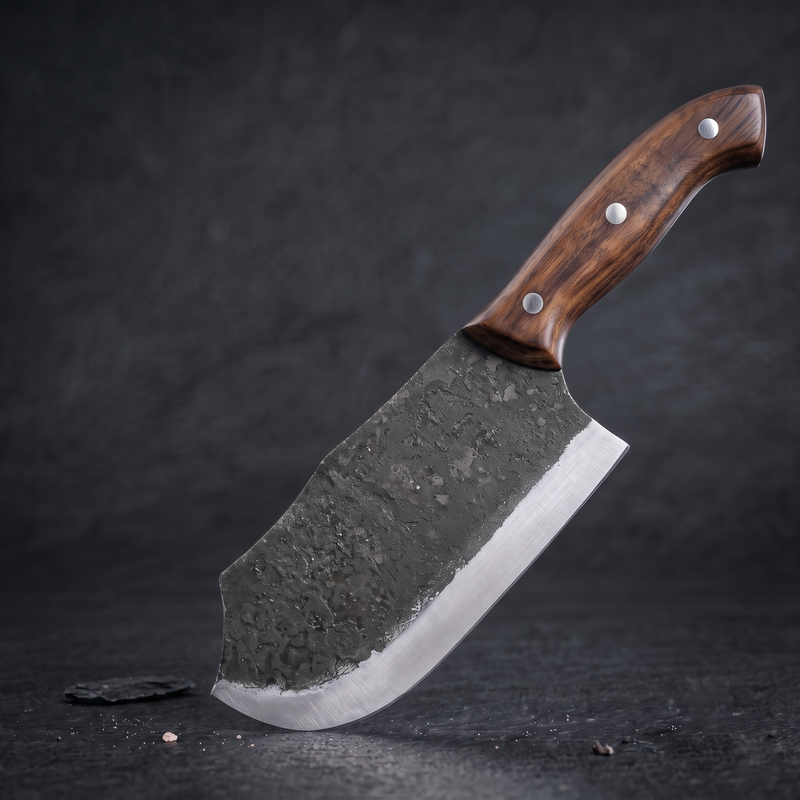
How to Remove Rust From a Carbon Steel Knife Without Ruining It
Rust on a hand forged high carbon steel knife is a chore, not a funeral. This guide shows how to tell rust from patina...