
How to Dispose of Old Kitchen Knives Safely (and When Not To)
October 13, 2026 · By Matt
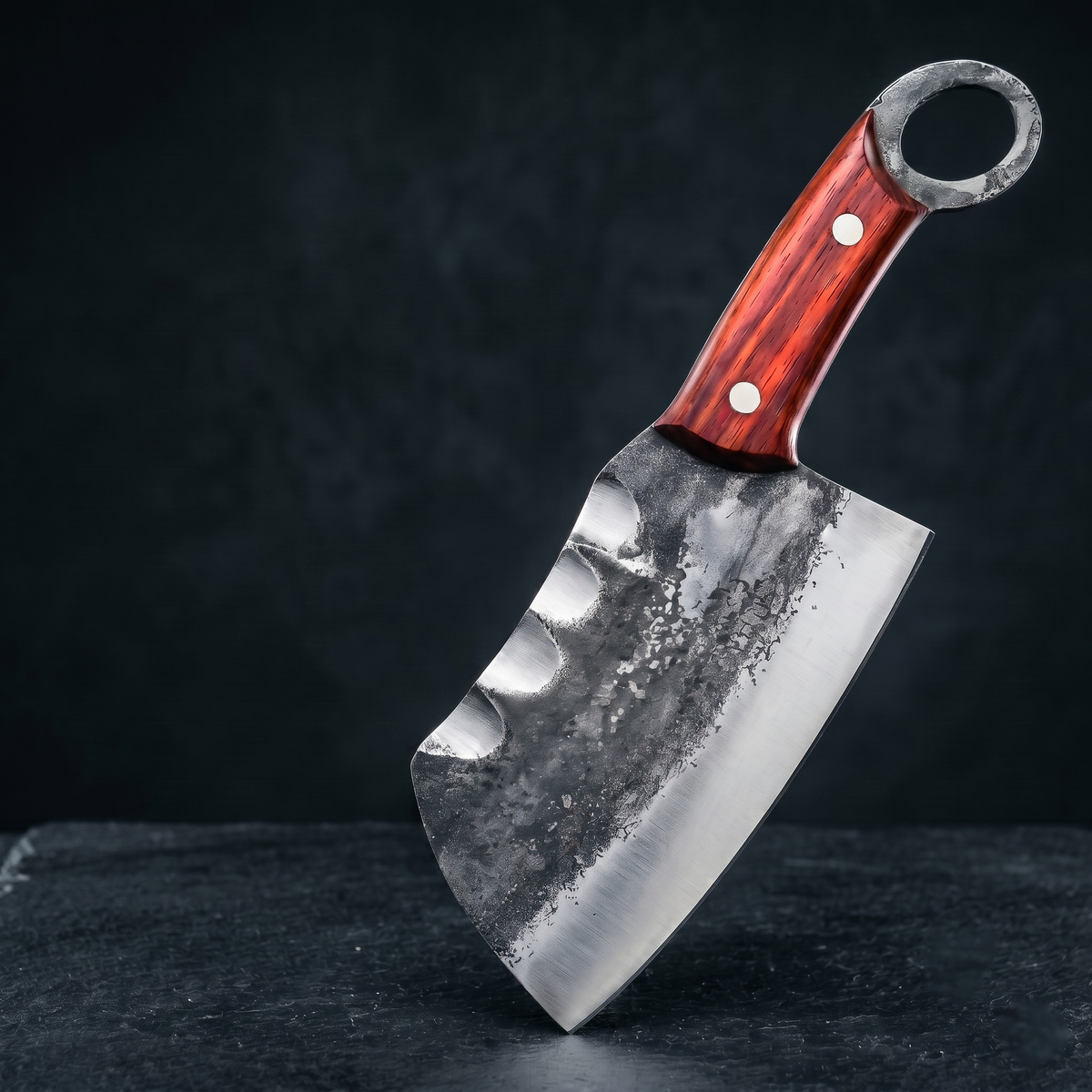
To dispose of an old kitchen knife safely, wrap the blade in several layers of thick cardboard, tape it shut so it cannot slide out, write "SHARP" on the outside and then follow your local waste service's rules. Many scrap metal recyclers will take an all metal knife, and a knife that still works can often be donated instead of binned.
Before any of that, ask the question nobody wants to ask: is the knife actually finished, or is it just dull and a bit orange? A surprising number of knives go in the trash for problems a whetstone and twenty minutes would fix. The other surprise is how many go in loose, which is how a knife you no longer want ends up cutting someone who never owned it. This guide covers when to save a knife, the ways to get rid of one, how to wrap it, what not to do, and what to buy so you are not back here next year.
Can the Knife Be Saved First?
Most old knives are not broken. They are neglected, which is a different and much cheaper problem. Run through these before you reach for the tape.
It is dull
A knife that crushes tomato skin, bounces off an onion or drags through meat needs sharpening, not a funeral. A combination whetstone fixes this on most kitchen knives, and our guide on how to sharpen kitchen knives with a whetstone walks through it from finding the angle to stripping the burr. If you would rather not do it yourself, a local sharpening service will. Plenty of hardware stores and kitchen shops offer it or know someone who does.
It is rusty
Orange spots on a carbon steel blade look terminal and usually are not. Surface rust comes off with baking soda, a cork and some patience, and heavier rust often responds to a short vinegar bath. Our guide on how to remove rust from a carbon steel knife covers the gentle methods first and the abrasive ones only when needed. Grey or blue shading on the steel is patina, which is normal and not a reason to throw anything away.
It is chipped
Small chips come out in a normal sharpening session. Bigger ones take a coarse stone and more time, or a trip to a sharpening service. A chip only ends a knife when it is so deep that removing it would leave nothing worth cutting with.
When a knife really is done
Some knives are past saving, and it is fine to admit it. A blade snapped in two, a tip broken off so far the knife has lost its shape, a crack running into the steel, a handle that wobbles on a cheap tang with nothing to grip, or rust that has pitted right through the edge. A cracked blade is the one to take seriously. It can let go mid cut, and that is not a risk worth keeping in a drawer to save a few dollars.
What Are Your Options for Getting Rid of a Knife?
There are four sensible routes, and the right one depends on whether the knife still works and what your area accepts.
| Option | When it fits | How to do it |
|---|---|---|
| Sharpen or restore | Dull, rusty or lightly chipped, but the blade and handle are sound | Whetstone at home, or a local sharpening service |
| Donate | Still sharp enough to use, no cracks, handle solid | Call ahead first, wrap the blade, hand it over in person rather than leaving it in a drop box |
| Scrap metal recycling | Broken or worn out, and mostly metal | Wrap the blade, take it to a scrap yard or a recycling center that accepts scrap metal |
| Household trash | Nothing else is available and your local service allows it | Wrap thickly, tape, label it sharp, and follow your local waste service's instructions |
Donating a knife that still works
A decent knife you have replaced can do another few years in someone else's kitchen. Thrift stores, shelters, community kitchens and friends setting up their first apartment are the usual candidates. Not every charity takes knives, so ring first instead of leaving a surprise in a donation bin for a volunteer to find with their hand. Give it a sharpen and a clean before it goes. Donating a dull knife is just moving the problem to a new address.
Scrap metal recycling
A knife is a piece of steel with a handle on it, and steel is one of the things scrap yards exist for. An all metal knife is the easiest case. A knife with a wooden or plastic handle may still be taken, or the yard may ask you to remove the handle. They will not pay you much for one paring knife, but that was never the point. Do not put knives in your curbside recycling bin unless your local program specifically says it takes them. The people sorting that bin are working with their hands, at speed, and a loose blade is the last thing they need.
Recycling rules are not the same everywhere, and the federal recycling guidance says as much about metal in particular. The EPA notes that metal recycling programs differ from one place to the next: EPA guide to common recyclables.
Your local waste service
If neither of the above works, the knife goes out with the household waste, wrapped properly. We are not going to give you a rule for your town, because we do not know it, and anyone online who claims to know the rules for every city at once is guessing. Check your local waste service's website, look for their A to Z or "where does it go" list, or call them. Some areas want sharp items wrapped and placed in the trash, some point you to a drop off site, and some have their own instructions entirely.
How Do You Wrap a Knife for the Trash?
The aim is simple. Nobody who handles that bag, from you to the person at the transfer station, should be able to meet the edge. This is how to do it:
- Clean and dry the knife. Mostly so you are not wrapping raw chicken residue in cardboard for a week.
- Cut a piece of thick cardboard about twice the width of the blade and a little longer than it. A shipping box is ideal. Cereal box card is too thin and a determined tip will go straight through it.
- Fold the cardboard around the blade so the edge and the tip sit inside the fold, with at least a couple of layers on every side. Add another layer at the tip, since that is where blades break out.
- Tape it tightly all the way along, plus a few wraps around the handle end, so the blade cannot slide out if the bundle is dropped or squeezed.
- Label it. Write "SHARP" or "CAUTION KNIFE" on both sides in large letters with a marker.
- Follow the local rule for where it goes next: in the trash bag, in a separate box, or to a drop off point.
Several knives can go in one bundle as long as they are all pointing the same way and each blade is separated by card. A dozen loose knives in a shoebox is not a bundle, it is a hazard with a lid.
What Should You Never Do With an Old Knife?
A short list, because most of it is common sense that somehow keeps not being common:
- Do not drop a bare knife into the kitchen trash. Bags split, people compress them by hand, and the edge does not know it was retired.
- Do not put it loose in the curbside recycling bin. Sorting lines rely on people picking things off a moving belt.
- Do not wrap it in a paper towel or a sheet of newspaper and call it done. Paper is not armor.
- Do not leave knives in a donation drop box without asking first.
- Do not try to snap a blade in half to make it "safer". High carbon steel and hardened blades can break with sharp fragments. Wrap it whole.
What Should Replace It?
If the old knife really is done, replace it with something that will still be worth sharpening in ten years. Every Xcutlery knife is hand forged from high carbon steel with a full tang and steel pins, so the handle will not work loose on a tang that only goes halfway in. Each one carries a lifetime warranty against defects in materials and craftsmanship. That covers the knife being made wrong. It does not cover a frozen roast. The details are on our warranty page.
For an everyday chef knife
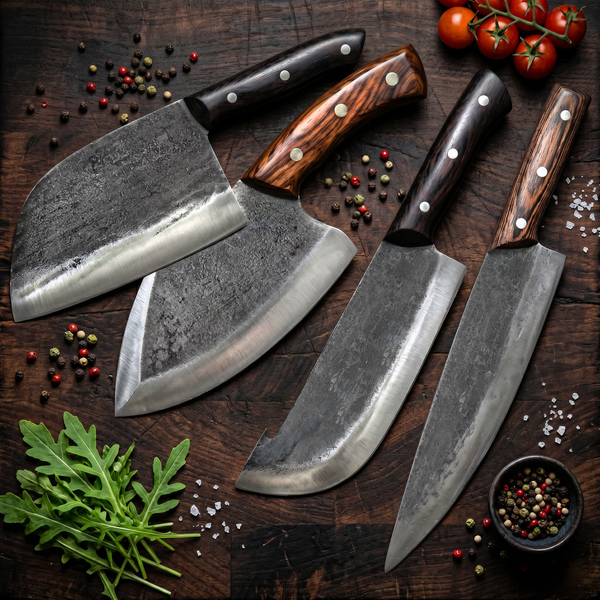
The Kermode 7" chef cleaver is a tall Serbian style chef knife at $119. It has a curved edge that rocks through herbs and onions and enough height to scoop what you just chopped. If you prefer a more conventional shape, the Orca 7" chef knife at $135 weighs 260 g and handles daily prep without fuss.
For meat and bone
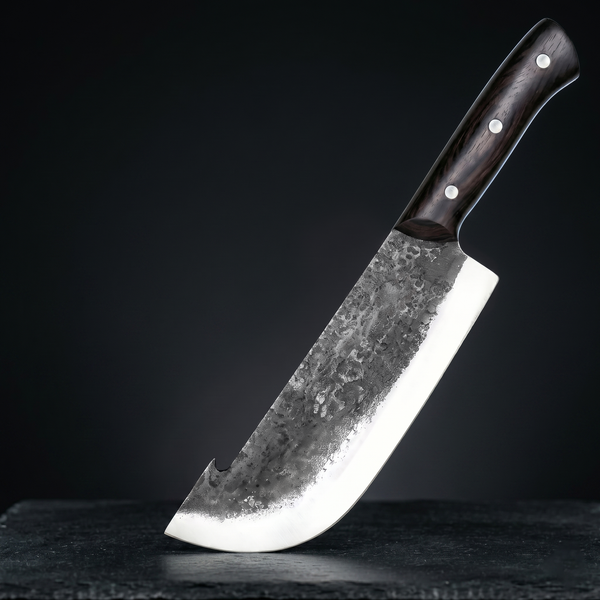
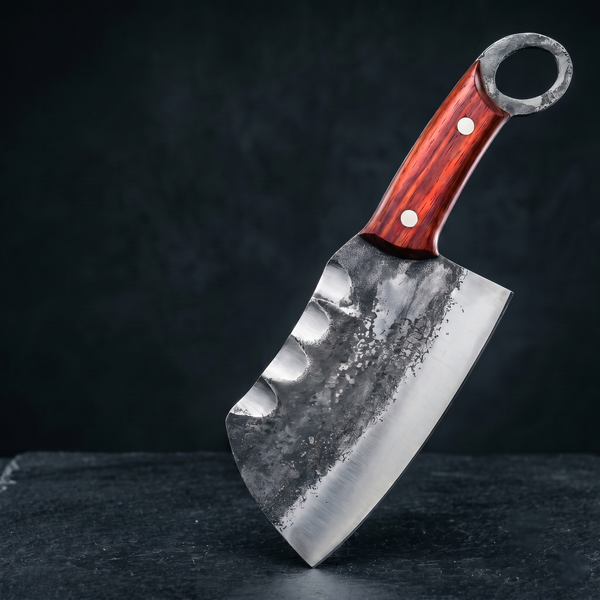
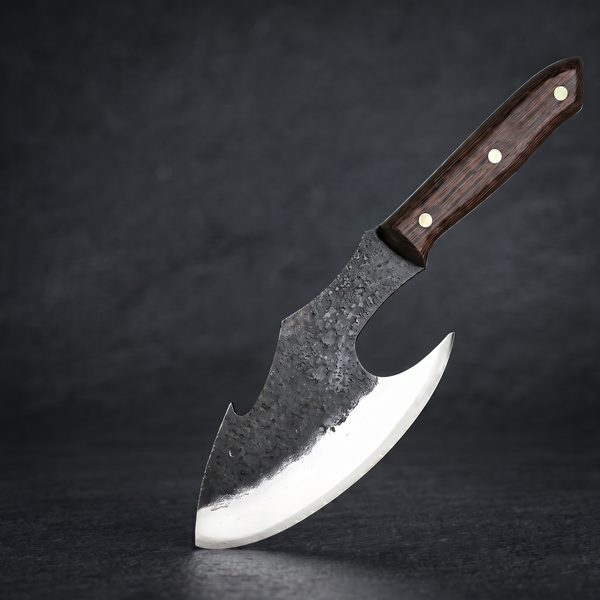
The Kraken 8" cleaver ($160) has a hammer textured blade and a black wenge handle and sits comfortably between prep and butchery. The Kodiak 8" butcher cleaver ($189) has a drop point, a rosewood handle and 581 g behind the edge. The Rhino 8" Serbian cleaver ($138) is the heavy one at 1250 g with a 0.3" thick blade, made to order, so allow 2 to 3 weeks before it ships. For a smaller chopper, the Warthog 6" meat cleaver ($121) is compact at 308 g with a pakka wood handle. All the cleavers are in one place in our hand forged cleavers collection.
For trimming
If the knife you are throwing out was a small utility knife, the Hellfang 5" butcher knife ($79) handles meat trimming and small jobs at 240 g.
In stock knives are delivered in 5 to 6 business days, and we ship to the USA and Australia.
How Do You Make a Knife Last So You Do Not Have to Do This Again?
Most knives that end up in the trash were killed by habits, not by age. The fixes cost almost nothing:
- Hand wash and dry it at once. The dishwasher is where good knives go to get dull and rusty in the same cycle.
- Never leave it soaking in the sink, where it rusts and where someone reaches in blind.
- Wipe on a light coat of food safe oil after drying, especially on high carbon steel.
- Cut on wood or plastic boards, not glass, stone or the plate.
- Hone between sharpenings and sharpen when honing stops working.
- Keep cleavers away from frozen meat and frozen bone, which chip the edge.
- Store it on a magnetic strip, in a block or in a sheath, not loose in a drawer with the can opener.
Patina will build up on high carbon steel as you use it. That grey and blue shading is normal and protects the steel a little. It is not a sign the knife is wearing out. Our full routine is in the high carbon steel knife care guide.
If your old knife turns out to be dull rather than dead, start with the whetstone sharpening guide and give it a second chance. If it really has to go, wrap it well, check your local rules, and take a look through our cleavers for something that will outlive the cardboard.
Questions
Can you put kitchen knives in the trash?
In many places you can, as long as the blade is wrapped in thick cardboard, taped shut and labeled sharp so nobody handling the bag gets cut. Rules are set locally, though, and some areas prefer a drop off site or scrap metal recycling. Check your local waste service's website or call them before the knife goes out.
Can old knives go in the recycling bin?
Not loose in the curbside bin unless your local program says it accepts them. Sorting is often done by hand and a bare blade is a real hazard. Scrap metal recyclers and some recycling centers do take knives, usually wrapped, and sometimes with the handle removed. Ask the yard or your local program what they want.
How do you wrap a knife to throw it away?
Fold thick cardboard around the blade so the edge and tip sit inside several layers, add an extra layer at the tip, then tape it tightly along its length and around the handle end. Write SHARP on both sides in large letters. Paper towels or newspaper alone are not enough, because a tip will push through them.
Should I throw away a rusty knife?
Usually not. Surface rust on a carbon steel knife comes off with baking soda paste or a short vinegar bath, followed by a rinse, a quick dry and a light coat of food safe oil. A knife is only finished when rust has pitted deep into the edge, or the blade is cracked or broken.
Does the Xcutlery warranty cover a knife I want to replace?
Every Xcutlery knife has a lifetime warranty against defects in materials and craftsmanship. If you believe something failed because of how the knife was made, check the warranty page and get in touch before you throw it away. Ordinary wear, dullness or damage from cutting frozen food is a sharpening job, not a warranty one.
Shop the knives from this guide
Keep reading
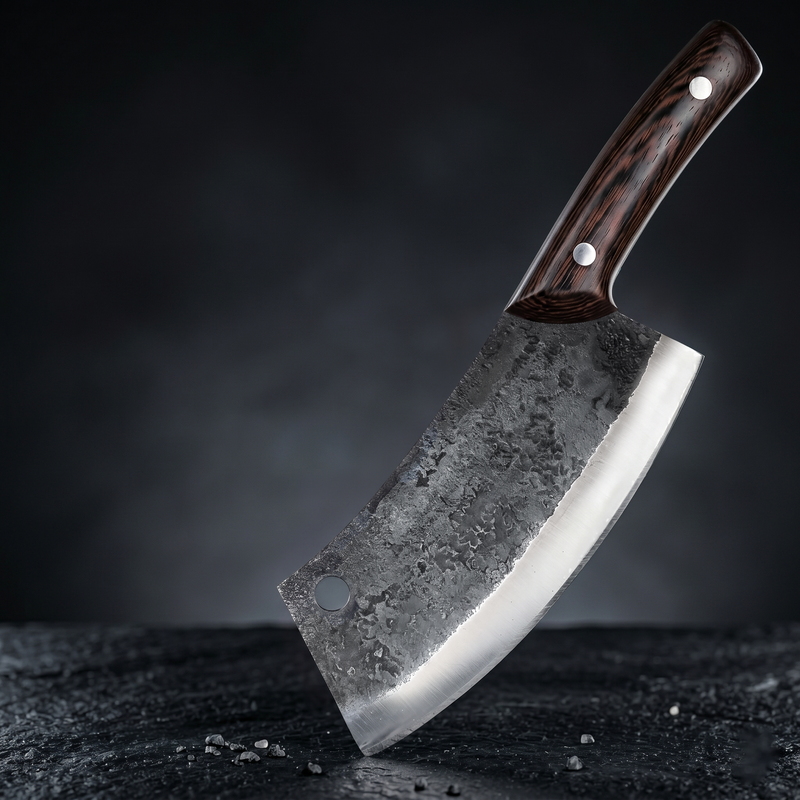
How to Sharpen Kitchen Knives With a Whetstone, Step by Step
A plain guide to sharpening kitchen knives on a whetstone. Which combination stone to buy, how to prepare it, how to find the angle...
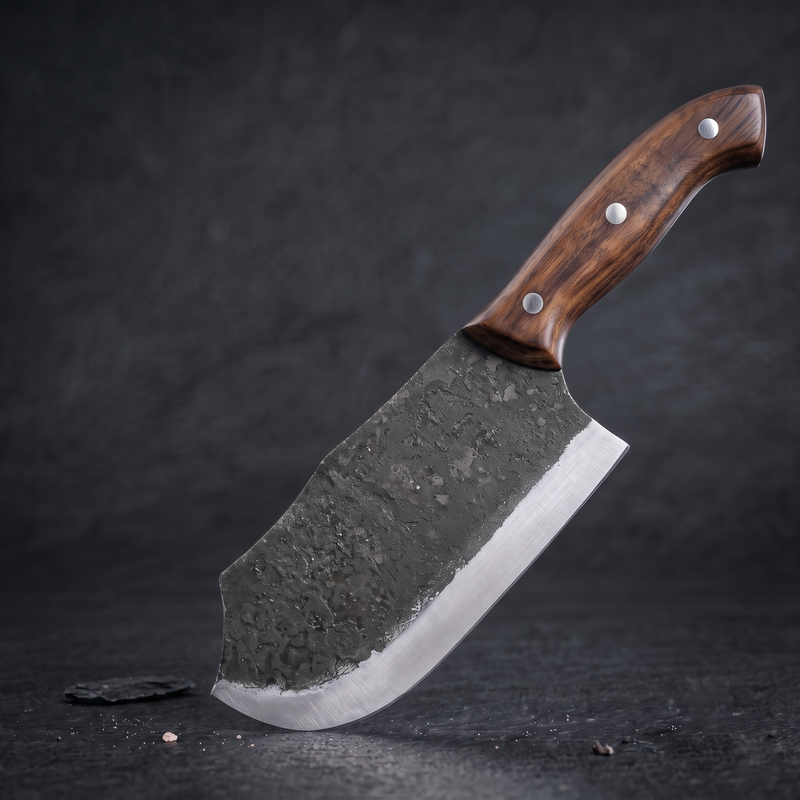
How to Remove Rust From a Carbon Steel Knife Without Ruining It
Rust on a hand forged high carbon steel knife is a chore, not a funeral. This guide shows how to tell rust from patina...
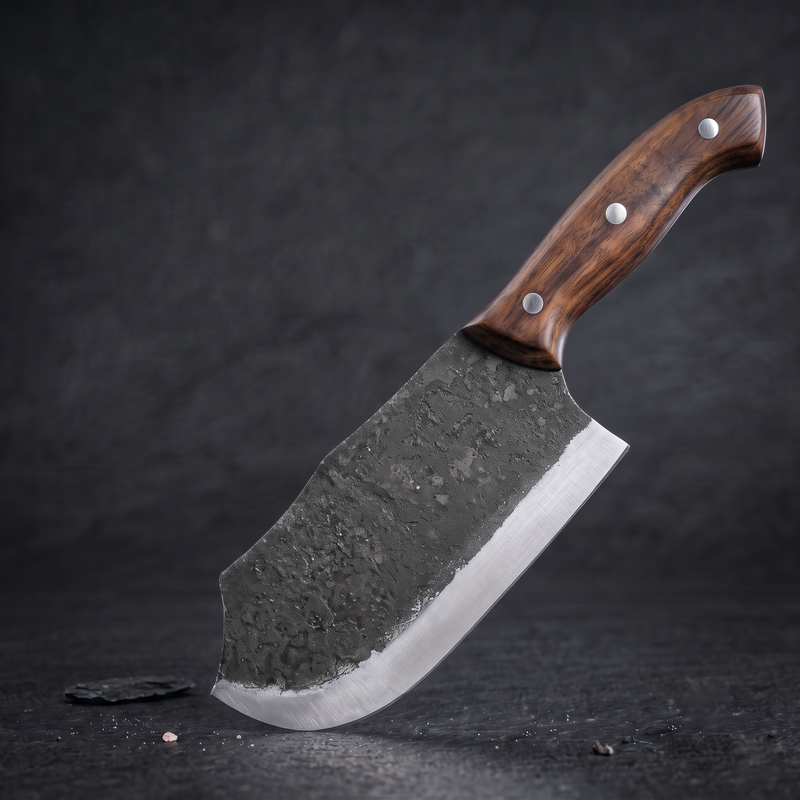
High Carbon Steel Knife Care: Rust, Patina, Oiling and Sharpening
High carbon steel rewards a simple routine. Here is how to wash, dry and oil a carbon steel knife, remove light rust, force a...