
How to Slice Prime Rib for Christmas Dinner
November 01, 2026 · By Matt
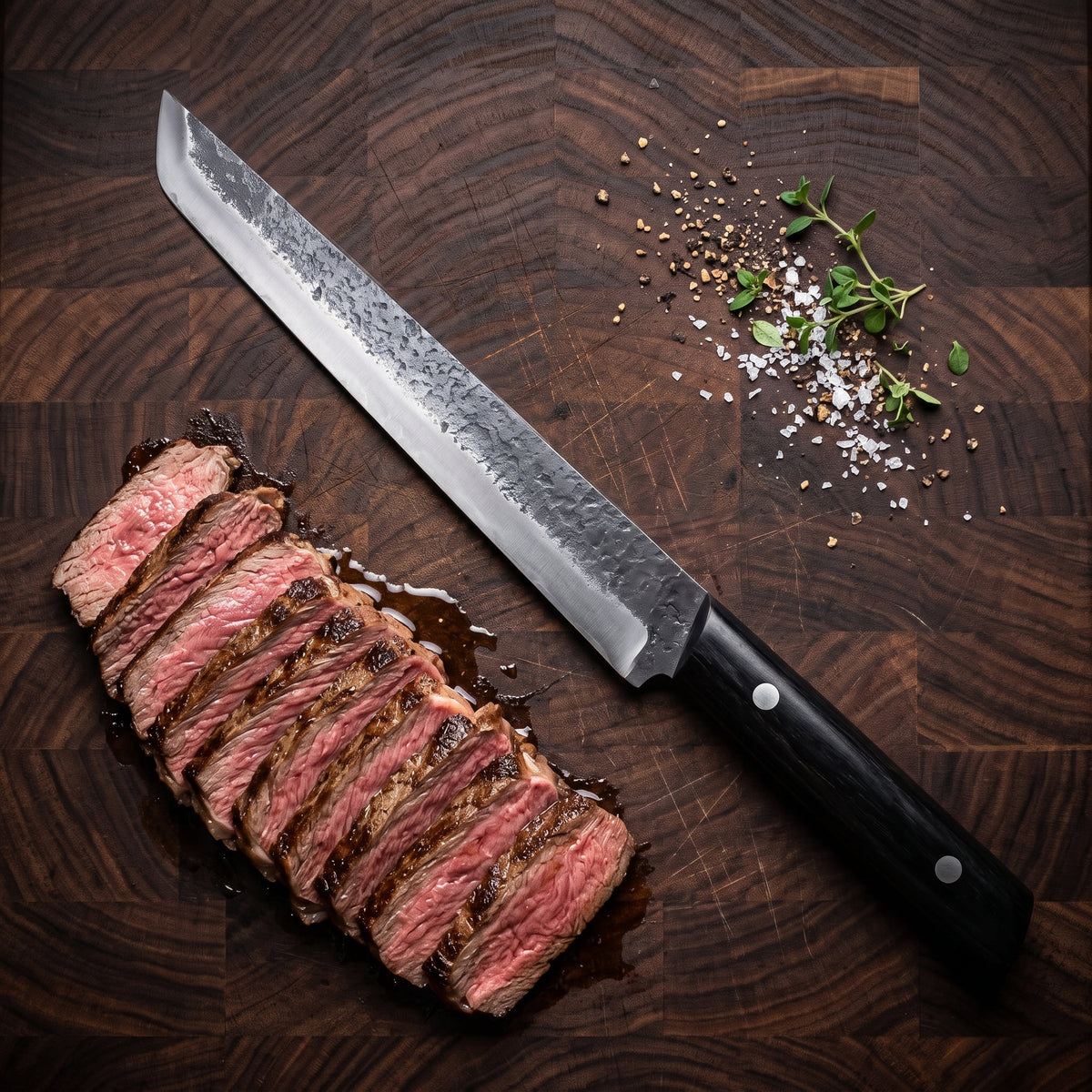
To slice prime rib, let the roast rest for 20 to 30 minutes, cut the bones away in one piece by running a knife along their curve, then turn the roast so the cut side faces down and slice across the grain into slices about half an inch to an inch thick. Use a long, sharp slicing knife and pull it through in long strokes instead of sawing. That is the whole method. The rest of this guide is the detail that keeps a very expensive roast from turning into a very expensive pile of scraps.
Knowing how to slice prime rib matters more than it should, because it is usually the most costly thing on the Christmas table, and it gets carved in front of everyone, often by someone who has done it once a year for a decade and still does not quite trust themselves. The good news is that it is one of the easier roasts to slice. It has a simple shape, the grain runs in one direction, and the bones come off in a single piece if you let them.
What You Need on the Board
| Tool | Job | Our pick |
|---|---|---|
| Long slicing knife | Even slices in one or two strokes | Mamba 11" slicing knife, $112 |
| Boning knife | Following the curve of the rib bones | Mako 7.5" boning knife, $96 |
| Chef knife | A workable backup if you have no slicer | Ironclad 8.7" chef knife, $179 |
| Carving fork or tongs | Holding the roast steady without pressing out the juice | Whatever you own |
| Large board with a juice groove | Catching the juices so they end up on plates, not the tablecloth | Wood or plastic, never glass |
Step 1: Rest the Roast
Take the prime rib out of the oven and move it to the board. Tent it loosely with foil and leave it alone for 20 to 30 minutes. This is the hardest step, because the house smells incredible and someone will hover.
Resting lets the juices settle back into the meat instead of running across the board the moment you cut. A large roast also keeps cooking while it sits, so the internal temperature climbs a little after it leaves the oven. Most recipes tell you to pull it a few degrees below your target for exactly this reason. Follow your recipe's numbers and your thermometer, not your nerves.
Do not wrap it tightly. A sealed foil parcel steams the crust, and the crust is half the reason anyone asked for rib roast in the first place.
Step 2: Remove the Bones
A bone in prime rib is easier to slice once the bones are off. Set the roast on the board so the rib bones stand upright, and hold the top of the bones steady with the fork or a folded towel.
Now take a boning knife and slide the tip in where the meat meets the first bone. Keep the blade pressed against the bones and follow their curve down in long, steady strokes. You are trying to leave as little meat on the bones as you can, though some will stay there, and nobody has ever complained about that. The rack of bones should lift away in one piece.
A narrow, firm blade makes this easy because it can follow the bone without wandering into the meat. The Mako 7.5" has a trailing point that sweeps up toward the tip, which suits long cuts along a curved surface, and at 200 grams it is easy to steer. Our guide on what a boning knife is used for covers the technique on other cuts too.
Two useful tricks. First, ask your butcher to cut the bones off before you cook and tie them back on with twine. The roast cooks the same, and at carving time you snip the string and lift the bones away. Second, do not throw the bones out. Cut between them to separate the ribs and serve them on the side. Someone at the table will want one, and it is usually the person who said they were too full for dessert.
Step 3: Find the Grain
The muscle fibers in a rib roast run along the length of the roast, from one end to the other. You want to cut across them, which on prime rib means slicing in the same direction the bones ran. Each slice should look like a small steak, with the eye of the meat in the middle and the fat cap around the outside.
If you are not sure, look at the cut face of the roast after you take the first slice. You should see the ends of the fibers as tiny dots, not long strands. Long strands mean you are cutting with the grain, and the slices will be chewy no matter how well you cooked it.
Step 4: Slice to the Right Thickness
Lay the boneless roast on the side where the bones were. That flat surface keeps it steady. Hold it gently with the fork, start at one end and cut straight down.
| Thickness | What it suits |
|---|---|
| About 1/4 inch | Leftovers and sandwiches the next day |
| About 1/2 inch | Most dinner plates, and a good default for a crowd |
| About 3/4 to 1 inch | A thick, steakhouse style slice for big appetites |
| One rib's width | The bone in cut, if you skipped Step 2 on purpose |
Ask the table before you start. Some people want the end cut with the most crust, some want the rarest slice from the middle, and one guest will want a slice so thin it is basically a theory. Thin slices work best for anyone who likes their beef more cooked, because you can give them the ends.
Slice only what you are about to serve. A whole roast sliced at once dries out on the platter while people are still passing potatoes. The unsliced half stays warmer and juicier, and it makes much better leftovers.
Step 5: Use Long Strokes, Not a Saw
This is where the knife matters. Set the heel of the blade on the top edge of the roast and draw the knife toward you, so the whole edge passes through the meat in one long pull and the length does the work. A second pull should finish the slice. If you find yourself sawing back and forth, either the blade is too short or it is too dull, and possibly both.
Sawing tears the meat, squeezes the juice out and drags the crust off the top. A long blade crosses the full width of the roast in a single stroke, which is why slicers exist. Press down lightly. The weight of your hand is enough.
What Is the Best Knife for Prime Rib?
The best knife for prime rib is a long slicing knife with a straight edge, long enough to cross the roast in one pull. A rib roast is wide, and a short knife means more strokes and more tearing.
The Mamba 11" is the one we would use. It has an 11" high carbon steel blade with a long straight edge and an angular tip, on a 16.3" overall frame, and it weighs 264 grams. The smith leaves forge scale on the upper flats, which helps the blade slide through meat instead of dragging. It was made for brisket, and a rib roast is the same kind of job: a big cooked cut that needs long, clean slices. Our guide on the best knife for slicing brisket goes into why length beats everything else on a slicer.
If you do not own a slicer, a long chef knife will manage. The Ironclad 8.7" has more reach than a standard 8 inch knife and does long push cuts well. Expect an extra stroke per slice on a big roast.
If you would rather have one blade that trims the roast raw and carves it cooked, the Kodiak 8" butcher cleaver has a drop point and a curved belly that carves. It is heavier, at 581 grams, so it suits a cook who likes a knife with some weight behind it. You can compare all of these in our brisket and BBQ knives collection and our chef knives collection.
Common Mistakes When Slicing Prime Rib
- Cutting straight from the oven. The juice runs out and the slices go grey at the edges. Rest it.
- Slicing with the grain. Tender beef turns chewy. Cut across the fibers.
- Using a dull knife. You crush the crust and tear the slices. Sharpen the day before, not ten minutes before the guests sit down.
- Stabbing the roast with a fork. Every hole is a leak. Hold it steady with the back of the fork or with tongs.
- Carving on a glass board. It dulls the edge and the roast slides around. Use wood or plastic.
After Dinner: Looking After the Knife
A high carbon steel slicer takes a keen edge and sharpens easily at home, and it rusts if it is left wet. Once the roast is put away, hand wash the knife, dry it straight away and wipe on a light coat of food safe oil. Do not leave it in the sink to soak with the roasting pan, and do not put it in the dishwasher. A grey or blue patina will form with use, and it is normal. The full routine is in our high carbon steel knife care guide.
Turkey instead of beef this year? The same slicer does the job, and our guides on how to carve a turkey and the best knife for carving turkey cover the bird from legs to breast.
Questions
How long should prime rib rest before slicing?
About 20 to 30 minutes, tented loosely with foil. Resting lets the juices settle so they stay in the meat when you cut, and the roast keeps cooking a little while it sits, so pull it from the oven slightly below your target temperature.
Which way do you cut prime rib?
Across the grain. The muscle fibers run along the length of the roast, so cut in the same direction the bones ran. Each slice should look like a small steak, and the cut face should show the fiber ends as small dots rather than long strands.
How thick should prime rib be sliced?
About half an inch is a good default for a crowd. Go to three quarters of an inch or a full inch for a thick steakhouse style slice, and about a quarter inch for leftovers and sandwiches.
What is the best knife for prime rib?
A long slicing knife with a straight edge, long enough to cross the roast in one pull. The Mamba 11 inch slicer suits it well. A boning knife such as the Mako 7.5 inch is the easiest way to take the bones off first.
Should you remove the bones before slicing prime rib?
Yes, it makes slicing much easier. Run a boning knife along the curve of the bones to lift them off in one piece, or ask your butcher to cut them off before cooking and tie them back on, then snip the twine at carving time. Serve the separated ribs on the side.