
How to Hold a Chef Knife: The Pinch Grip and the Claw
October 13, 2026 · By Matt
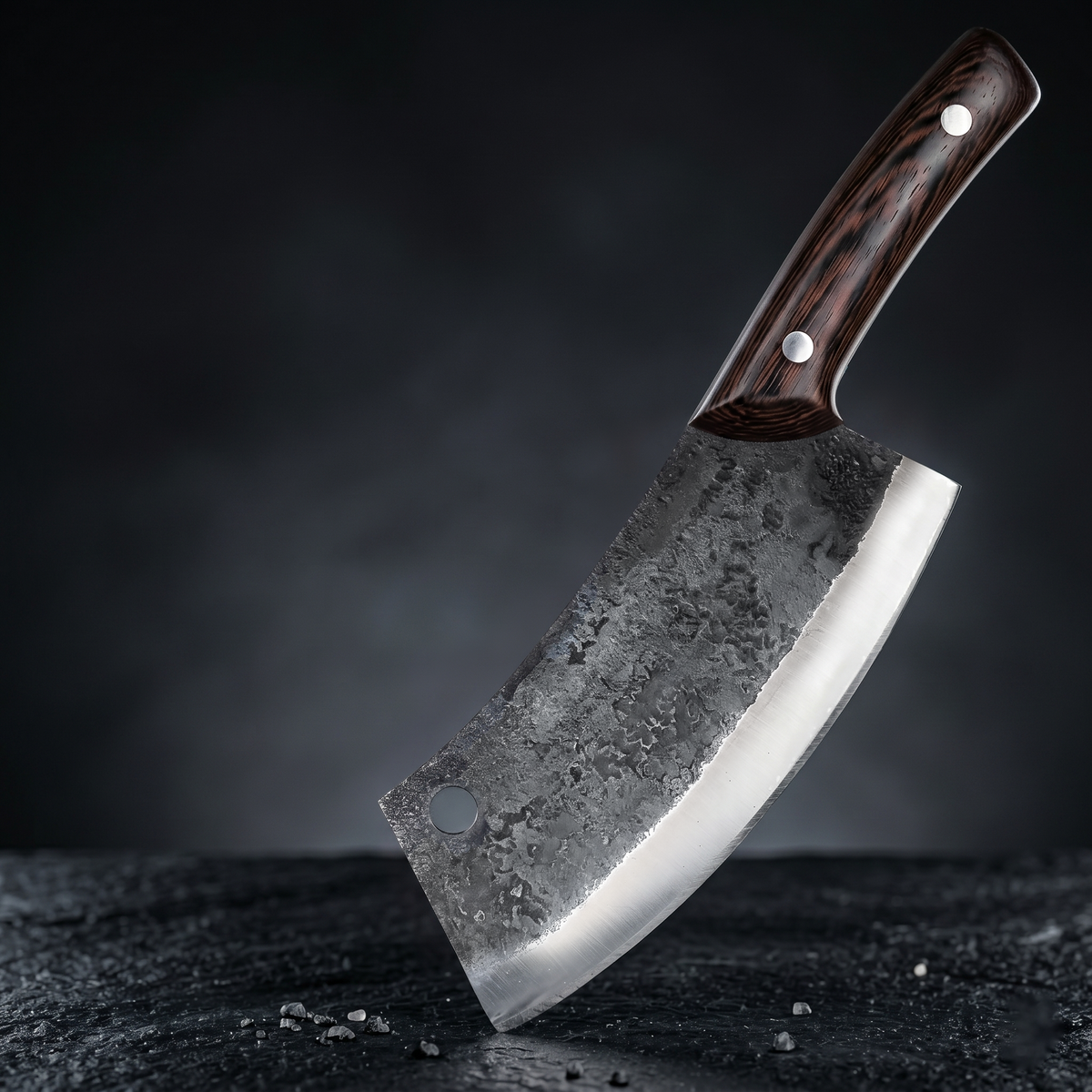
To hold a chef knife, pinch the blade itself just ahead of the handle between your thumb and the side of your bent index finger, then wrap your other three fingers around the handle. Your other hand guides the food in a claw, fingertips tucked under and knuckles resting against the flat of the blade so the edge can never reach your nails.
Most people hold a chef knife the way they hold a hammer, because nobody ever told them otherwise and the handle looks like the part you are meant to grab. It works, in the sense that food gets cut and most fingers survive. The pinch grip and the claw are what make a knife feel like part of your hand instead of a thing you are wrestling. This guide covers both, the cutting motions, how the grip shifts on a tall Serbian chef knife and on a cleaver, the board setup and the usual mistakes.
What Is the Correct Way to Hold a Chef Knife?
The pinch grip. Put your thumb on one side of the blade and the middle section of your index finger on the other, both just in front of where the handle meets the steel. Your index finger curls slightly, so it is the side of the finger touching the blade, not the pad. The middle, ring and little fingers close around the handle and hold it against your palm. That is the whole grip.
What it gives you is control. A knife held by the handle alone pivots around your fist, and the tip wanders a little with every cut. Pinch the blade and the pivot moves forward to your fingertips, which are much better at small corrections than your wrist. This is not a fringe opinion either, since the standard description of the knife notes that for precise control most cooks grip the blade itself: Wikipedia's chef's knife entry.
It feels awkward for about a week, and your thumb will complain. That settles once you stop squeezing. A firm hold is enough; a white knuckled one tires your hand and makes the cut worse, not safer.
Pinch Grip vs Handle Grip vs Pointer Finger Grip
The pinch grip
Best for nearly everything, from dicing onions to portioning meat. Most control, least wrist strain over a long session. The downside is the learning curve.
The handle grip
All four fingers on the handle, thumb along the side or wrapped underneath. It feels secure, and when you are leaning on the knife to split a squash, it lets you put weight behind it. The downside is precision. The blade can twist in your hand, and fine dice turns into guesswork.
The pointer finger grip
Index finger stretched along the spine, the other fingers on the handle. It feels precise, and for scoring a crust or slicing thin fish it can be. For general chopping it is a poor habit. The finger has no strength up there, the wrist does all the steering and the blade can roll sideways under pressure. Move that finger down onto the flat and see how much steadier the knife gets.
How Should You Hold the Food? The Claw
The hand that is not holding the knife matters at least as much as the one that is. Curl your fingertips under so they point slightly back toward your palm, and tuck your thumb behind them. Rest the food under your fingertips, and let the first knuckles of your middle and index fingers touch the flat of the blade.
Now the knife does its work against your knuckles. The flat of the blade slides along them, and the edge cannot reach your fingertips because they are behind the knuckles. To move to the next slice, walk the claw back a little and the blade follows. Your knuckles set the thickness of every cut, which is how cooks get even dice without measuring anything.
Two things ruin the claw: lifting the blade higher than your knuckles, and the thumb creeping out to steady a round onion. Keep the edge low, keep the thumb tucked, and cut a flat side on round food first so it sits still by itself.
Which Cutting Motion Should You Use?
The rock chop
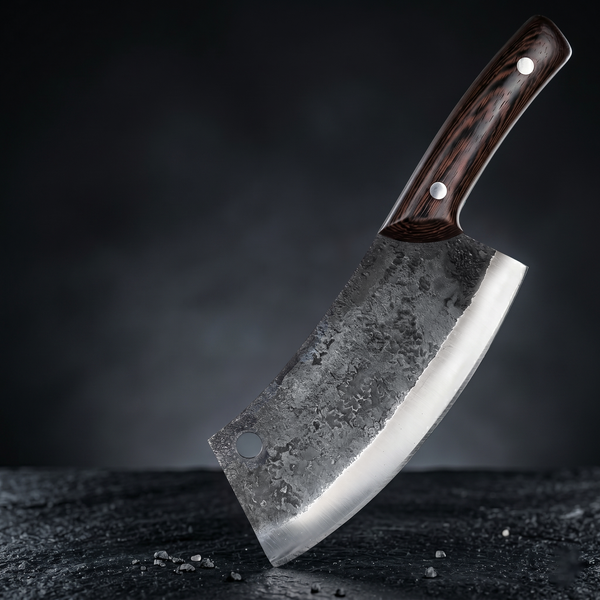
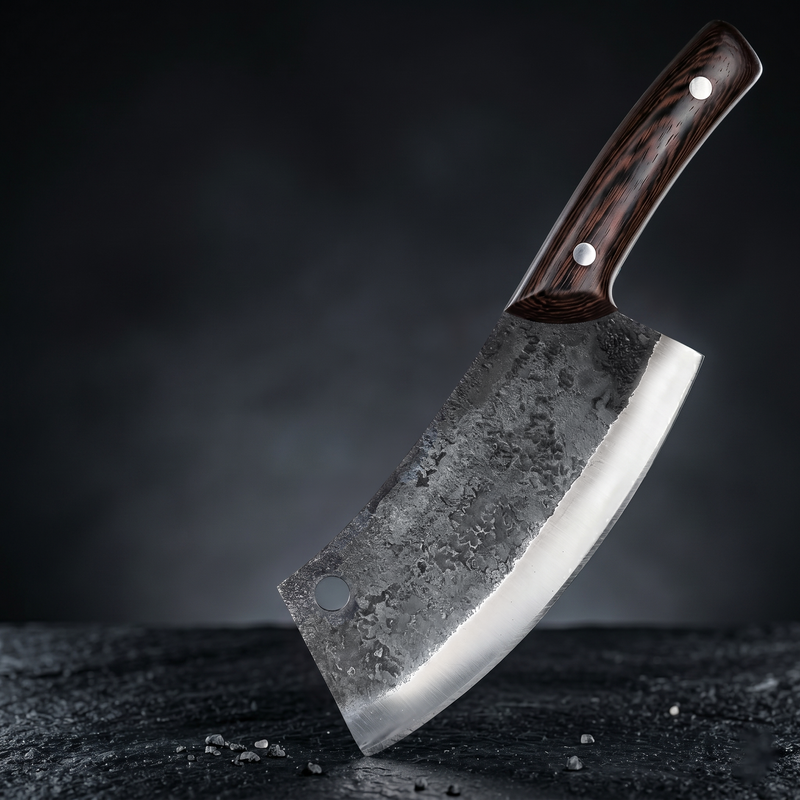
The tip stays on the board and the handle rises and falls, so the curved part of the edge rolls through the food. It is fast and steady for herbs, garlic and anything you want minced fine. It needs a curved edge to work. Our Kermode 7" chef cleaver has a curved edge built for exactly this, and it rocks well despite the tall blade.
The push cut
Edge on the food, push forward and down in one movement, lift, repeat. It suits flatter edges and tall blades. The Chef's Kiss 7" Serbian chef knife weighs 404 g, so a push cut through a carrot or a cabbage mostly happens under its own weight. The Orca 7" chef knife, our everyday chef knife at 260 g, is light enough to push cut for a long session without your forearm filing a complaint.
The pull cut
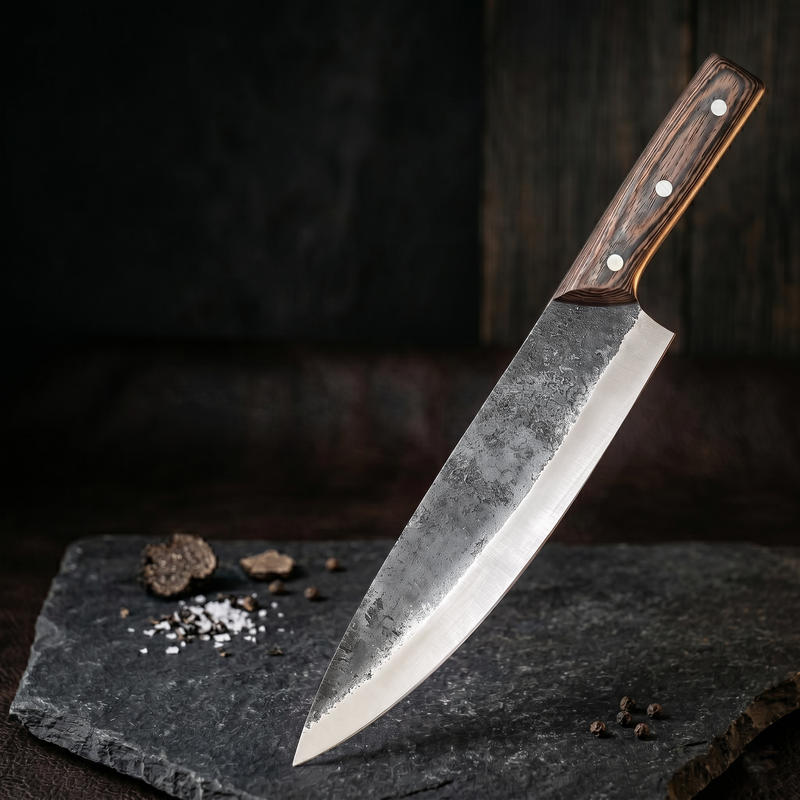
Set the tip or the middle of the blade on the far side of the food and draw the knife back toward you as it drops. It is the motion for slicing chicken breast or steak, and length helps, because one long draw cuts cleaner than three short ones. The Ironclad 8.7" chef knife gives you the extra reach for that.
If you are not sure which jobs belong to which knife in the first place, our guide to what a chef knife is used for covers the full list.
| Grip | How | Best for | Watch out for |
|---|---|---|---|
| Pinch grip | Thumb and side of index finger pinch the blade just ahead of the handle, other fingers on the handle | Nearly all prep, dicing, slicing, mincing | Squeezing too hard, sore thumb in the first week |
| Handle grip | All four fingers around the handle, thumb along the side | Hard squash, thick roots, cleaver chops through bone | Less precision, blade can twist on fine work |
| Pointer finger grip | Index finger along the spine, others on the handle | A few delicate jobs like scoring or thin slicing | Weak control, blade rolls sideways under pressure |
| Claw (guiding hand) | Fingertips tucked under, knuckles against the flat of the blade | Holding food steady for every cut | Thumb sticking out, blade lifted above the knuckles |
How Does the Grip Change on a Serbian Chef Knife or a Cleaver?
Tall Serbian chef knives
A Serbian chef knife has a much taller blade than a standard chef knife. You pinch just in front of the handle as usual, but your index finger lands on a wide flat with plenty of steel above it, which most people find steadier. The claw gets easier too, since your knuckles have a tall wall to rest against. The extra steel adds weight, so let the knife fall rather than driving it down. Our Serbian chef knife guide explains the shape in more detail.
Cleavers
A cleaver uses both grips, and the job decides which. For slicing and dicing, choke up into the same pinch grip you use on a chef knife. For chopping through bone, switch to a full handle grip, all four fingers wrapped round, firm but not clenched, and let the stroke come from the elbow and shoulder. Your pinch fingers have no business near the blade when it is coming down on a rib.
Lighter cleavers move between the two grips easily. The Kraken 8" cleaver at 380 g and the Kodiak 8" butcher cleaver at 581 g slice vegetables in a pinch grip and chop poultry bone in a handle grip. The Rhino 8" Serbian cleaver weighs 1250 g with a 0.3" spine, and it is a handle grip knife almost all the time. Pinching 1250 g of steel for an hour of onion work is a fine way to learn what your thumb thinks of you.
Some cleavers, like the Megalodon 6.6", have a finger hole. It hangs the knife on a hook, and when you choke up into a pinch grip for slicing, a finger hooked through it locks the blade to your hand. Keep the finger out of it for bone chops, or the shock goes straight into your knuckle. The full chopping technique is in our guide on how to use a meat cleaver.
How Should You Stand and Set Up the Board?
Good grip will not save you from a board that moves. Put a damp towel flat under the cutting board so it cannot slide. Use a wood or plastic board big enough that food stays on it; glass, stone and ceramic blunt the edge and make the blade skid.
Stand square to the counter, feet roughly shoulder width apart, with your forearm roughly level when the edge touches the board. If you have to hunch, a thicker board fixes that faster than a new kitchen.
What Are the Most Common Knife Grip Mistakes?
- Squeezing. A death grip makes the knife harder to steer. Hold it like a pen you care about, not a railing on a ship.
- Flat fingers on the food. Fingertips pointed forward are the first thing the edge meets. Curl them under.
- Sawing. Short back and forth strokes tear food and wander off line. Use one long push or pull.
- Using a dull knife. A dull edge slips off a tomato skin and into whatever is next to it. Our guide on sharpening kitchen knives with a whetstone covers how.
- Catching a falling knife. Step back and let it land. A knife is cheaper than stitches.
How Do You Learn the Pinch Grip?
- Hold the knife by the handle with your hand relaxed, then slide your hand forward until your middle finger touches the back of the blade where it meets the handle.
- Bring your thumb onto one side of the blade and the side of your curled index finger onto the other, both just in front of the handle.
- Wrap your remaining fingers around the handle. Check that you can wiggle the knife slightly; if you cannot, you are squeezing.
- Set your other hand in a claw on a carrot or a cucumber, knuckles touching the flat.
- Make slow push cuts, moving the claw back a little after each one. Watch the knuckles, not the edge.
- Do one vegetable a day for a week with the pinch grip only, even when it feels slower. By the end of it, the handle grip will be the one that feels odd.
Speed comes last. Cooks on television chop fast because they chopped slowly for years first.
All our chef knives are hand forged high carbon steel with a full tang and steel pins, and the forge scale or hammer texture left on the flats gives your pinch fingers something to hold. Keep the blade dry as you work, because a wet high carbon steel blade will rust. You can browse the range in our chef knives collection, and when you want to try the same grips on something heavier, the hand forged cleavers are the next place to practice, with our guide to cleaver vs chef knife to explain which one earns the board space.
Questions
What is the pinch grip on a chef knife?
The pinch grip means holding the blade itself, just in front of the handle, between your thumb and the side of your curled index finger. Your middle, ring and little fingers wrap around the handle. It gives far better control than holding the handle alone, because your fingertips steer the blade instead of your wrist.
Where should my index finger go when holding a chef knife?
Curl it and rest the side of the middle section against the flat of the blade, opposite your thumb, just ahead of the handle. Avoid stretching it along the spine. That pointer finger position feels precise but gives you little strength, and the blade can roll sideways when you press down on something firm.
What is the claw grip in cooking?
The claw is how the guiding hand holds the food. Curl your fingertips under, tuck your thumb behind them and rest your knuckles against the flat of the blade. The knife slides along your knuckles, so the edge cannot reach your fingertips, and moving the claw back sets the thickness of each slice.
Should I rock or push cut with a chef knife?
It depends on the edge. A curved edge, like the Kermode chef cleaver, rocks well for herbs and garlic with the tip staying on the board. A flatter or taller blade suits a push cut, forward and down in one movement. Long pull cuts work best for slicing meat. Most cooks use all three.
How do you hold a cleaver compared with a chef knife?
For slicing and dicing, hold a cleaver in the same pinch grip as a chef knife. For chopping through bone, switch to a full handle grip with all four fingers around the handle, firm but not clenched, and let the stroke come from the elbow and shoulder. Keep your pinch fingers away from the blade when chopping.
Shop the knives from this guide
Keep reading
Chef Knife Sizes: 6, 7, 8 and 10 Inch, and Which One to Buy
An 8 inch chef knife is the safe all rounder for most kitchens. This guide covers what 6, 7, 8 and 10 inch chef...
What Is a Chef Knife Used For? Jobs, Sizes and How to Hold One
What a chef knife is used for, and what it should never be asked to do. How to pick a blade length for your...
How to Use a Meat Cleaver: Grip, Chop and Keep Your Fingers
A practical guide to using a meat cleaver: the handle grip and pinch grip, what the finger hole is for, setting up a board...