
How to Use a Meat Cleaver: Grip, Chop and Keep Your Fingers
October 13, 2026 · By Matt
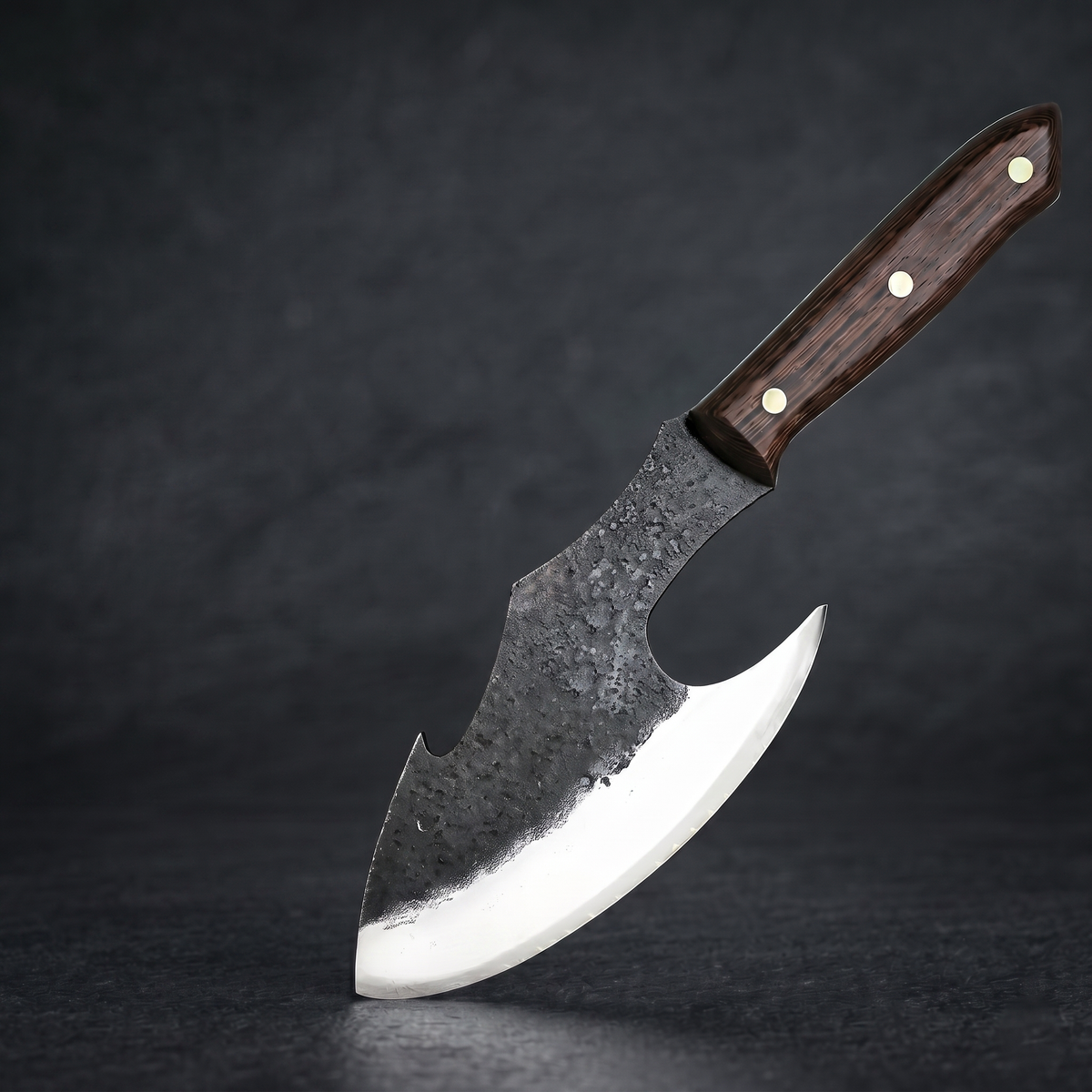
To use a meat cleaver, hold it in a firm handle grip, set it on a heavy board that will not slide, lift it to about shoulder height and bring it straight down in one committed stroke, letting the weight of the blade do the cutting. For vegetables, switch to a pinch grip and rock or push the edge through instead of chopping. Keep your other hand well back and never saw or twist the blade once it is in bone.
A cleaver is the simplest knife in the kitchen and the one people are most nervous about, usually because it looks like it could remove a thumb without noticing. It can, which is why the technique matters more than the brand. This guide covers the grip, the board, the strokes, getting through bone, breaking down a chicken, ribs and pork shoulder, and the care afterwards.
How to Hold a Meat Cleaver
The handle grip for chopping
For anything with bone in it, wrap all four fingers around the handle with your thumb along the side. Hold it firmly but not in a death grip. A clenched wrist sends every shock straight up your arm, while a slightly relaxed hold lets the handle move a fraction in your palm when the edge lands. The stroke comes from the elbow and shoulder, not the wrist.
The pinch grip for control
For slicing and dicing, slide your hand forward so thumb and forefinger pinch the flat just in front of the handle, the same grip you would use on a chef knife. On a cleaver with a curved edge, like the Kermode 7" chef cleaver, the pinch grip is the one you will use most of the time.
What the finger hole is for
Some of our cleavers have a hole through the blade, including the Megalodon 6.6", the Razorback 6" and the 5.5" clip point cleaver. It hangs the knife on a hook, and when you choke up into a pinch grip for slicing, a finger hooked through it locks the blade to your hand. Keep the finger out of it for bone chops; bring the blade down on a bone that way and the shock has nowhere to go but your knuckle.
Setting Up the Board and Your Stance
A cleaver needs a board that can take a hit. End grain wood or a thick plastic board are the sensible choices; a thin board splits along the grain the first time you put real force into a chop. Skip glass, stone, ceramic and steel surfaces entirely. They chip the edge and bounce the blade. The board should be bigger than the cleaver in every direction.
Put a damp towel under the board. A board that skates when the edge lands is the most common cause of a bad cut. Stand square to the counter, feet about shoulder width apart, with your forearm roughly level when the edge touches the board. Keep the hand holding the meat flat, fingers curled, well back from where the edge will land.
The Three Cleaver Strokes
The straight chop
This is the stroke for bone and joints. Place the edge where you want the cut, lift the cleaver straight up along that line to between elbow and shoulder height and bring it down in one motion. The blade should land square, the whole edge at once, not tip first. Follow through into the board rather than stopping at the meat.
The rocking cut and the push cut
Vegetables do not need a chop. On a curved edge, set the tip on the board and rock the blade down and forward through the food. On a flatter cleaver, push cut: edge on the food, push forward and down, lift, repeat. People who dice onions with a bone stroke end up with onion on the ceiling.
The flat of the blade
The wide flat is the part of a cleaver a chef knife cannot match. Put it over a peeled garlic clove and press down with the heel of your hand to crush it. Once food is chopped, slide the flat under the pile and lift the lot into the pan.
Can a Meat Cleaver Cut Through Bone?
Yes, that is the job it was built for. A cleaver gets through bone because it is thick behind the edge and heavy enough to carry momentum, so the edge splits the bone rather than slicing into it and stopping.
Let the weight do the work. Lift, aim, and bring it down in one clean motion without pulling back at the last moment. A half hearted chop that stops in the bone is worse than a hard one, because now the blade is stuck and you are tempted to wiggle it. Aim for the joint or the thinnest part of the bone, and cut between bones wherever there is a gap. If the first stroke does not go through, lift it out cleanly, set the edge back in the same cut and chop again. Never lever it inside the bone; that is how edges chip.
Do You Need a Heavy Cleaver to Chop Bone?
For small bones, no. For big ones, yes, and no amount of enthusiasm makes up for a light blade. The Kodiak 8" butcher cleaver at 581 g and the Kraken 8" cleaver at 380 g handle poultry bones and lamb and pork ribs without complaint, and are light enough for everyday prep.
When the bones get bigger, so should the cleaver. The Rhino 8" Serbian cleaver weighs 1250 g with a 0.3" (7.6 mm) spine, the Grizzly 8.7" comes in at 1073 g, and the Mammoth 9.1" is about 1500 g with a thick spine. These are for beef ribs, shoulder bones, chopping a rack across the bones and breaking down large cuts for stock. The trade off is obvious the first time you try to dice a shallot with one.
Which Stroke for Which Job
| Task | Stroke | Weight class that suits it | Xcutlery example |
|---|---|---|---|
| Dicing onions, herbs, vegetables | Rocking or push cut, pinch grip | Light, under about 400 g | Kermode 7" chef cleaver, 349 g |
| Crushing garlic, scooping chopped food | Flat of the blade | Any | Kraken 8", 380 g |
| Breaking down a chicken | Slice to the joint, then a short straight chop | Light to middle, roughly 270 to 600 g | Megalodon 6.6", 430 g |
| Pork and lamb ribs, cutting between the bones | Straight chop, handle grip | Middle, roughly 400 to 700 g | Kodiak 8", 581 g |
| Beef ribs, shoulder bones, chopping across a rack | Straight chop from shoulder height | Heavy, over 1000 g | Rhino 8", 1250 g |
| Large joints and stock bones | Straight chop, let the mass fall | Heavy, over 1000 g | Mammoth 9.1", about 1500 g |
How to Break Down a Chicken With a Cleaver
A whole chicken is the best practice bird there is. The bones are small, the joints are easy to find and the worst outcome of a bad chop is an ugly thigh. Pat it dry so it does not slide. Slice through skin and meat, and chop only where there is bone.
- Remove the legs. Pull one leg away from the body and slice the skin between thigh and breast. Bend the leg back until the hip joint pops, then cut through the joint with a short chop. Repeat on the other side.
- Separate thigh from drumstick. Lay the leg skin side down. There is a thin line of fat over the knee joint. Put the edge on that line and chop straight down once. If you hit bone hard, you missed the joint by a quarter inch.
- Take off the wings. Pull a wing out, find the shoulder joint with your thumb and chop through it. Chop off the wing tips for stock.
- Remove the backbone. Stand the carcass on its neck end and chop down along one side of the spine through the rib bones, then the other side. The backbone comes away in one piece. This is the part a flimsy knife hates and a cleaver barely notices.
- Split the breast. Lay it skin side down, put the edge on the centre of the keel bone and chop straight down once from about elbow height.
- Portion further if you want. Each breast half chops into two or three bone in pieces. Chop between the ribs, not across them.
You now have eight to ten pieces, stock bones, and a board that needs attention before anything else touches it. Wash your hands, then the board, the cleaver and the counter. FoodSafety.gov puts it plainly: wash cutting boards, dishes, utensils, and countertops with hot, soapy water, especially after they have held raw meat, poultry, seafood, or eggs: FoodSafety.gov four steps to food safety.
Splitting Ribs and Portioning a Pork Shoulder
Ribs
To cut a rack into single ribs, lay it bone side up so you can see where each bone runs, set the edge in the meat between two bones and chop straight down. A middle weight cleaver does this in one stroke per rib. Shortening a rack across the bones is a different job. Now you are going through bone at every stroke, so you want the heavy class and a committed chop. Work along the line one bone at a time rather than trying the whole width in one swing.
Pork shoulder
A bone in pork shoulder is mostly meat with one flat blade bone and a length of round arm bone through it. Use the cleaver as a knife first. With the pinch grip, slice the meat away from the bone in big pieces and cut those to size. Only once the bone is bare do you switch to the handle grip. Chop the blade bone across its narrowest part. The arm bone is thick, so it gets a heavy cleaver and a single hard stroke from shoulder height.
What Not to Do With a Cleaver
Most cleaver damage comes from a short list of habits. Do not saw; the edge is thick and sawing just scrapes it sideways across bone and dulls it. Do not twist or lever a stuck blade. Lift it straight out and chop again. Do not chop frozen bone or frozen meat, which is the fastest way to put a chip in a cleaver that was doing fine. Do not put a cleaver in the dishwasher, which will have the edge orange by morning. And do not try to catch a falling cleaver. Step back and let it hit the floor. The floor will recover.
Cleaning, Oiling and Storing a High Carbon Steel Cleaver
High carbon steel rusts if you let it, so the routine after use is short and not optional. Wash the blade by hand in warm water with a little dish soap, dry it at once, then wipe a thin coat of food safe oil along the blade, edge and spine included. A dark grey patina on the flats is normal. Orange is rust and needs dealing with the same day. The full routine is in our high carbon steel knife care guide.
Store the cleaver dry, somewhere the edge cannot knock against other steel. A magnetic strip or a blade guard in a drawer works, and the finger hole on the Megalodon or Razorback exists for a hook. A cleaver that has started crushing skin rather than cutting it needs a few strokes on a stone, and our guide on how to sharpen a meat cleaver covers the angle and the method.
Once the technique is in your hands, the rest is practice and a bird or two. If you are still deciding what to practise with, our guide to meat cleaver sizes explains where each weight class earns its place, and the hand forged meat cleavers collection runs from light choppers to the Mammoth.
Questions
How do you hold a meat cleaver?
For chopping bone, wrap all four fingers around the handle with your thumb along the side, firm but not clenched, and swing from the elbow and shoulder. For slicing and dicing, slide forward into a pinch grip with thumb and forefinger on the flat of the blade just ahead of the handle, the same grip you would use on a chef knife.
Can a meat cleaver cut through bone?
Yes, that is what it is built for. The thick edge and the weight of the blade let it split bone rather than slice into it and stop. Lift the cleaver, aim for a joint or the thinnest part of the bone and bring it down in one committed stroke. Never saw, twist or lever the blade once it is in the bone.
What cutting board should you use with a cleaver?
Use a thick end grain wood board or a thick plastic board, bigger than the cleaver in every direction, with a damp towel underneath so it cannot slide. Avoid glass, stone, ceramic and steel surfaces, which chip the edge and make the blade bounce. Wash the board with hot soapy water after it has held raw meat or poultry.
Do you need a heavy cleaver to chop bone?
Not for small bones. A cleaver in the 380 to 600 g range such as the Kodiak or Kraken handles chicken, lamb and pork ribs easily. For beef ribs, shoulder bones and chopping across a rack you want the heavy class, over 1000 g, such as the Rhino, Grizzly or Mammoth, where the mass of the blade does the work.
How do you clean a high carbon steel cleaver after use?
Wash it by hand in warm water with a little dish soap, dry it at once with a towel and wipe on a thin coat of food safe oil. Never put it in the dishwasher and never leave it soaking. A grey patina on the flats is normal. Orange rust is not, and should be removed the same day it appears.
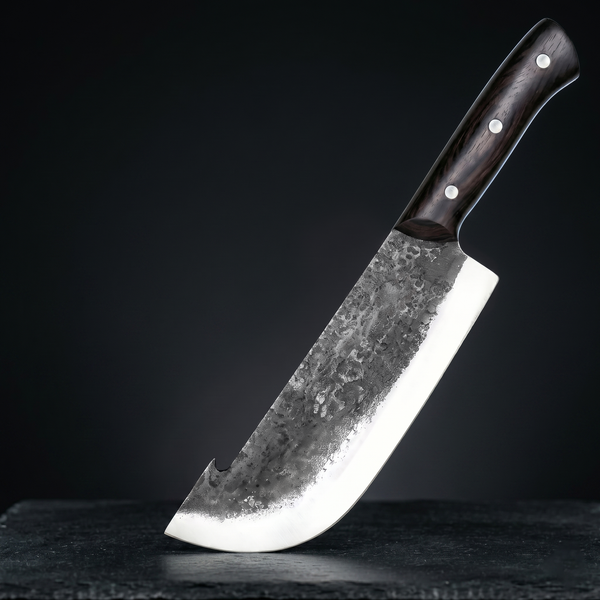
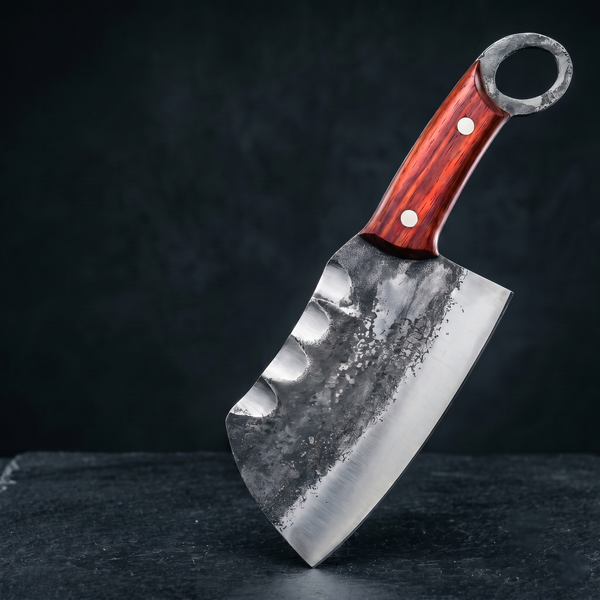
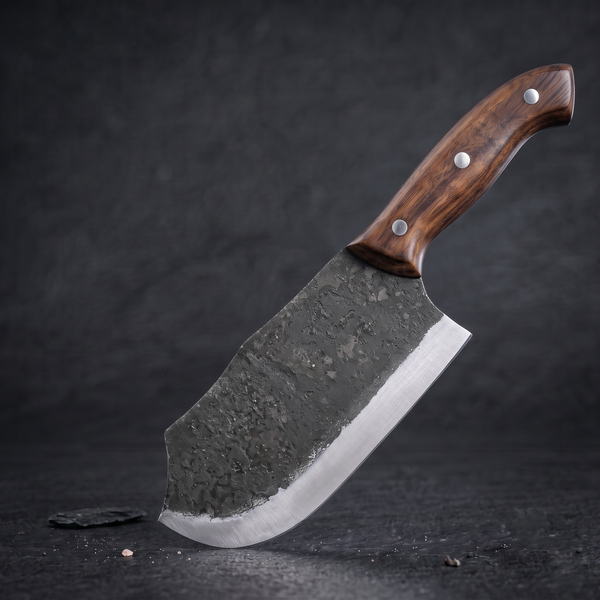
Shop the knives from this guide
Keep reading
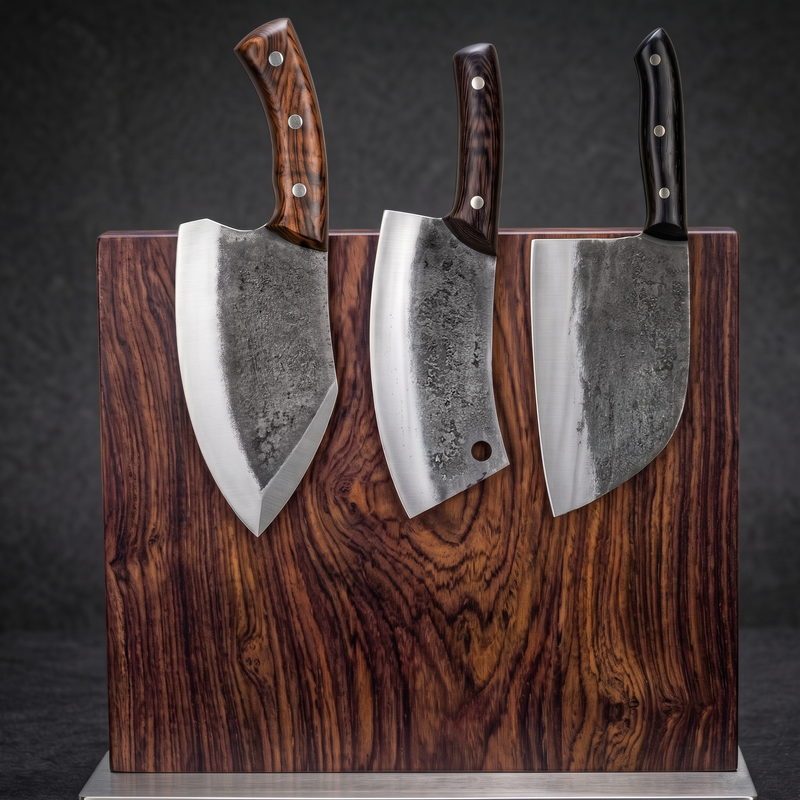
Meat Cleaver Sizes Explained: Which Blade Length to Buy
Blade length is the number everyone shops by and the one that matters least. This guide explains what length, height, spine thickness and weight...
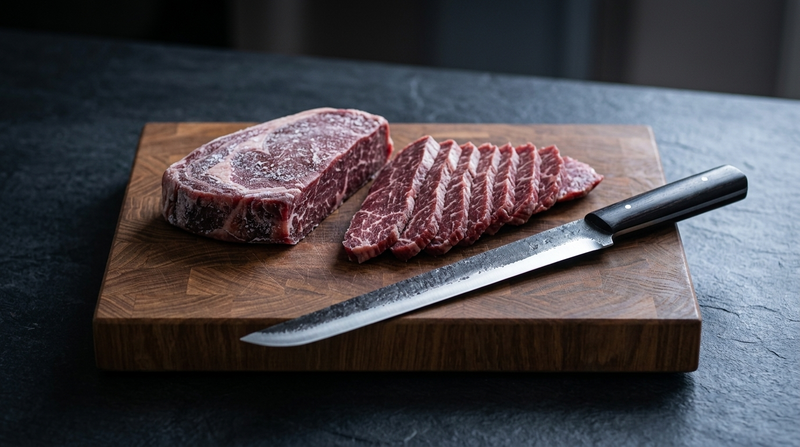
How to Cut Frozen Meat Without Wrecking Your Knife or Your Hand
Fully frozen meat chips knife edges and makes blades skid toward your hand. Here is how to thaw meat safely, why partly frozen meat...
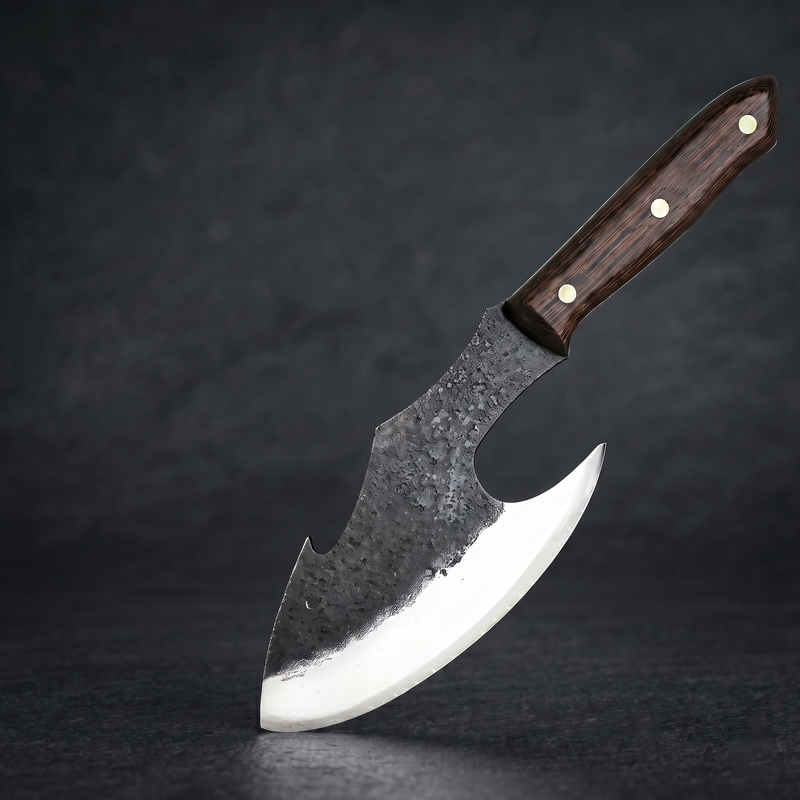
Why Do Cleavers Have a Hole in the Blade? What It Is Really For
The hole in a cleaver blade is a hanging hole first. On the Xcutlery Megalodon, Razorback and 5.5" clip point cleaver it is also...