
Best Knives for Cutting Meat: Which Blade for Which Cut
October 13, 2026 · By Matt
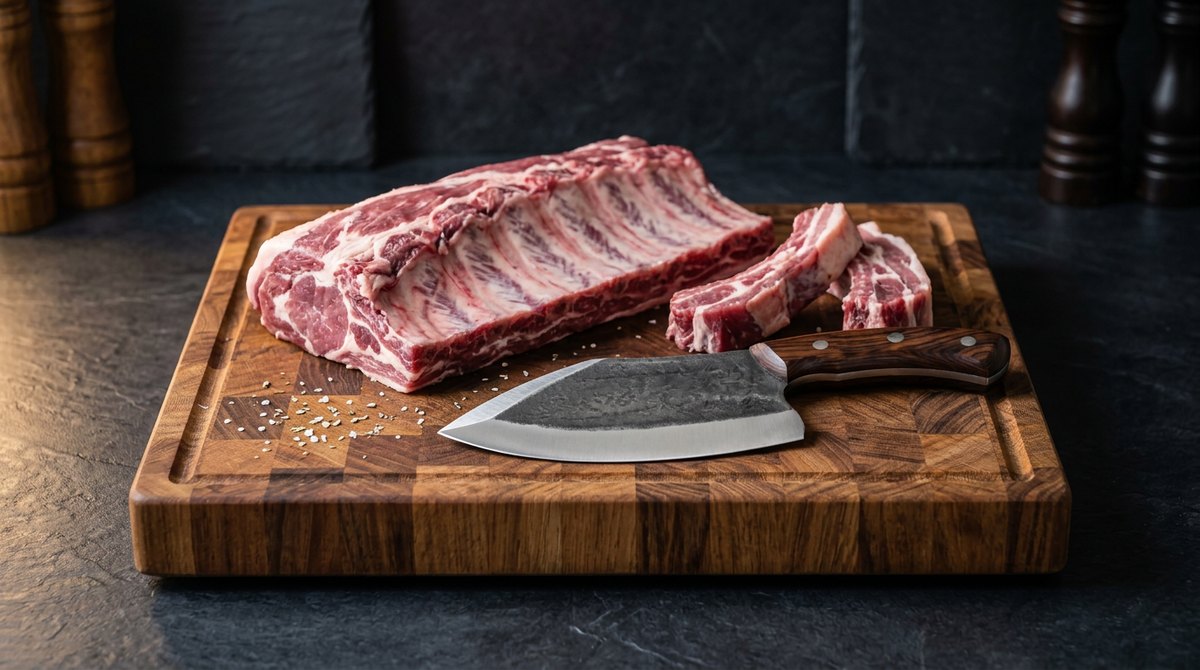
The best knife for cutting meat depends on what is on the board. Bone wants a heavy cleaver like the Rhino 8", trimming wants a small butcher knife like the Hellfang 5", a cooked brisket wants a long slicer, fish wants a thin fillet knife, and the everyday pile of chicken thighs and onions wants a tall Serbian style chef knife. If one knife has to cover all of it, buy the Kodiak 8" butcher cleaver and accept that fish will be clumsy.
Every knife maker will tell you their knife cuts meat. A butter knife cuts meat too, given enough patience. The real question is which blade does the job without fighting you, wrecking its own edge, or shredding a roast. This guide matches the knife to the task, with a table so you can skip to the row that matters.
What Makes a Knife Good for Cutting Meat?
Four things decide it: the edge, the weight, the height of the blade and the length of the handle. Every knife we make is hand forged high carbon steel with a full tang, so the steel question is settled before you start.
The edge
A slicing knife wants a thin, keen edge that parts the fibers with little pressure. A bone knife wants a sturdier edge with more steel behind it, so it survives the hit. Those goals pull in opposite directions, which is why a butcher owns more than one knife. Ask a thin slicer to split a pork shoulder and the edge chips. Ask a thick cleaver to carve a roast and you get slabs.
Weight
Weight does the work on bone. A cleaver over a kilo lands with momentum, so your arm steers and the steel splits. That same mass is a liability when you are trimming silverskin for twenty minutes, when your fingers, not your shoulder, should do the steering. The Mako 7.5" boning knife weighs 200 g. The Rhino weighs 1250 g. Nobody is confused about which is which.
Blade height
A tall blade keeps your knuckles off the board, gives you a flat face to scoop with and carries more steel into a chop. A narrow blade slips into joints and follows a backbone. Tall for chopping, narrow for boning and filleting, and no amount of marketing changes that.
Handle length
A longer handle lets you shift your grip back for a swing or forward for control. Our cleavers run a 4.5" to 5.9" handle. The Kodiak and the Rhino both carry the 5.9" handle, so you can hold back for a chop and choke up for trimming. A short handle on a heavy blade gets tiring fast.
Meat Knife Comparison Table
Weights and blade lengths are the published figures. The last two columns are our opinion, and you are free to disagree once you own one.
| Knife | Blade | Weight | Best for | Avoid for |
|---|---|---|---|---|
| Rhino 8" Serbian cleaver | 8" | 1250 g | Beef and pork bone, heavy chopping | Thin slicing, fish |
| Kodiak 8" butcher cleaver | 8" | 581 g | Breaking down primals, mixed meat prep | Heavy beef bone all day |
| Kraken 8" cleaver | 8" | 380 g | Poultry, smaller joints, stew meat | Thick beef bone |
| Megalodon 6.6" meat cleaver | 6.6" | 430 g | Ribs, chicken, portioning | Long roasts and brisket |
| Warthog 6" meat cleaver | 6" | 308 g | Compact chopping, poultry, small kitchens | Large bone |
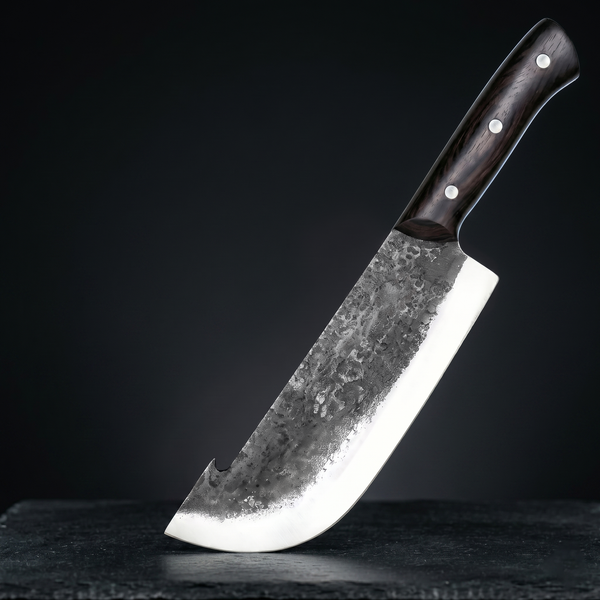
| Hellfang 5" butcher knife | 5" | 240 g | Trimming fat and silverskin, small cuts | Bone of any kind |
| Mako 7.5" boning knife | 7.5" | 200 g | Meat off the bone, poultry | Chopping |
| Mamba 11" slicing knife | 11" | 264 g | Brisket, roasts, hams, long even slices | Bone, chopping, prying |
| Barracuda 10" fillet knife | 6" | 220 g | Fish, skinning fillets | Anything with bone in it |
| Kermode 7" chef cleaver | 7" | 349 g | Everyday meat and vegetables, rocking cuts | Splitting bone |
| Chef's Kiss 7" Serbian chef knife | 7" | 404 g | Everyday prep with more heft | Splitting bone |
Raw Meat or Cooked Meat, Does the Knife Change?
Raw meat is soft, slippery and full of connective tissue that catches on a dull edge. It wants a sharp knife of the right shape and cares little about length. Cooked meat is a different problem. A roast or a brisket has a crust you want to keep whole and fibers that shred if the knife saws. That is where a long thin slicer like the Mamba 11" earns its length: one pull, heel to tip. A short knife on a big joint means three strokes per slice and pulled pork nobody ordered.
The other difference is the board, and it matters more than the knife. Raw meat leaves bacteria behind, and neither cooked meat nor salad should touch that surface. Wash the knife between raw and cooked, or use a second knife, which is as good an excuse as you will get. The federal food safety guidance says the same about boards, one for fresh produce and another for raw meat, poultry or seafood: FoodSafety.gov four steps.
Bone In or Boneless?
Bone decides the knife faster than anything else. If the plan is to go through it, you need mass and a sturdy edge, and nothing else on the list will do it well. The Rhino 8" is the bone knife in our range: 1250 g on a 0.3" spine, made to order, built so the steel takes the shock instead of your wrist. Ribs, pork shoulder, beef shank, that is its job. For chicken and smaller joints, the Kraken 8" at 380 g is quick and far less tiring, and its hammer textured flats help meat let go.
Boneless meat is a slicing and trimming problem, and the cleaver goes back on the rack. A trimming knife like the Hellfang 5" gets under fat caps and silverskin, and a slicer handles portioning. A heavy cleaver on boneless meat is not dangerous, just crude, because the thick edge wedges through rather than slicing. The grey area is bone in meat where you are only trimming, like a pork chop. That is knife work. Cut around the bone and save the cleaver for when the bone itself has to give.
The Best Knife for Poultry
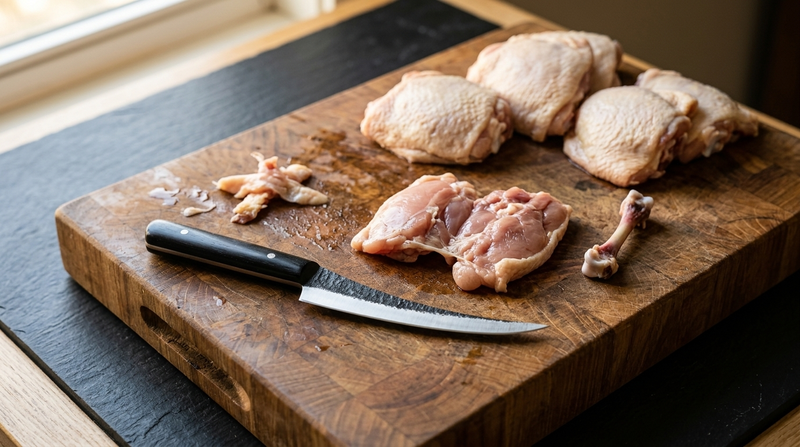
Chicken and turkey are mostly joints, not bone to split. A whole bird comes apart at the joints with a boning knife and a little feel, and the Mako 7.5" with its trailing point is the knife to learn it on. Find the joint, cut the skin, bend it back until it pops, cut through the cartilage. Where a cleaver helps is portioning bone in pieces for a curry or a stew: a thigh in half, a backbone split for stock. The Kraken 8" is the right weight for that. The 6" Warthog does the same work at 308 g, and the 6.6" Megalodon with its finger hole sits between the two. A 1.2 kg bone cleaver on a chicken is driving a truck to the mailbox. It works, and it is silly.
The Best Knife for Red Meat
Red meat is where you want more than one knife, because beef, pork and lamb arrive as bone in primals, boneless cuts that need trimming, and cooked joints that need slicing. For the first, a butcher cleaver with a drop point does most of the work. The Kodiak 8" at 581 g goes through pork rib bones, and the drop point lets you cut around a bone or trim a fat cap without swapping knives. It is the one cleaver in the range that behaves like a butcher knife when asked.
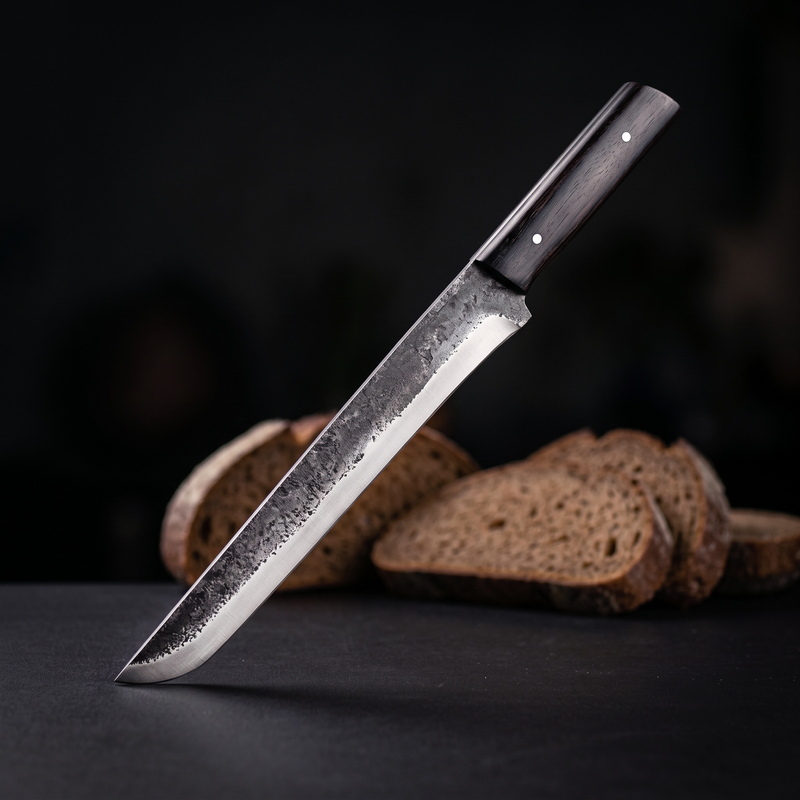
For steaks off a boneless strip loin or slices off a roast, a sharp slicer gives clean faces and even thickness. Brisket in particular punishes short knives. The Mamba 11" brisket slicing knife has a long straight edge and a forge scale finish, and one pull takes a slice across the whole flat. Our guide to the best knife for slicing brisket has the full argument. The short version is that length beats everything else once the meat is cooked.
The Best Knife for Fish
Fish is the one meat where a cleaver has no business, unless you are splitting a head for stock. A fillet knife is thin and narrow so it can follow the backbone and slip between skin and flesh without tearing either. The Barracuda 13" fillet knife has an 8" blade at 0.07" thick, and that thinness is the whole point. A thick blade pushes the fillet off the bones instead of cutting it. The 10" Barracuda does the same job on smaller fish. Boning and fillet knives overlap, but the fillet knife is thinner and better at skinning. Our boning knife vs fillet knife guide sorts out which you need, and it may be both.
If You Only Buy One Knife for Meat
Buy the Kodiak 8" butcher cleaver. It is the compromise that fails the fewest tests. At 581 g it has enough mass for chicken bones and pork ribs, the drop point gives it a tip for trimming, the 5.9" handle lets you grip back or forward, and the blade is tall enough for vegetables. It will not fillet a fish and it is slow on brisket, but for a household that cooks a lot of meat and wants one good knife, it is the honest answer.
If your meat cooking is mostly weeknight dinners, the Kermode 7" chef cleaver is a better single knife. It is a Serbian style chef knife with a curved edge that rocks through onions, and it still has the height and the 349 g to chop through a chicken thigh. The Chef's Kiss 7" is the same idea at 404 g. The full range is in our cleavers collection.
The Three Knife Setup for Meat
Three knives cover almost every meat job: a heavy cleaver for bone, a trimming or boning knife, and a slicer for cooked meat. For the cleaver, the Rhino if beef bone is a regular event, the Kodiak for mixed work, the Kraken for poultry. For trimming, the Hellfang 5" at 240 g and $79 does one job properly. For slicing, the Mamba 11", because a slicer that is too short is a slicer you will stop using.
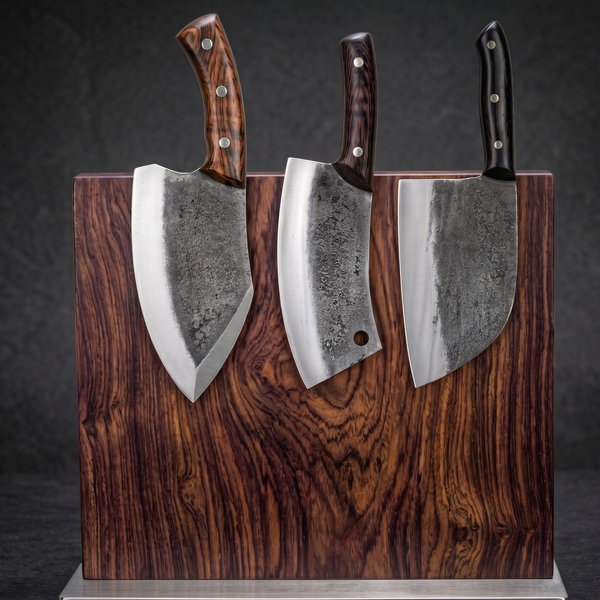
If you would rather buy once, the Butcher's Trio puts a 7.5" butcher cleaver, an 8" drop point cleaver and a 7" sheep foot cleaver in one set for $330. It skips the slicer and the boning knife, so it is a three cleaver set rather than a three task set, but it covers chopping, breaking down and heavy prep. In stock knives reach you in 5 to 6 business days in the USA and Australia. Made to order pieces like the Rhino take 2 to 3 weeks before they ship, about how long it takes to clear freezer space for a side of pork.
Looking After a Knife That Cuts Meat
Every knife here is hand forged high carbon steel. It takes a keen edge and holds it, and it will rust if left wet, because that is the trade. Meat juices and salt left on a blade pit it eventually. Hand wash as soon as the job is done, dry it straight away, and wipe on a light coat of food safe oil. No dishwasher, no soaking in the sink while you eat. Patina builds with use and that is normal, not damage. The full routine is in our high carbon steel knife care guide. The lifetime warranty against defects in materials and craftsmanship covers the steel and the work, not the roast you left it sitting in.
Match the knife to the cut and both last longer, the edge because it only does its own job, the meat because it was cut rather than mauled. Start with the hand forged cleavers for the bone and chopping side of things, and if a brisket is what sent you here, go straight to the brisket slicing guide and buy the long one.
Questions
What is the best knife for cutting raw meat?
It depends on the job. For trimming fat and silverskin off raw cuts, a small butcher knife like the Hellfang 5 inch is easiest to control. For taking raw meat off the bone, use a boning knife such as the Mako 7.5 inch. For going through raw bone, use a heavy cleaver like the Rhino 8 inch. A sharp edge matters more than length on raw meat.
Can I use a meat cleaver to slice cooked meat?
You can, but the result is slabs rather than slices. A cleaver edge is thick so it survives bone, and that thickness wedges through cooked meat instead of slicing it cleanly. For roasts, hams and brisket, a long thin slicer like the Mamba 11 inch gives even slices in one pull and keeps the crust intact. Save the cleaver for bone and chopping.
Which Xcutlery knife is best if I only want one for meat?
The Kodiak 8 inch butcher cleaver. At 581 g it has enough weight for chicken bones and pork ribs, the drop point gives it a tip for trimming and cutting around bone, and the 5.9 inch handle lets you grip back for a chop or forward for control. It will not fillet fish well and it is slow on brisket, but it covers the most ground.
Do I need a different knife for poultry and red meat?
Not always, but it helps. Poultry comes apart at the joints, so a boning knife like the Mako does most of the work and a lighter cleaver like the Kraken 8 inch handles portioning bone in pieces. Red meat often needs a heavier cleaver for bone, a trimming knife for fat, and a slicer for cooked roasts. One knife can do it, three knives do it well.
How do I care for a high carbon steel meat knife?
Hand wash it as soon as you finish, dry it straight away, and wipe on a light coat of food safe oil before storing. Never put it in the dishwasher and never leave it soaking or sitting on a wet board. Meat juices and salt will darken and eventually pit the steel if left on it. A grey patina that builds with use is normal and not a defect.
Shop the knives from this guide
Keep reading
What Is a Boning Knife Used For? Jobs, Sizes and When to Skip It
A boning knife is the narrow, pointed blade that takes meat off the bone without wasting it. This guide covers the jobs it is...
Best Knife for Slicing Brisket: Length, Edge and Timing
What makes the best knife for slicing brisket: a long straight edge, enough length to cross a packer flat, and a sharp blade that...
Meat Cleaver Sizes Explained: Which Blade Length to Buy
Blade length is the number everyone shops by and the one that matters least. This guide explains what length, height, spine thickness and weight...