
Types of Kitchen Knives and What Each One Is Actually For
October 13, 2026 · By Matt
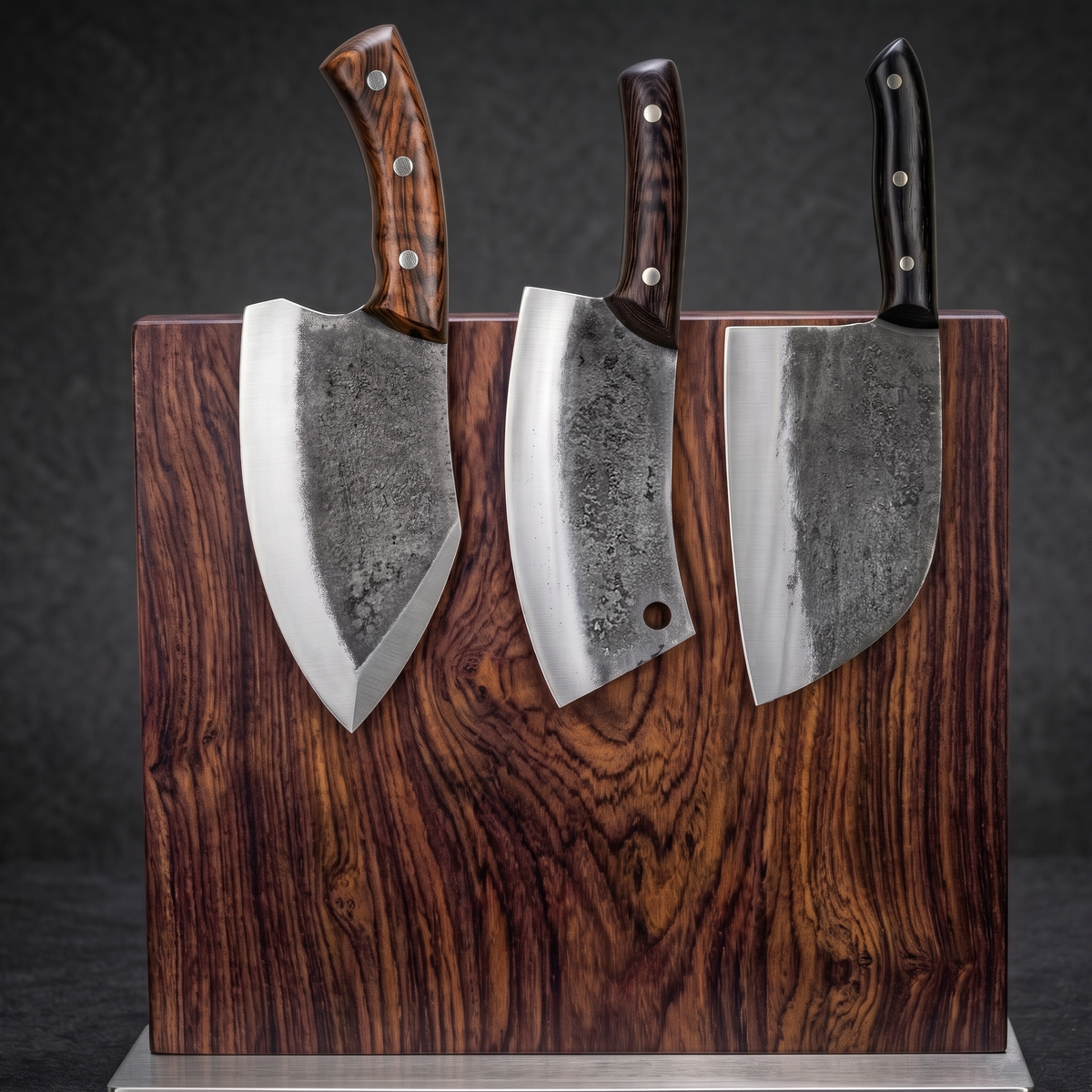
The main types of kitchen knives are the chef knife, the Serbian chef knife, the meat cleaver, the butcher knife, the boning knife, the fillet knife and the slicing knife, with the paring knife, bread knife, santoku and utility knife filling the smaller gaps. Each one is shaped for a particular job, and each one is fairly bad at somebody else's job.
Knife makers, us included, would happily sell you all eleven. You do not need all eleven. You need the two or three that match how you actually cook, and the rest can go to people with bigger drawers. This guide goes type by type, says plainly what each knife is bad at, and points to our version where we make one. Where we do not make one, we say that too.
Kitchen Knife Types at a Glance
The lengths below are the ranges you commonly see in shops, not rules. Plenty of good knives sit outside them, and hand forged blades in particular vary from one to the next.
| Knife type | Typical blade length | Main jobs | Xcutlery example |
|---|---|---|---|
| Chef knife | Commonly 6 to 10 inches | General prep, dicing, slicing, mincing | Orca 7", Ironclad 8.7" |
| Serbian chef knife | Usually around 6 to 8 inches | Chopping, rocking, scooping, light meat work | Kermode 7", Chef's Kiss 7" |
| Meat cleaver | Commonly 6 to 9 inches | Chopping through joints and bone, portioning | Rhino 8", Kraken 8", Mammoth 9.1" |
| Butcher knife | Commonly 6 to 12 inches | Breaking down and trimming large cuts | Kodiak 8", Hellfang 5" |
| Boning knife | Commonly 5 to 7 inches | Taking meat off bone, trimming silver skin | Mako 7.5" |
| Fillet knife | Commonly 6 to 9 inches | Filleting and skinning fish | Barracuda 10" and 13" |
| Slicing knife | Usually 10 inches or longer | Long even slices of brisket, roasts, ham | Mamba 11" |
| Paring knife | Commonly 3 to 4 inches | Peeling, trimming, small in hand work | Not in our range |
| Bread knife | Commonly 8 to 10 inches | Crusty bread, soft cakes, tomatoes | Not in our range |
| Santoku | Commonly 5 to 7 inches | Straight down chopping and fine slicing of vegetables | Not in our range |
| Utility knife | Commonly 4 to 7 inches | Sandwiches, small fruit, in between jobs | Not in our range |
If you want to know why a drop point behaves differently from a sheep foot or a clip point, that is a separate subject, and our guide to knife blade shapes covers it properly. This page is about jobs.
Chef Knife
The chef knife is the one most people mean when they say "a good knife". It has a curved edge that rocks on the board, a point for detail work and enough height at the heel to keep your knuckles off the cutting board. It dices onions, slices peppers, minces herbs and portions a chicken breast well enough that many cooks never buy a second. Most chef knives on the market sit between 6 and 10 inches, with 8 the usual middle, which matches the general description in this reference: Wikipedia entry on kitchen knives.
What it is bad at: bone. A chef knife has a thin edge built to glide, and hitting a joint or a frozen chop with it is a quick way to put a chip in the edge. It is also a little short for slicing a whole brisket in clean single strokes.
Our Orca 7" chef knife is the everyday version, at 260 g with a black rosewood handle. The Ironclad 8.7" is longer, with a hand hammered spine, for people who like more blade on the board. Both live in our chef knives collection.
Serbian Chef Knife
A Serbian chef knife, sometimes called a chef cleaver, is a tall, wide blade with a curved edge. Think of a chef knife that spent a few years lifting weights. The height lets you scoop chopped food straight off the board, the curve still lets it rock, and the extra steel gives it enough weight to push through squash and cut up a chicken without much drama.
What it is bad at: fine point work and anything that needs a light, nimble tip. It is also still not a bone chopper. It will handle small joints, but a pork shoulder bone is cleaver territory.
The Kermode 7" chef cleaver is the lighter one at 349 g. The Chef's Kiss 7" has a taller blade and comes in at 404 g, for people who want the weight to do more of the work.
Meat Cleaver
A meat cleaver is a heavy, thick spined rectangle of steel built to land hard. It chops through chicken backs, ribs and joints, splits racks into portions and bashes garlic flat with the side of the blade. The weight does the cutting. You lift it, let it drop with some control, and the spine drives the edge through.
What it is bad at: precision. A cleaver is clumsy at fine dicing, and it is no use for slicing a roast into thin even slices. It also hates frozen meat. Never chop frozen bone or frozen meat with a cleaver, because that chips the edge.
Our cleavers cover a wide spread of weights. The Kraken 8" is a hammer textured cleaver at 380 g, light enough to use for general meat prep. The Rhino 8" Serbian cleaver is a different animal, 1250 g with a 7.6 mm spine, made to order and shipped in 2 to 3 weeks. The Mammoth 9.1" goes further still for people who split serious bone. Sizing is its own topic, and our guide to meat cleaver sizes goes through it. The whole range is in our hand forged cleavers collection.
What Is a Butcher Knife, Really?
The name gets used loosely. In a butcher shop it usually means a long, curved blade for breaking big cuts into smaller ones and trimming fat as you go. At home it gets stretched to mean any sturdy meat knife.
What it is bad at: bone chopping, if it is a long curved breaking knife, and vegetables, because it is too long and too pointed for comfortable board work.
We make two quite different knives in our butcher knives collection. The Kodiak 8" butcher cleaver has a drop point and a 5.9" handle, and it sits between a cleaver and a butcher knife, heavy enough at 581 g to work through a joint and pointed enough to trim. The Hellfang 5" is the small end, a meat trimming knife for steaks and chops.
Boning Knife
A boning knife has a narrow blade and a sharp point, made to follow the line of a bone and take the meat off it with as little waste as possible. It also handles silver skin, tendons and fat trimming, which is where most home cooks use it most.
What it is bad at: chopping anything, and cutting on the board in general. The narrow blade gives you no knuckle room. It is a knife for working around a piece of meat, not through it.
Our Mako 7.5" boning knife has a trailing point and weighs 200 g. If you are not sure whether you need one, our guide on what a boning knife is used for answers it in detail.
Fillet Knife
A fillet knife is the fish version of a boning knife, longer and thinner, made to run along a backbone and then slide between skin and flesh. On fish the thin blade matters more than anything else, because fish flesh tears if you force it.
What it is bad at: heavy meat work. A thin fillet blade will bend or chip if you lean on it through beef, and it should never meet frozen food.
The Barracuda 10" has a 6" blade for most fish. The Barracuda 13" carries an 8" blade for bigger fish. Both are 1.8 mm thick and live in our boning and fillet knives collection.
Slicing Knife
A slicing knife is long and narrow, built so you can cut a slice in one pull instead of sawing back and forth. That single stroke is the whole point. Sawing tears the crust off a brisket and leaves ragged edges on a roast.
What it is bad at: nearly everything else. It is too long for a small board, too thin for bone and too awkward for vegetables.
Our Mamba 11" slicing knife has a long straight edge and a forge scale finish. It sits in our BBQ knives collection with the other knives people take out to the smoker.
What About Paring, Bread, Santoku and Utility Knives?
We do not make these four. They are useful knives all the same, so here is the short version.
Paring knife
A small blade, commonly 3 to 4 inches, for peeling apples, hulling strawberries and other jobs done in your hand rather than on the board. It is bad at anything big.
Bread knife
A long serrated blade that saws through crust without crushing the soft middle. It is also handy on ripe tomatoes. It is bad at clean slices of meat, because the teeth shred.
Santoku
A Japanese style knife with a flatter edge and a blunt, rounded tip. It is made for chopping straight down rather than rocking, and it is very good with vegetables. It is bad at bone and not great if you like to rock your knife.
Utility knife
The in between size, longer than a paring knife and shorter than a chef knife. It cuts sandwiches, cheese and small fruit. In practice most people find that a chef knife and a paring knife cover its jobs, which is why it is often the first knife left in the block.
Which Three Knives Do You Actually Need?
Start with one general knife. For most people that is a chef knife or a Serbian chef knife, depending on whether you prefer a nimble point or a tall blade with weight behind it.
Your second knife should cover what the first is bad at, and for most cooks that means meat. If you buy whole chickens, ribs or bone in cuts, get a cleaver. If you mostly trim steaks and take meat off bones, get a boning knife.
Your third knife depends on what you cook. Smoke briskets on weekends and you want a slicing knife. Catch fish and you want a fillet knife. Bake bread and a cheap serrated bread knife is money well spent.
If you would rather buy the meat side in one go, the Butcher's Trio puts a 7.5" butcher cleaver, an 8" drop point cleaver and a 7" sheep foot cleaver in one set. The Mastercraft 4 piece set adds a 9" chef knife and a fish and steak cutter to two cleavers, which gets you closer to a full kit.
Do Different Knife Types Need Different Care?
Not if they are high carbon steel, which all of ours are. Every knife here is hand forged, full tang with steel pins, and gets the same routine: hand wash, dry it at once, wipe on a light coat of food safe oil, no dishwasher and no soaking. A grey or blue patina will build up on the steel over time. That is normal and does no harm. The only real difference between types is how you use them. Keep thin knives away from bone, keep every knife away from frozen food and use a wood or plastic board. All of them carry our lifetime warranty against defects in materials and craftsmanship.
If meat is most of what you cut, our guide to the best knives for cutting meat narrows the field further, and the cleavers collection is the place to start if the chopping side of your kitchen has been doing its job with the wrong knife.
Questions
What are the main types of kitchen knives?
The main types are the chef knife, Serbian chef knife, meat cleaver, butcher knife, boning knife, fillet knife and slicing knife, with paring knives, bread knives, santoku knives and utility knives covering smaller jobs. Each is shaped for a particular task, and most home cooks only use three or four of them regularly.
Which kitchen knife should I buy first?
Buy a chef knife or a Serbian chef knife first. Either one handles most daily prep, from dicing onions to portioning chicken. A classic chef knife has a more nimble point, while a Serbian chef knife is taller and heavier and lets the weight do more of the work. Add a meat knife second.
What is the difference between a chef knife and a meat cleaver?
A chef knife has a thin edge made to glide through vegetables and boneless meat, and it chips if you hit bone. A meat cleaver is thick and heavy, made to drop through joints and ribs. The cleaver is clumsy at fine dicing, and the chef knife should never be used to chop bone.
Do I need both a boning knife and a fillet knife?
Only if you prepare both meat and whole fish regularly. A boning knife takes meat off bone and trims silver skin, while a fillet knife is longer and thinner for running along a fish backbone and removing skin. If you rarely cook whole fish, a boning knife alone covers most needs at home.
Does Xcutlery make paring knives or bread knives?
No. Our range is hand forged high carbon steel chef knives, Serbian chef knives, cleavers, butcher knives, boning and fillet knives and slicing knives. We do not make paring knives, bread knives, santoku knives or utility knives, so for those jobs you will need to look elsewhere and pair them with a knife from us.
Shop the knives from this guide
Keep reading
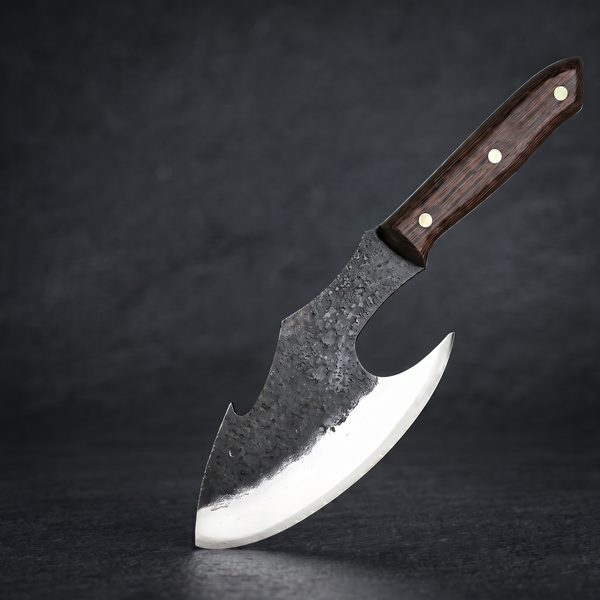
Knife Blade Shapes Explained: Drop Point, Clip Point and More
Blade shape is the outline of the blade: where the tip sits, what the spine does and how the edge is drawn. This guide...
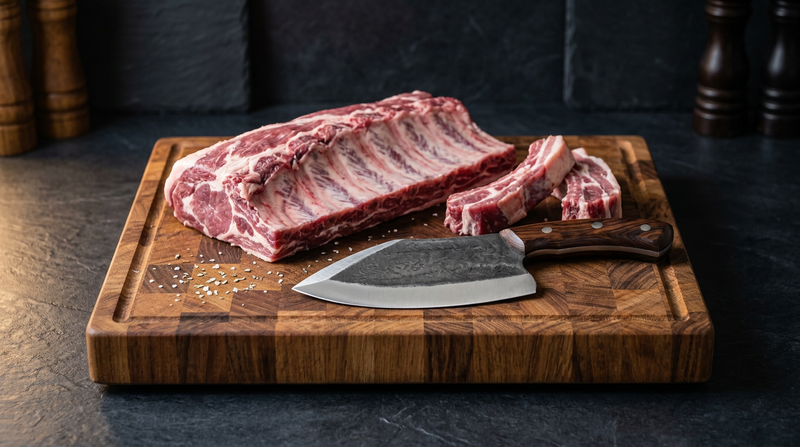
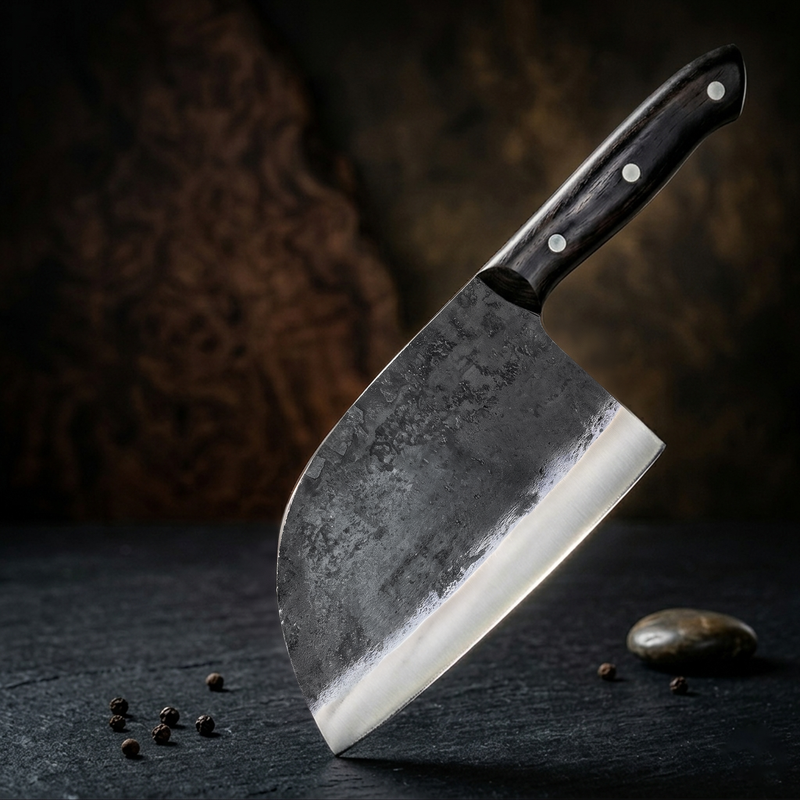
Best Knives for Cutting Meat: Which Blade for Which Cut
The best knife for cutting meat depends on the cut in front of you. Bone wants a heavy cleaver, trimming wants a small butcher...
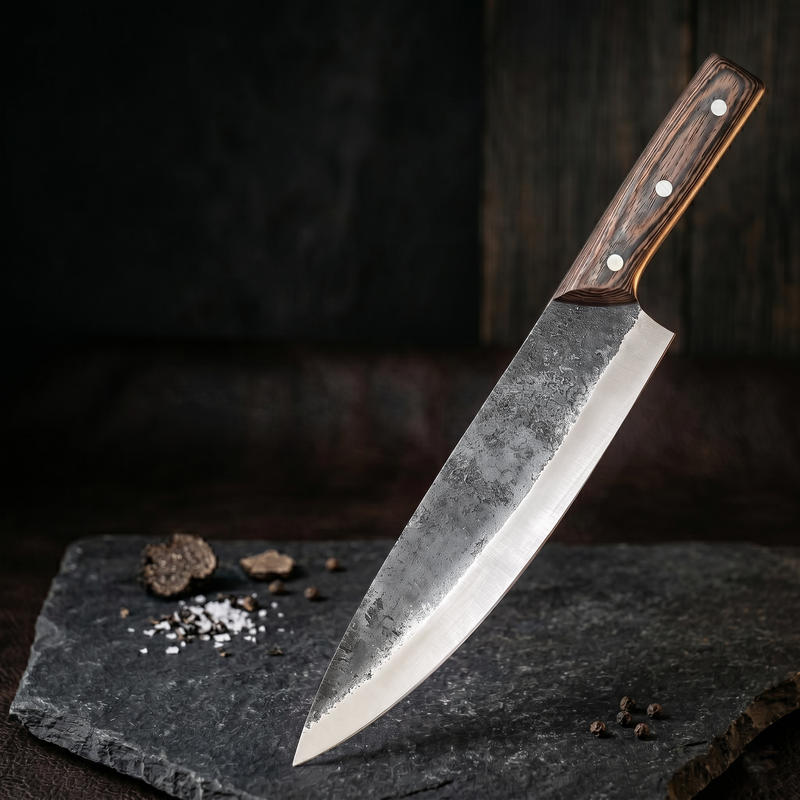
What Is a Chef Knife Used For? Jobs, Sizes and How to Hold One
What a chef knife is used for, and what it should never be asked to do. How to pick a blade length for your...